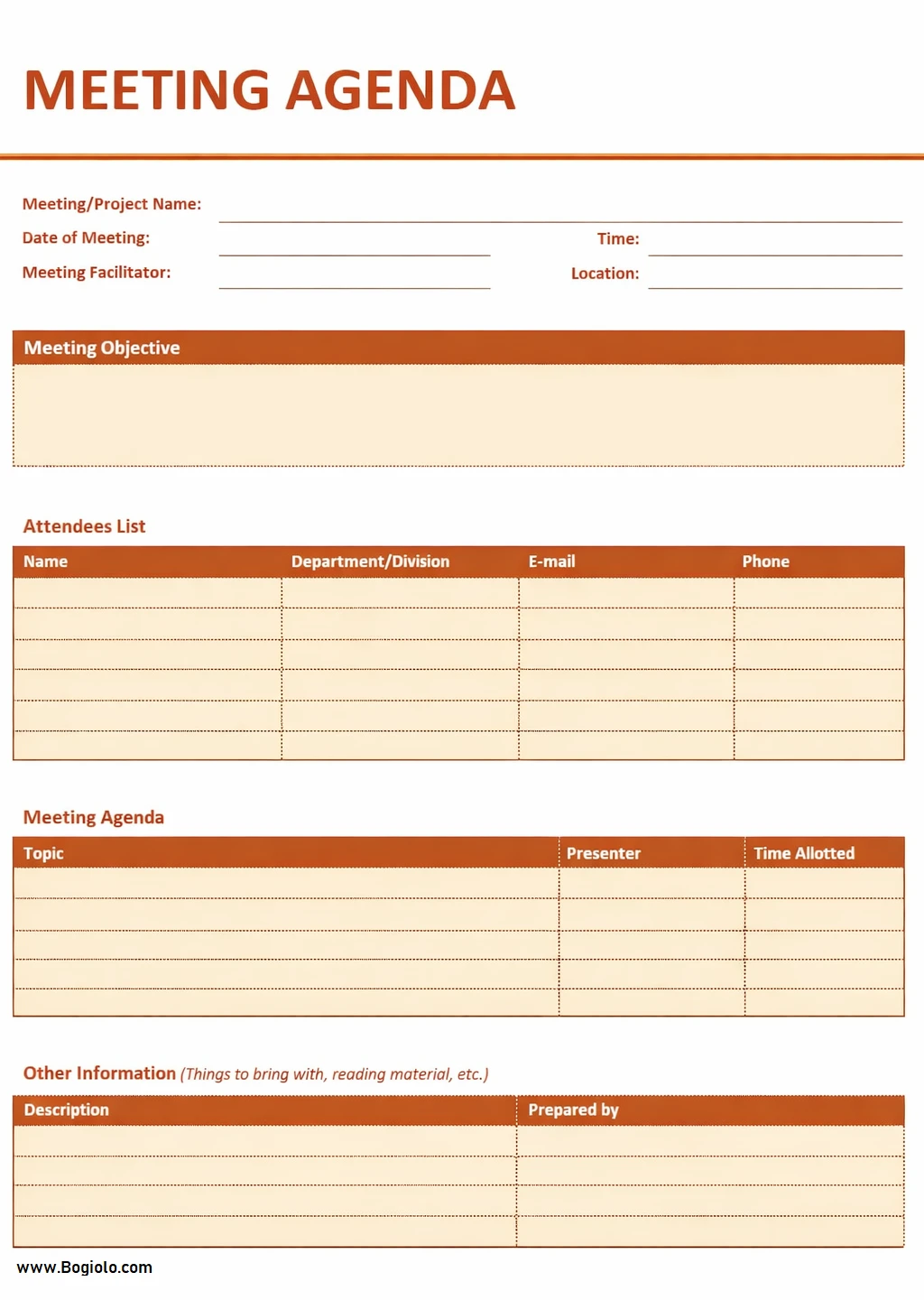
Meetings are an essential part of any organization’s day-to-day operations. However, without proper planning and structure, meetings can easily become unproductive and unfocused, leading to wasted time and resources. This is where a well-structured meeting agenda comes into play.
Acting as a roadmap for the meeting, a meeting agenda helps define the objectives, outline topics to be discussed, allocate time for each item, and allow participants to prepare in advance. This not only ensures that meetings are productive, focused, and efficient but also reduces wasted time and ensures that all key matters are covered.
What is a Meeting Agenda?
A meeting agenda is a document that outlines the topics to be discussed during a meeting and the order in which they will be addressed. It serves as a guide for the meeting, ensuring that all participants are on the same page and that the meeting stays on track.
A meeting agenda can range from a simple list of topics to a detailed outline with time allocations for each item.
Why Use a Meeting Agenda?
There are several benefits to using a meeting agenda:
- Structure: A meeting agenda provides structure to the meeting, ensuring that it stays focused and on track.
- Efficiency: By outlining topics to be discussed and allocating time for each item, a meeting agenda helps keep the meeting efficient and productive.
- Preparation: A meeting agenda allows participants to prepare in advance, leading to more meaningful discussions and better decision-making.
- Time Management: By setting time allocations for each item, a meeting agenda helps manage time effectively and ensures that all key matters are covered.
Key Elements of a Meeting Agenda
A well-structured meeting agenda typically includes the following key elements:
- Title: Clearly stating the purpose of the meeting.
- Date and Time: Specifying the date, time, and duration of the meeting.
- Participants: Listing the names of participants and their roles.
- Agenda Items: Outlining the topics to be discussed during the meeting.
- Time Allocations: Allocating specific time slots for each agenda item.
- Preparation Materials: Providing any necessary documents or materials for participants to review before the meeting.
How to Create a Meeting Agenda
Creating a meeting agenda is a straightforward process that involves the following steps:
1. Determine the Objective of the Meeting
Identify the purpose of the meeting and what you hope to accomplish by the end of it.
2. Identify Key Topics to be Discussed
List out the main topics that need to be addressed during the meeting.
3. Allocate Time for Each Agenda Item
Estimate how much time should be allocated for each agenda item to ensure that the meeting stays on schedule.
4. Include Relevant Participants
List out the names of participants who should attend the meeting based on their roles and responsibilities.
5. Distribute the Agenda in Advance
Send out the meeting agenda to participants in advance to allow them to prepare and familiarize themselves with the topics to be discussed.
6. Stick to the Agenda During the Meeting
During the meeting, stick to the agenda and ensure that discussions stay focused on the topics outlined.
7. Follow-up After the Meeting
After the meeting, follow up with participants on action items and next steps to ensure that decisions made during the meeting are implemented effectively.
Tips for Successful Meetings
Here are some tips for creating and using a meeting agenda effectively:
- Keep it Concise: Keep the agenda concise and focused on the main topics to be discussed.
- Set Clear Objectives: Clearly state the objectives of the meeting to keep participants on track.
- Encourage Participation: Encourage all participants to actively engage in discussions and share their perspectives.
- Assign Roles: Assign roles such as timekeeper and note-taker to ensure that the meeting runs smoothly.
- Review and Adjust: After the meeting, review the effectiveness of the agenda and make adjustments as needed for future meetings.
By using a well-structured meeting agenda, organizations can ensure that their meetings are productive, focused, and efficient, ultimately leading to better decision-making and outcomes.
Meeting Agenda Template – DOWNLOAD
