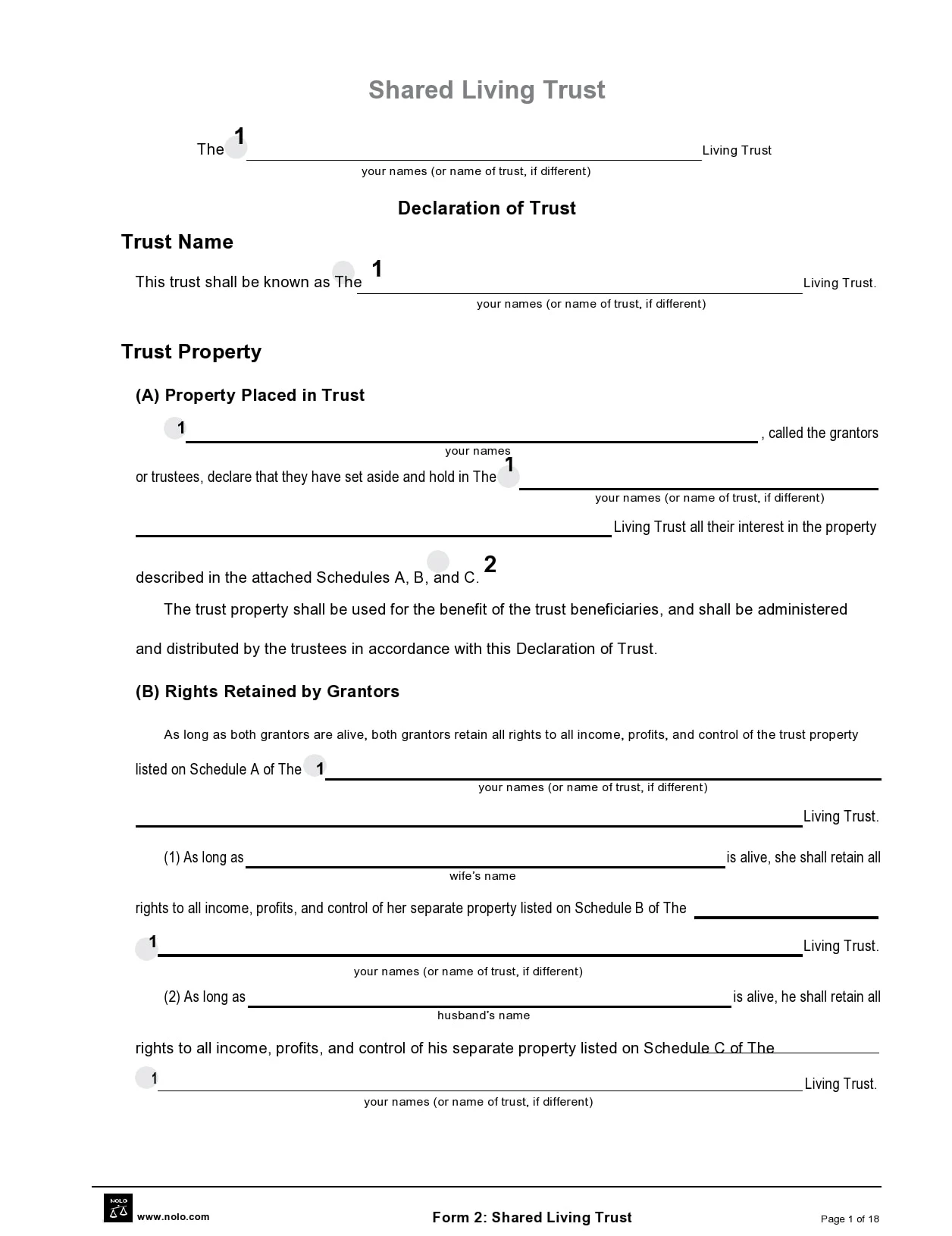
When it comes to estate planning, one of the most effective tools you can use is a living trust form. This legal document allows you to manage and distribute your assets during your lifetime and after your death, all while avoiding the costly and public probate process.
In simple terms, a living trust specifies who will manage your assets (the trustee) and who will inherit them (the beneficiary). But it doesn’t stop there – a living trust can also ensure that your assets are managed in case of incapacity and provide a way to manage property for minor children.
What is a Living Trust Form?
A living trust form, also known as a revocable trust or inter vivos trust, is a legal document that allows you to transfer your assets into a trust during your lifetime. By doing so, you retain control over your assets while specifying how they should be managed and distributed both during your lifetime and after your death.
This differs from a will, which only goes into effect after your death and must go through the probate process.
Why Use a Living Trust Form for Estate Planning?
There are several benefits to using a living trust form for estate planning:
- Avoid Probate: One of the main advantages of a living trust is that it helps your loved ones avoid the lengthy and expensive probate process.
- Privacy: Unlike a will, a living trust is private and does not become part of the public record, ensuring that your affairs remain confidential.
- Asset Management: With a living trust, you can appoint a trustee to manage your assets for your benefit if you become incapacitated, ensuring that your affairs are taken care of.
- Minor Children: A living trust allows you to specify how assets should be managed for minor children until they reach a certain age, providing peace of mind for parents.
Key Elements of a Living Trust Form
When creating a living trust form, there are several key elements to consider:
- Trustee: This is the person or entity responsible for managing the trust assets according to your wishes.
- Beneficiary: The individual or individuals who will inherit the trust assets after your death.
- Successor Trustee: In case the original trustee is unable to serve, a successor trustee should be named to take over management of the trust.
- Assets: All assets that you wish to include in the trust should be clearly identified and transferred into the trust.
How to Create a Living Trust Form
Creating a living trust form can be a complex process, but it is typically done with the help of an estate planning attorney. Here are the general steps involved:
- Evaluate Your Assets: Make a list of all the assets you want to include in the trust.
- Choose a Trustee: Select a trustworthy individual or entity to manage the trust.
- Draft the Trust Document: Work with an attorney to create a living trust document that outlines your wishes and appoints a trustee and beneficiaries.
- Transfer Assets: Transfer ownership of your assets into the trust, ensuring that all assets are properly titled.
- Sign and Notarize: Sign the trust document in front of a notary public to make it legally binding.
Tips for Managing a Living Trust
Once you have created a living trust form, it is important to actively manage and update it as needed. Here are some tips for effectively managing a living trust:
- Review Regularly: Regularly review your trust document to ensure it reflects your current wishes and circumstances.
- Communicate with Trustees: Keep open lines of communication with your trustee to ensure they understand their responsibilities.
- Update Beneficiaries: Update beneficiary designations on retirement accounts and insurance policies to align with your trust.
- Consider Professional Help: Consult with an estate planning attorney or financial advisor to ensure your trust is structured correctly.
Conclusion
A living trust form is a powerful estate planning tool that can help you manage and distribute your assets both during your lifetime and after your death. By creating a living trust, you can avoid the costly and public probate process, ensure your assets are managed in case of incapacity, and provide for minor children. Working with an estate planning attorney to create a living trust form tailored to your specific needs can provide peace of mind for you and your loved ones.
Living Trust Form – Word
