Have you ever been tasked with writing a literature review and felt overwhelmed by the sheer amount of information available on your chosen topic? Don’t worry, you’re not alone. Literature reviews are a crucial element of academic research, providing a comprehensive overview of existing knowledge on a specific subject.
In this guide, we will walk you through the process of writing a literature review, from understanding its purpose to structuring it for success.
What is a Literature Review?
A literature review is a critical analysis of existing research on a particular topic. It involves synthesizing and presenting the current state of knowledge in a structured manner, demonstrating the researcher’s understanding of the field. The goal of a literature review is to identify gaps or areas for further investigation, helping to establish the context for original research or inform a specific argument.
When writing a literature review, it is essential to go beyond summarizing individual studies. Instead, you should analyze and evaluate the existing literature, highlighting key findings, methodologies, and theoretical frameworks. By critically engaging with the work of other researchers, you can contribute to the ongoing conversation in your field.
The Purpose of a Literature Review
The primary purpose of a literature review is to provide a comprehensive overview of existing knowledge on a specific topic. By synthesizing and analyzing the available research, you can identify trends, contradictions, and gaps in the literature. This critical overview helps to establish the context for your own research, highlighting the significance of your study and setting the stage for further investigation.
Additionally, a literature review can help you refine your research question, develop a theoretical framework, and identify potential sources of data. By engaging with the existing literature, you can build on previous research and make a meaningful contribution to your field.
How To Structure Your Literature Review For Success
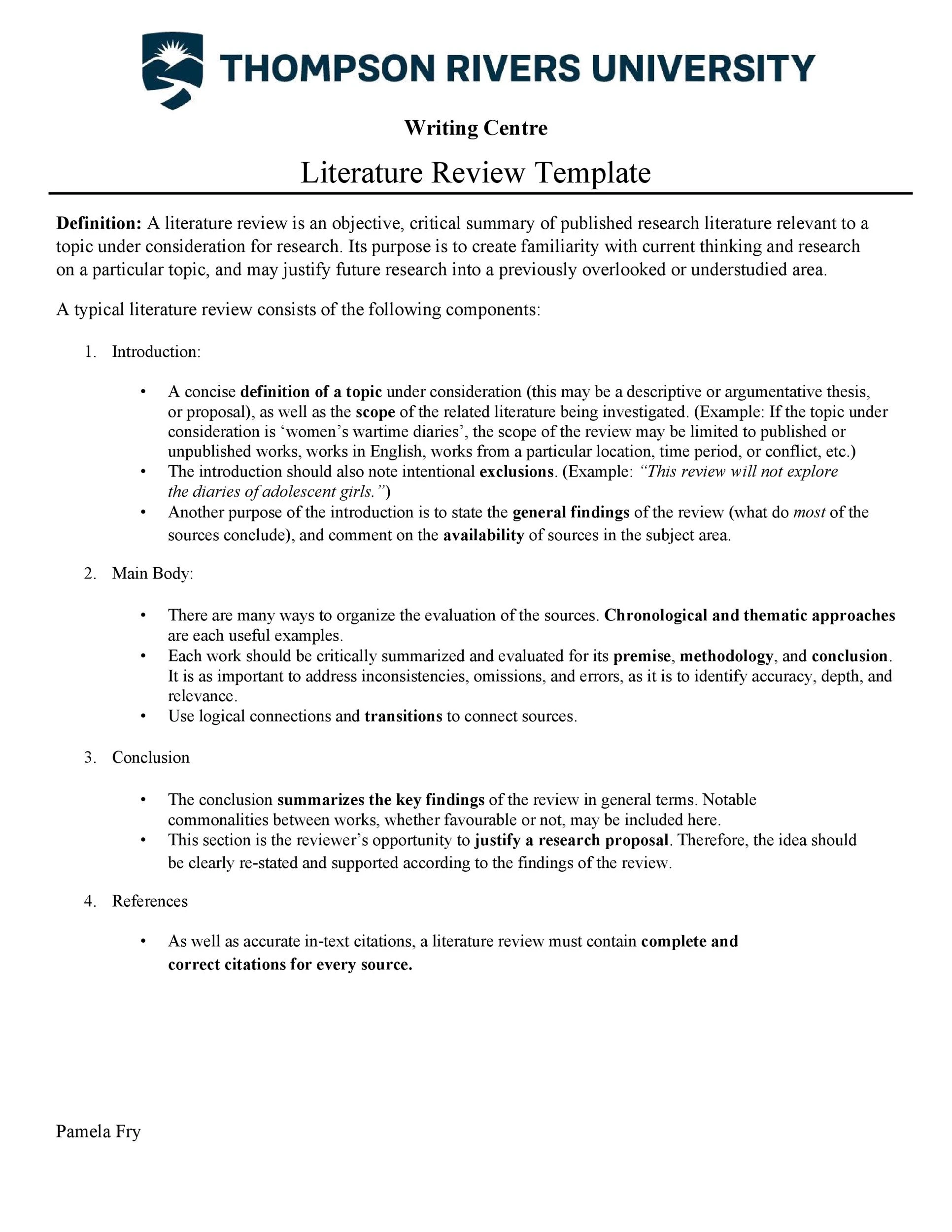
When structuring your literature review, it is essential to follow a coherent and organized format. Start by defining your research question or objective, which will guide your review and help you stay focused. Next, conduct a comprehensive search of the literature, using a combination of databases, journals, and other relevant sources.
As you review the literature, take detailed notes and identify key themes, trends, and debates. Organize your findings into categories or subtopics, grouping related studies together to provide a clear and coherent narrative. Be sure to critically evaluate each study, highlighting strengths and weaknesses, and discussing their relevance to your research question.
Finally, synthesize the findings of the literature review, drawing connections between different studies and identifying common themes or patterns. Conclude your review by summarizing the key findings, discussing their implications, and highlighting areas for further research.
Keep This Checklist Handy Before Writing Your Literature Review
- Define your research question: Clearly articulate the focus of your literature review and establish a set of objectives.
- Conduct a comprehensive search: Use a variety of sources to gather relevant literature on your topic.
- Take detailed notes: Record key findings, themes, and debates as you review the literature.
- Organize your findings: Group related studies together to provide a coherent and structured overview.
- Critically evaluate each study: Assess the strengths and weaknesses of individual studies and discuss their relevance to your research question.
- Synthesize the findings: Identify common themes, patterns, and connections between different studies.
- Conclude your review: Summarize the key findings, discuss their implications, and highlight areas for further research.
Literature Review Template – Word
