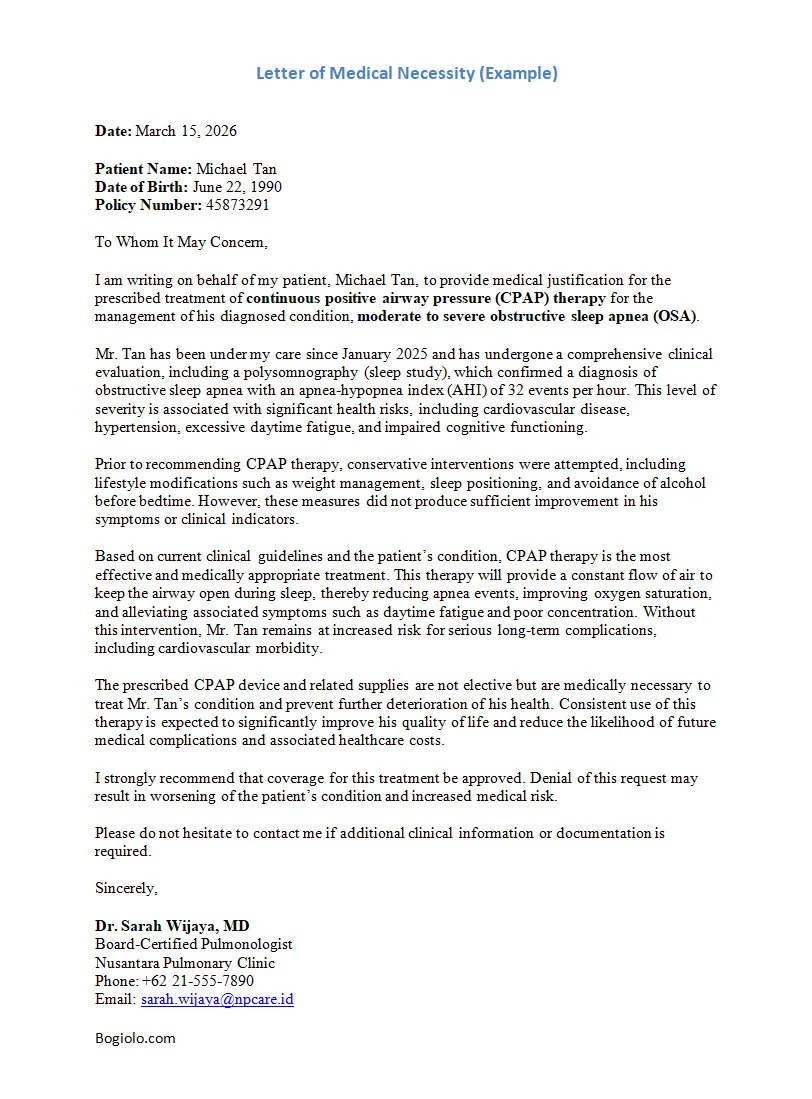
In the realm of healthcare, a Letter of Medical Necessity (LMN) plays a crucial role in ensuring that patients receive the appropriate treatments, services, or items that are essential for their health. This document serves as a formal justification provided by a healthcare provider, typically a doctor, explaining why a specific intervention is medically required for a patient.
The LMN is often required by insurance companies or other benefit providers to demonstrate the necessity of a particular treatment or service, ultimately helping to secure coverage for the patient.
What Is A Letter Of Medical Necessity?
A Letter of Medical Necessity is a written document prepared by a healthcare provider, usually a physician, outlining the clinical rationale for a specific treatment, service, or item that is deemed essential for managing or treating a diagnosed medical condition. It serves as a detailed explanation of why the intervention is medically necessary for the patient’s health and well-being.
When a doctor determines that a particular treatment or service is crucial for a patient’s medical care, they will draft a Letter of Medical Necessity to provide a comprehensive justification for the prescribed intervention. This document helps insurance companies or other benefit providers understand the medical reasoning behind the recommended course of action, increasing the likelihood of approval for coverage.
What Is The Purpose Of A Letter Of Medical Necessity?
The primary purpose of a Letter of Medical Necessity is to establish the essential need for a specific treatment, service, or item in the management or treatment of a patient’s diagnosed medical condition. By clearly outlining the medical rationale and clinical reasoning behind the prescribed intervention, the LMN helps insurance companies and benefit providers evaluate the necessity of coverage for the recommended care.
In addition to justifying the medical necessity of a particular intervention, a Letter of Medical Necessity also serves to:
– Provide a detailed explanation of the patient’s medical condition and why the recommended treatment is essential for their health.
– Support the healthcare provider’s decision-making process by documenting the clinical reasoning behind the prescribed intervention.
– Facilitate communication between healthcare providers, insurance companies, and other benefit providers to ensure that patients receive timely and appropriate care.
Difference Between A Letter Of Medical Necessity And A Prescription
It is important to distinguish between a Letter of Medical Necessity and a prescription, as they serve different purposes in the healthcare setting. While both documents are written by healthcare providers, they have distinct functions:
– A prescription is a written order from a healthcare provider to a pharmacist for a specific medication or treatment. It specifies the medication, dosage, and instructions for the patient to follow.
– A Letter of Medical Necessity, on the other hand, is a detailed explanation provided by a healthcare provider to justify the medical necessity of a specific treatment, service, or item for a patient’s health. It complements the prescription by providing the clinical rationale behind the recommended intervention.
In essence, a prescription focuses on the specifics of the medication or treatment itself, while a Letter of Medical Necessity focuses on the medical reasoning and justification for why the intervention is necessary for the patient.
What Are Some Items That Require A Letter Of Medical Necessity?
Several items in healthcare may require a Letter of Medical Necessity to justify their medical necessity for insurance coverage or other benefits. Some common examples include:
- Durable Medical Equipment (DME). Items such as wheelchairs, walkers, or oxygen tanks may require an LMN to demonstrate the need for these devices in managing a patient’s medical condition.
- Orthotics and Prosthetics. Custom-fitted braces, artificial limbs, or orthopedic shoes may necessitate a LMN to explain their essential role in improving a patient’s mobility or function.
- Medical Procedures. Certain medical procedures, such as surgery or specialized therapies, may require a Letter of Medical Necessity to justify their necessity for treating a specific condition.
- Specialized Medications. Some medications that are not typically covered by insurance may require an LMN to demonstrate their crucial role in managing a patient’s medical condition when standard treatments are ineffective.
When May You Need A Letter Of Medical Necessity?
You may need a Letter of Medical Necessity in various situations where a healthcare provider recommends a treatment, service, or item that requires justification for insurance coverage or other benefits. Some instances where you may need an LMN include:
– When seeking coverage for a specific medical device or equipment prescribed by your healthcare provider.
– When requesting authorization for a specialized medical procedure recommended for your condition.
– When applying for coverage for a medication that is not on the insurer’s formulary but is deemed necessary for your treatment.
– When appealing a denial of coverage for a prescribed treatment or service, provide additional documentation of medical necessity.
In these scenarios, a Letter of Medical Necessity can help support your case for securing coverage for essential healthcare interventions recommended by your healthcare provider.
How To Get A Letter Of Medical Necessity
To obtain a Letter of Medical Necessity, you should consult with your healthcare provider, typically your primary care physician or specialist, who is familiar with your medical history and treatment plan. Follow these steps to get an LMN:
1. Discuss with your healthcare provider the need for a specific treatment, service, or item that requires justification for insurance coverage.
2. Provide your healthcare provider with any relevant medical records, test results, or documentation supporting the recommended intervention.
3. Ask your healthcare provider to prepare a detailed Letter of Medical Necessity outlining the medical rationale for the prescribed intervention.
4. Review the LMN with your healthcare provider to ensure that all necessary information and clinical reasoning are accurately documented.
5. Submit the Letter of Medical Necessity to your insurance company or benefit provider along with any additional required documentation for review and approval.
By working closely with your healthcare provider and following these steps, you can obtain a Letter of Medical Necessity to support the medical necessity of the recommended treatment, service, or item for your health.
How Long Is An LMN Valid?
The validity period of a Letter of Medical Necessity may vary depending on the specific treatment, service, or item it justifies, as well as the policies of the insurance company or benefit provider. In general, an LMN is typically valid for a specified period, such as:
– One year: Some insurance companies may require a new LMN annually to reassess the medical necessity of a prescribed intervention.
– Six months: For certain treatments or services with shorter durations, the LMN may be valid for six months before requiring renewal.
– Indefinite: In some cases, an LMN may be deemed valid indefinitely for ongoing treatments or services that are essential for managing a chronic condition.
It is important to check with your insurance company or benefit provider to understand their specific requirements regarding the validity period of a Letter of Medical Necessity and whether any renewal or reevaluation is necessary for continued coverage.
In conclusion, a Letter of Medical Necessity is a vital document in healthcare that provides a healthcare provider’s rationale and clinical reasoning for a prescribed treatment, service, or item. By obtaining an LMN, patients can demonstrate the medical necessity of recommended interventions to secure insurance coverage or other benefits essential for their health and well-being. Working collaboratively with healthcare providers and insurers, patients can navigate the process of obtaining and maintaining an LMN to support their healthcare needs.
Letter of Medical Necessity Template – Word
