Logic models are effective tools that can assist in program planning, implementation, management, evaluation, and reporting. They help define a program’s intended impact and goals, the sequence of intended effects, which activities are to produce which effect, and where to focus outcome and process evaluations.
In this article, we will examine the advantages of utilizing printable logic models throughout various stages of program development and management.
What is a Logic Model
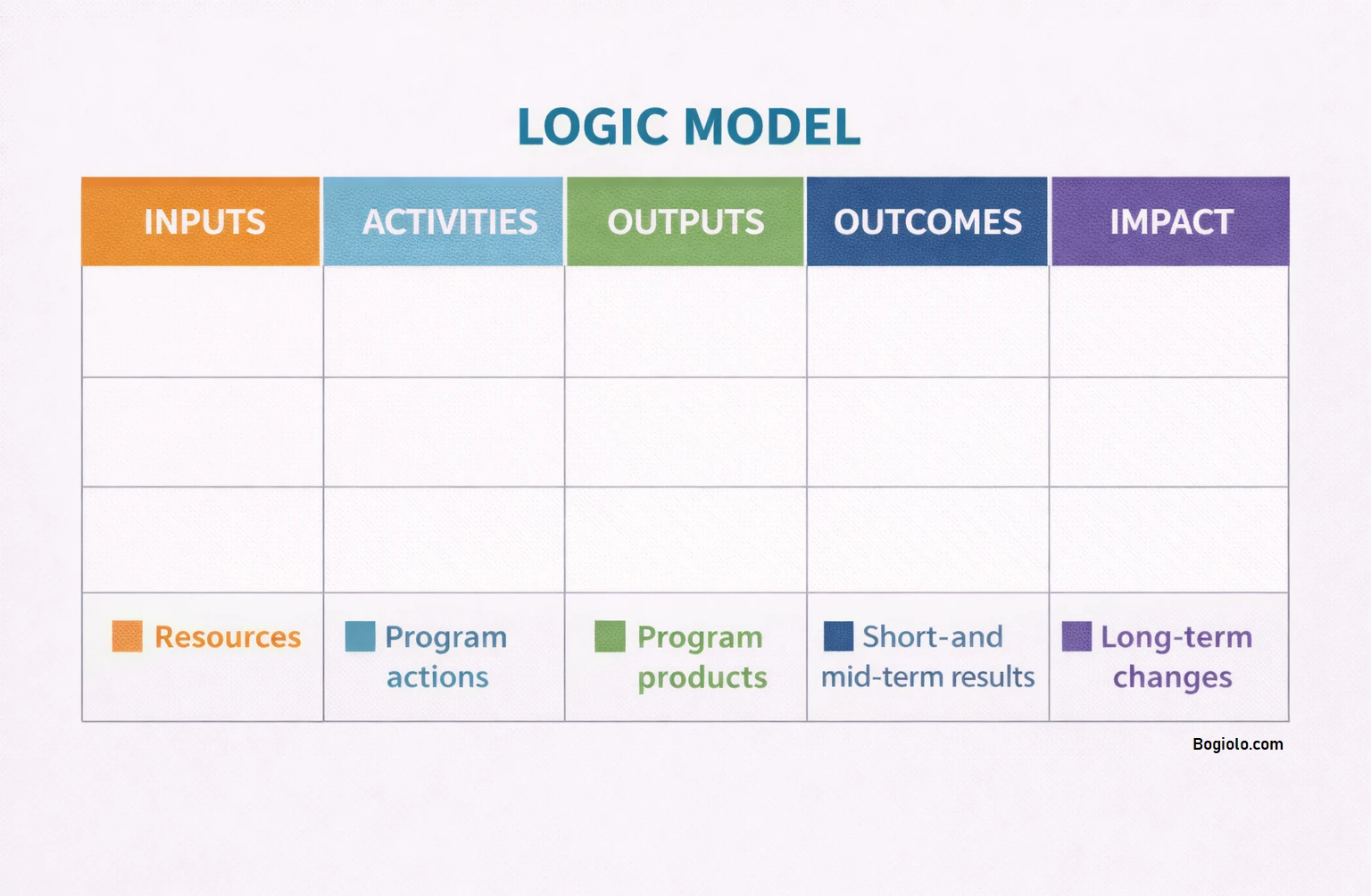
A logic model is a visual representation of how a program is supposed to work. It outlines the resources, activities, outputs, outcomes, and impacts of a program logically and sequentially. Logic models provide a clear and structured framework for understanding and communicating the theory of change behind a program. They help stakeholders to align their efforts, resources, and activities towards achieving the desired outcomes.
Logic models can vary in complexity, from simple one-page diagrams to detailed multi-page documents. They are typically composed of four main components:
1. Inputs/Resources: The resources, such as funding, staff, equipment, and materials, that are needed to implement the program.
2. Activities: The specific actions and interventions that will be carried out to achieve the program’s objectives.
3. Outputs: The immediate and tangible products or services that result from the activities.
4. Outcomes: The short-term, intermediate, and long-term changes or benefits that are expected to occur as a result of the program.
Why Build a Logic Model?
Building a logic model is essential for program planning and management for several reasons:
1. Clarity and Focus: Logic models help to clarify the purpose, goals, and intended outcomes of a program. They provide a roadmap for program implementation and ensure that all stakeholders are aligned towards a common vision.
2. Accountability: Logic models make the program’s theory of change explicit, allowing stakeholders to track progress, evaluate effectiveness, and report results.
3. Communication: Logic models provide a visual representation of the program’s logic and can help in communicating complex ideas and strategies to stakeholders, funders, and partners.
4. Strategic Planning: Logic models help in setting priorities, allocating resources effectively, and identifying potential gaps or areas for improvement in program design and implementation.
How to Use a Logic Model
Using a logic model involves several steps:
1. Identify the Program’s Goals and Objectives: Clearly define the desired outcomes and impacts of the program.
2. Map Out the Program Components: Identify the inputs/resources, activities, outputs, and outcomes of the program.
3. Create the Logic Model: Develop a visual representation of the program’s theory of change, using boxes and arrows to show the relationships between components.
4. Review and Refine: Share the logic model with stakeholders for feedback, and make revisions as needed to ensure clarity and accuracy.
5. Implement and Monitor: Use the logic model to guide program implementation, monitor progress, and evaluate outcomes.
6. Update and Adapt: Regularly review and update the logic model to reflect changes in the program context, goals, or strategies.
Tips for Successful Implementation
When using a logic model for program planning and management, consider the following tips for successful implementation:
- Engage Stakeholders: Involve key stakeholders in the development and review of the logic model to ensure buy-in and alignment.
- Keep It Simple: Use clear and concise language, avoid jargon, and focus on the most critical components of the program.
- Use Visuals: Incorporate visual elements such as charts, graphs, and diagrams to enhance understanding and communication.
- Monitor Progress: Regularly track and measure progress towards program goals and outcomes, and make adjustments as needed.
- Evaluate Effectiveness: Utilize the logic model as a framework for assessing the program’s effectiveness and making informed, data-driven decisions.
- Communicate Results: Share the outcomes and impact of the program with stakeholders, funders, and partners to demonstrate accountability and transparency.
- Iterate and Improve: Continuously review and refine the logic model based on feedback, lessons learned, and changes in the program environment.
Conclusion
In conclusion, logic models are valuable tools for program planning, implementation, management, evaluation, and reporting. They help to clarify program goals, align stakeholders, track progress, communicate strategies, and improve overall program effectiveness. By following the steps outlined in this article and implementing the tips for successful implementation, organizations can leverage the power of logic models to achieve their desired outcomes and make a meaningful impact in their communities.
Logic Model Template – Download
