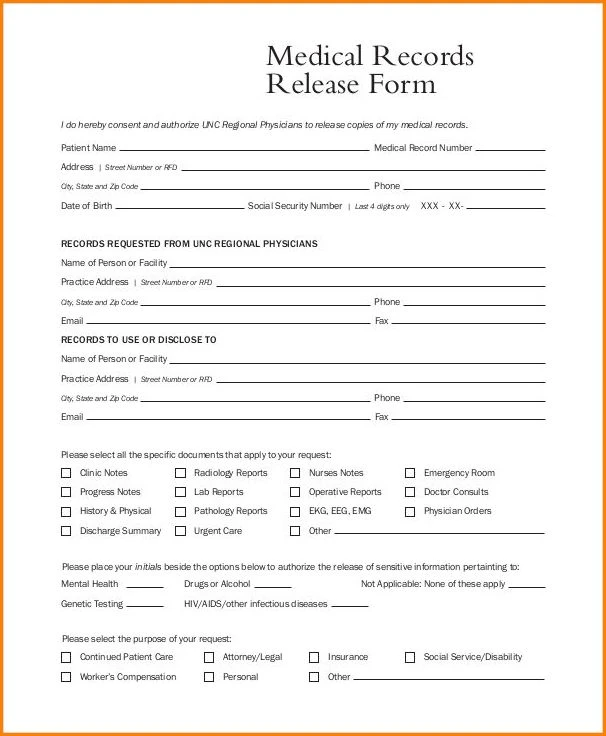
Medical records are a crucial aspect of healthcare, containing vital information about a patient’s medical history, treatments, and diagnoses. To ensure proper coordination of care and protect patient privacy, healthcare providers require legal authorization to share this sensitive information with specific third parties. This is where the medical records release form comes into play, granting patients control over who can access their private health information (PHI).
In this article, we will delve into the intricacies of the medical records release form, exploring its importance, contents, and how it works to safeguard patient data while facilitating necessary care coordination, legal processes, and insurance claims.
What is a Medical Records Release Form?
A medical records release form, also known as a consent or authorization form, is a legal document that gives patients the authority to authorize healthcare providers to disclose their private health information to designated third parties.
These third parties can include family members, other healthcare providers, employers, insurers, or legal entities. The form specifies what information can be shared, who receives it, and the purpose of the disclosure, ensuring that patient data is protected while enabling necessary communication and collaboration among relevant parties.
Why is a Medical Records Release Form Necessary?
The medical records release form plays a crucial role in maintaining patient privacy while facilitating essential aspects of healthcare delivery. Here are some reasons why this form is necessary:
- Ensuring Privacy: By requiring patient authorization for the disclosure of their medical records, the form helps protect sensitive health information from unauthorized access.
- Facilitating Care Coordination: Sharing medical records with other healthcare providers allows for seamless coordination of care, ensuring that all involved parties have access to relevant information for informed decision-making.
- Supporting Legal Processes: In legal proceedings or insurance claims, the medical records release form enables the sharing of pertinent health information to support the case or claim.
- Promoting Patient Empowerment: By giving patients control over who can access their medical records, the form empowers individuals to make informed choices about the sharing of their health information.
What to Include in a Medical Records Release Form
When drafting a medical records release form, certain key elements should be included to ensure clarity and compliance with legal requirements. Here are some essential components to include in the form:
- Patient Information: The form should include the patient’s name, date of birth, contact information, and any other identifying details to ensure accurate identification.
- Authorized Recipients: Specify the individuals or entities to whom the medical records can be disclosed, including their contact information and relationship to the patient.
- Scope of Information: Detail the specific types of health information that can be shared, such as medical history, diagnoses, treatments, and test results.
- Purpose of Disclosure: Clearly state the reason for sharing the medical records, whether it is for treatment, legal proceedings, insurance claims, or other purposes.
- Duration of Authorization: Specify the timeframe during which the authorization is valid, ensuring that the patient’s consent is current and relevant to the disclosure.
How to Fill Out a Medical Records Release Form
Filling out a medical records release form is a straightforward process that involves the following steps:
- Obtain the Form: Request a copy of the medical records release form from your healthcare provider or facility.
- Provide Patient Information: Fill in your personal details, including your name, date of birth, and contact information.
- Authorize Recipients: Specify the individuals or entities who are authorized to receive your medical records.
- Specify Information: Detail the types of health information that can be shared with the authorized recipients.
- Sign and Date: Sign and date the form to indicate your consent and authorization for the disclosure of your medical records.
Tips for Successful Medical Records Release
When completing a medical records release form, consider the following tips to ensure a smooth and successful process:
- Review the Form Carefully: Take the time to read through the form thoroughly and understand its contents before signing.
- Provide Accurate Information: Ensure that all the information you provide on the form is accurate and up-to-date to avoid any delays or complications.
- Limit Access to Necessary Parties: Only authorize the disclosure of your medical records to individuals or entities directly involved in your care or as required for specific purposes.
- Keep a Copy: Retain a copy of the signed form for your records and reference, especially if you may need to authorize future disclosures.
Conclusion
The medical records release form is a vital document that empowers patients to control the sharing of their private health information while enabling necessary communication and collaboration among healthcare providers, family members, insurers, and other relevant parties. By understanding the purpose and components of this form, patients can make informed decisions about who can access their medical records and for what purposes, ensuring the protection of their privacy and the seamless coordination of their care.
Medical Records Release Form Template – DOWNLOAD
