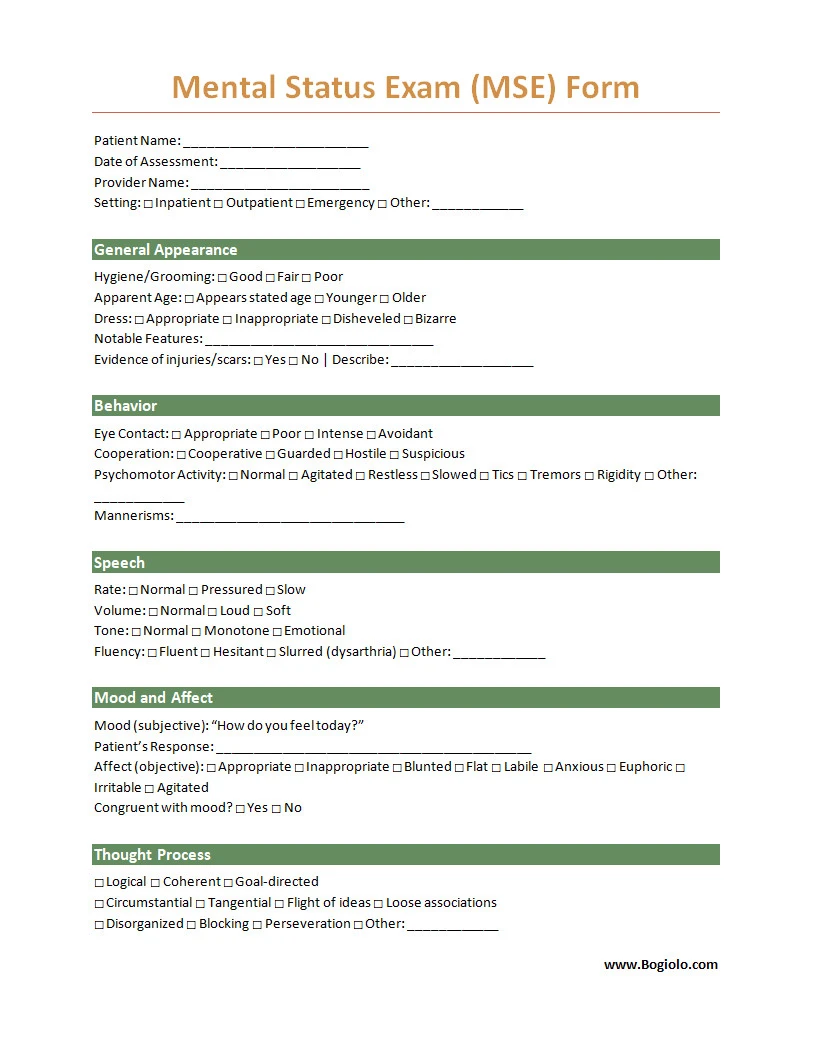
Mental Status Exam (MSE) is a critical tool used by healthcare providers, including psychiatrists, psychologists, and other professionals, to systematically evaluate an individual’s current mental state. This evaluation encompasses cognitive abilities, emotional state, and behavior, providing valuable insights into the patient’s mental functioning.
By conducting a thorough MSE, clinicians can identify potential areas of concern or impairment, leading to accurate diagnoses and effective management of various mental health conditions and neurological disorders that may impact mental processes.
What Is a Mental Status Exam?
A Mental Status Exam is a structured assessment that allows healthcare providers to gather information about a patient’s mental state. It involves observing and evaluating the individual’s appearance, behavior, speech, mood, affect, thought processes, perception, cognition, and insight. By examining these aspects, clinicians can gain a comprehensive understanding of the patient’s mental health and detect any abnormalities or signs of mental illness.
When conducting a Mental Status Exam, healthcare providers pay close attention to the following components:
- Appearance: Assessing the patient’s grooming, hygiene, and overall physical presentation.
- Behavior: Observing the individual’s movements, gestures, and interactions with others.
- Speech: Evaluating the patient’s rate of speech, tone, volume, and coherence.
- Mood and Affect: Noting the patient’s emotional state, including their prevailing mood and facial expressions.
- Thought Processes: Examining the coherence and logical flow of the individual’s thoughts.
- Perception: Assessing the patient’s sensory experiences and interpretation of reality.
- Cognition: Evaluating the individual’s memory, attention, concentration, and executive functioning.
- Insight: Determining the patient’s awareness and understanding of their mental health condition.
What Is Included In a Mental Status Exam?
A comprehensive Mental Status Exam typically includes a detailed assessment of the following areas:
The patient’s appearance, including their grooming, attire, and hygiene. This initial observation provides valuable information about the individual’s self-care habits and overall level of functioning.
The patient’s behavior, such as their motor activity, posture, and interactions with others. Observing these aspects can reveal any signs of agitation, restlessness, or social withdrawal that may indicate underlying mental health issues.
The patient’s speech and language abilities, including their rate of speech, fluency, articulation, and coherence. Changes in speech patterns or communication difficulties can be indicative of cognitive impairment or emotional distress.
The patient’s mood and affect, which refer to their emotional state and the way they express their feelings. Assessing mood involves identifying the predominant emotion (e.g., sadness, anger, euphoria), while evaluating affect focuses on the appropriateness and range of emotional expressions.
The patient’s thought processes, including the content and organization of their thoughts. Clinicians look for signs of logical thinking, rationality, and coherence in the individual’s verbal responses and narratives.
The patient’s perception of reality, which involves assessing their sensory experiences and interpretation of the environment. Delusions, hallucinations, or distorted perceptions may signify underlying psychiatric conditions or neurological disorders.
The patient’s cognitive abilities, such as memory, attention, concentration, and problem-solving skills. Testing these cognitive functions provides insights into the individual’s intellectual capacity and executive functioning.
The patient’s insight and judgment reflect their awareness of their mental health condition and the ability to make sound decisions. Impairments in insight or judgment can impact the individual’s treatment adherence and overall prognosis.
When Do Healthcare Providers Perform a Mental Status Exam?
Healthcare providers may conduct a Mental Status Exam in various settings and situations, including:
Initial psychiatric evaluations: When assessing a new patient with suspected mental health issues, clinicians often perform a comprehensive Mental Status Exam to establish a baseline and formulate a differential diagnosis.
Emergency room visits: In emergencies involving acute psychiatric symptoms or behavioral disturbances, healthcare providers may conduct a rapid MSE to assess the patient’s immediate mental state and determine the appropriate course of action.
Follow-up appointments: During routine follow-up visits or therapy sessions, clinicians may periodically administer a Mental Status Exam to monitor changes in the patient’s mental status, track treatment progress, and adjust therapeutic interventions as needed.
Forensic assessments: In legal settings, such as court-ordered evaluations or disability determinations, forensic experts may use a Mental Status Exam to provide objective assessments of an individual’s mental health status and capacity to make informed decisions.
How To Examine Mental Status?
Conducting a thorough Mental Status Exam requires clinicians to follow a structured and systematic approach to ensure comprehensive evaluation and accurate interpretation of findings. The following steps outline the process of examining mental status:
Establish rapport: Begin the assessment by establishing a rapport with the patient to promote trust, openness, and cooperation. Create a comfortable and non-threatening environment to encourage the individual to share their thoughts and feelings.
Observe appearance and behavior: Start the examination by observing the patient’s appearance, including their physical presentation, grooming, attire, and hygiene. Pay attention to any signs of restlessness, agitation, motor abnormalities, or social withdrawal that may indicate underlying mental health issues.
Evaluate speech and language: Assess the patient’s speech and language abilities by observing their rate of speech, fluency, articulation, and coherence. Listen to the content of their communication for any signs of disorganized thinking, tangentiality, or thought blocking that may suggest cognitive impairment or psychiatric symptoms.
Assess mood and affect: Determine the patient’s emotional state by exploring their mood, affect, and overall demeanor. Note any changes in mood stability, emotional reactivity, or affective expressions that may indicate underlying psychiatric conditions or mood disorders.
Examine thought processes: Explore the patient’s thought processes by engaging them in conversation and assessing the content and organization of their thoughts. Look for logical thinking, rationality, coherence, and goal-directedness in their verbal responses to evaluate the integrity of their cognitive functioning.
Test cognition and memory: Evaluate the patient’s cognitive abilities, including memory, attention, concentration, and problem-solving skills. Use standardized cognitive tests and memory tasks to assess the individual’s intellectual capacity, information processing speed, and working memory abilities.
Assess perception and reality testing: Investigate the patient’s sensory experiences and interpretation of reality by inquiring about any auditory or visual hallucinations, delusions, or paranoid beliefs. Test their insight and judgment by asking them to reflect on their mental health condition and make informed decisions about their treatment options.
Conclusion
In conclusion, conducting a Mental Status Exam is an essential component of mental health assessment and treatment. By systematically evaluating an individual’s cognitive abilities, emotional state, and behavior, healthcare providers can gain valuable insights into the patient’s mental functioning and identify potential areas of concern or impairment. The information gathered through a comprehensive MSE helps clinicians diagnose and manage various mental health conditions and neurological disorders effectively. Through careful observation and structured assessment techniques, healthcare professionals can support patients in achieving optimal mental well-being and quality of life.
Mental Status Exam Template – DOWNLOAD
