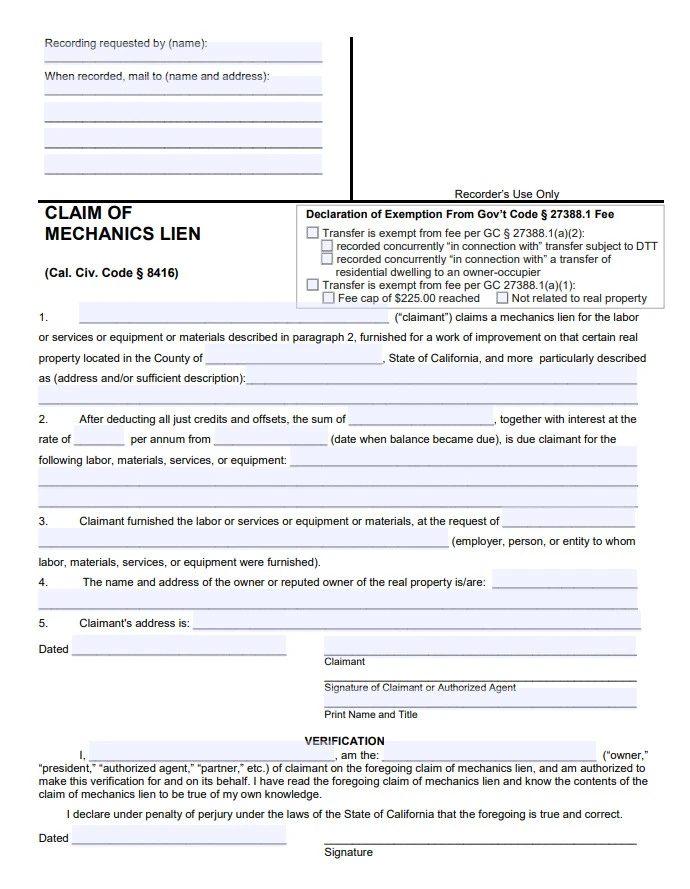
Construction projects can be complex processes that involve various parties, from contractors and subcontractors to suppliers and laborers. However, one common issue that arises in these projects is payment disputes. To address this concern, many construction professionals turn to mechanics lien forms as a way to secure payment for the work they have performed or the materials they have supplied.
In this article, we will delve into the mechanics lien form, its significance, and how it can protect the interests of those involved in construction projects.
What is a Mechanics Lien?
A mechanics lien, also known as a construction lien, is a legal document filed by contractors, subcontractors, suppliers, or laborers against a property to secure payment for work performed or materials supplied for its improvement. Its primary purpose is to create a “hold” on the property, preventing the owner from selling it without settling the outstanding debt.
Mechanics’ liens serve as a form of security for those who have contributed to the improvement of a property but have not been paid for their services or materials.
Why Mechanic’s Liens Are Allowed?
Mechanic’s liens are allowed to protect the rights of contractors, subcontractors, suppliers, and laborers who have provided services or materials for the improvement of a property. Without the protection of a mechanics lien, these parties may be at risk of not receiving payment for their work, which can have serious financial consequences for their businesses.
Mechanic’s liens provide a legal mechanism for these parties to secure payment and protect their interests in construction projects.
How Mechanic’s Lien Law Works
When a contractor, subcontractor, supplier, or laborer files a mechanics lien against a property, they must follow specific legal procedures outlined in the mechanics’ lien law. These procedures typically involve notifying the property owner, providing a detailed account of the services or materials provided, and filing the mechanics lien with the appropriate government office. Once the mechanics lien is filed, it creates a legal claim against the property, which can prevent the owner from selling or refinancing the property until the outstanding debt is resolved.
- Legal Procedures: Contractors must follow specific legal procedures when filing a mechanics lien, including providing notice to the property owner.
- Detailed Account: Contractors must provide a detailed account of the services or materials provided for the improvement of the property.
- Filing the Lien: The mechanics lien must be filed with the appropriate government office to create a legal claim against the property.
Items That Can Be Included in the Amount of a Lien
When filing a mechanics lien, contractors, subcontractors, suppliers, or laborers can include various items in the amount of the lien. These items typically include the cost of the services or materials provided, any additional expenses incurred during the project, and any interest or penalties associated with late payments. Including these items in the mechanics lien can help ensure that the party filing the lien receives fair compensation for their contributions to the project.
What happens when a lien is filed against your property?
When a lien is filed against your property, it can have significant implications for your ownership rights. The presence of a mechanics lien on your property can prevent you from selling or refinancing the property until the outstanding debt is resolved. If you fail to address the mechanics lien, the party who filed the lien may be able to foreclose on your property to recover the amount owed. Therefore, it is essential to address any mechanics liens filed against your property promptly to protect your ownership rights.
Avoiding Mechanic’s Liens
While mechanics liens can provide valuable protection for contractors, subcontractors, suppliers, and laborers, they can also be a source of contention in construction projects. To avoid the potential complications associated with mechanics liens, property owners should prioritize timely payments to contractors and ensure clear communication throughout the project. By maintaining open lines of communication and addressing payment issues promptly, property owners can minimize the risk of mechanics liens being filed against their property.
Mechanics Lien Form Template – DOWNLOAD
