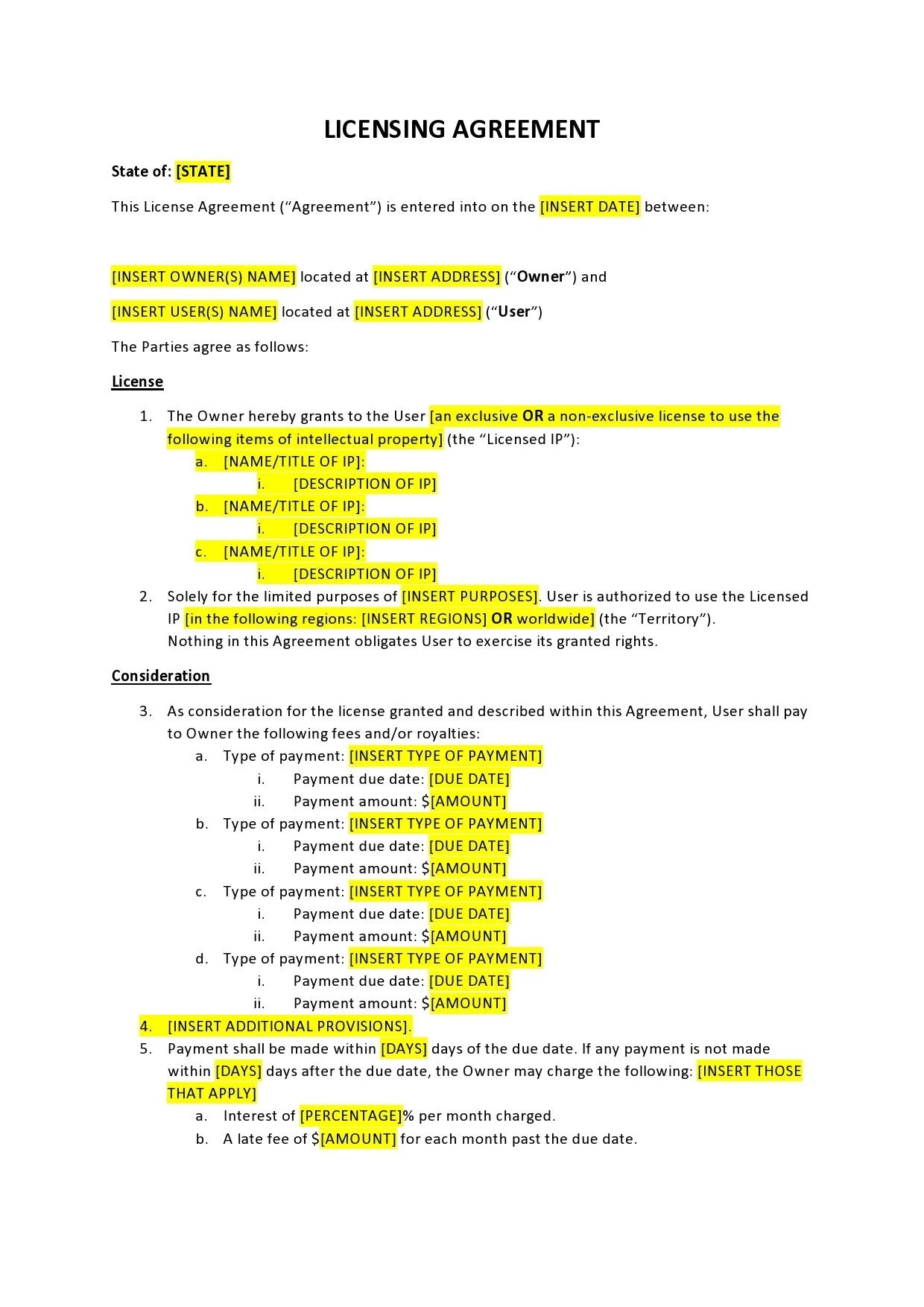
When it comes to protecting and leveraging intellectual property, licensing agreements play a crucial role. These agreements grant a party, known as the licensee, the legal right to use another party’s intellectual property, such as patents, trademarks, or copyrights, under specific terms and conditions.
This arrangement allows the licensee to utilize the property for commercial or other purposes, while the licensor retains ownership and can generate revenue through royalties or licensing fees.
In this article, we will delve into the intricacies of licensing agreements, exploring their benefits, drawbacks, common types, terms, and how to draft one effectively.
What Is a Licensing Agreement?
At its core, a licensing agreement is a legal contract between two parties that outlines the terms and conditions for the use of a particular intellectual property. The licensor, who owns the intellectual property rights, permits the licensee to use the property in exchange for a fee or compensation.
This compensation can take the form of royalties, licensing fees, or other mutually agreed-upon arrangements.
Why Should You Use a Licensing Agreement?
Licensing agreements offer several benefits for both the licensor and licensee:
- Revenue Generation: Licensors can generate additional income by allowing others to use their intellectual property in exchange for fees.
- Market Expansion: Licensees can access new markets or technologies by leveraging the intellectual property of others.
- Risk Mitigation: Licensors can mitigate the risk of infringement by legally permitting others to use their intellectual property.
- Collaboration Opportunities: Licensing agreements can foster collaboration between parties, leading to mutually beneficial partnerships.
Disadvantages of Licensing Agreements
While licensing agreements offer numerous advantages, they also come with some drawbacks:
- Loss of Control: Licensors may lose control over how their intellectual property is used by licensees.
- Competitive Risks: Licensees may gain insights into the licensor’s technology or market strategies, posing competitive risks.
- Legal Complexity: Drafting and enforcing licensing agreements can be legally complex and require expert assistance.
Types of Commonly Licensed Intellectual Property (IP)
Intellectual property that is commonly licensed includes:
- Patents: Rights granted to inventors for their inventions, allowing them to exclude others from making, using, or selling the patented invention.
- Trademarks: Distinctive signs, symbols, or logos used to identify and distinguish the goods or services of one party from those of others.
- Copyrights: Rights granted to creators for their original works, such as literary, artistic, or musical creations.
Common Terms of a Licensing Agreement
Key terms typically included in a licensing agreement are:
- Licensing Scope: Defines the rights and limitations granted to the licensee.
- Royalty Payments: Specifies the amount and frequency of payments to the licensor.
- Term and Termination: Sets the duration of the agreement and conditions for termination.
- Intellectual Property Rights: Clarifies ownership and protection of the intellectual property.
How to Write a Licensing Agreement
When drafting a licensing agreement, it’s essential to:
- Define the Parties: Clearly identify the licensor and licensee, including their contact information.
- Specify the Intellectual Property: Describe the intellectual property being licensed, including any limitations or exclusions.
- Outline the Terms: Detail the rights granted, compensation, duration, and any other relevant terms.
- Include Legal Protections: Ensure the agreement complies with relevant laws and includes provisions for enforcement.
By understanding the nuances of licensing agreements and how to navigate their complexities, parties can effectively protect and monetize their intellectual property assets. Whether you are a licensor seeking to generate revenue or a licensee looking to expand your market reach, a well-crafted licensing agreement can serve as a valuable tool for achieving your business objectives.
Licensing Agreement Template – Word
