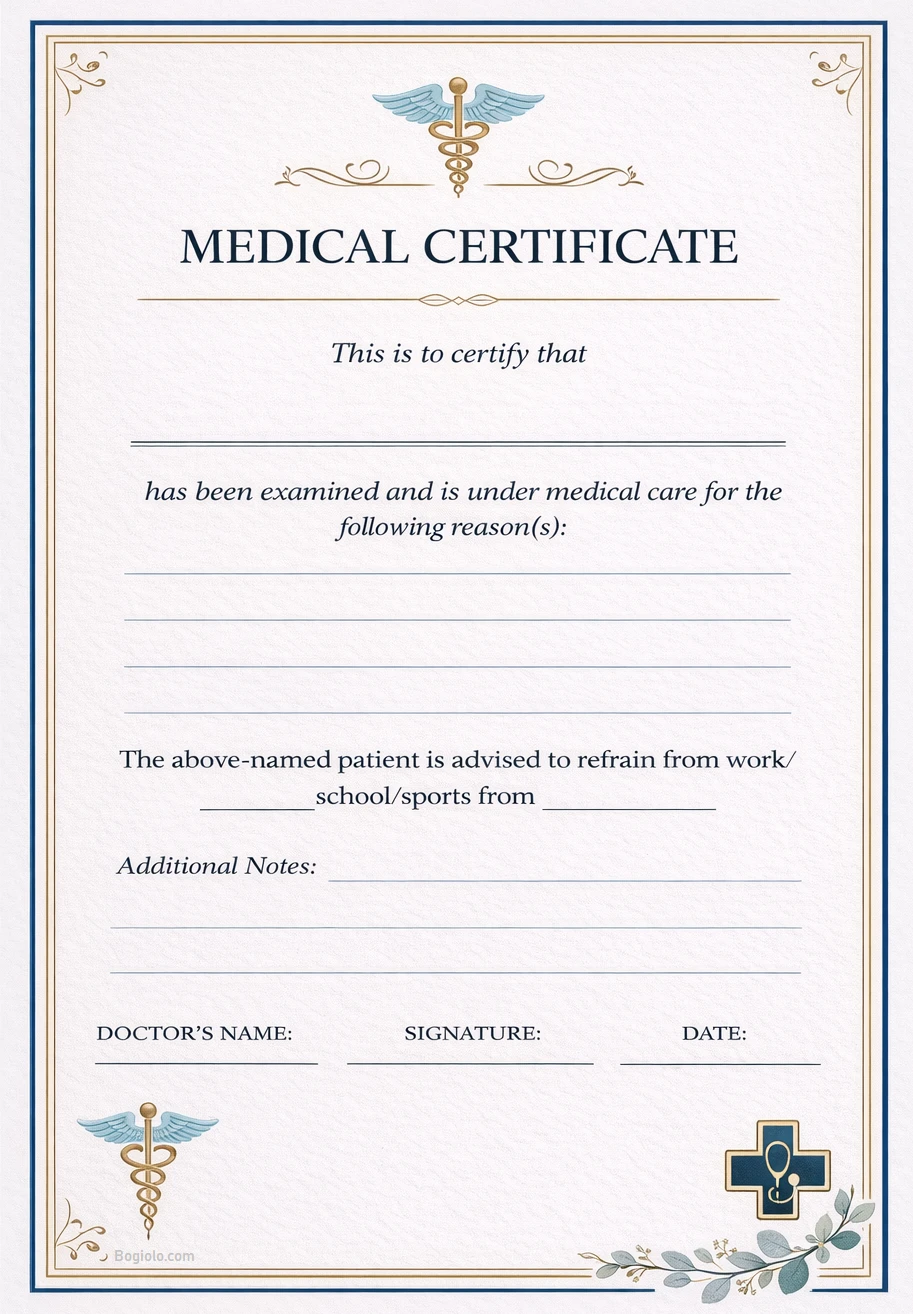
Medical certificates are official documents that provide a medically-substantiated statement about a person’s health for third parties such as employers, schools, or legal/insurance entities.
These certificates are crucial for proving a medical condition, justifying absences, confirming fitness for a job or specific activity, supporting insurance claims, or documenting the need for workplace accommodations. In this article, we will delve deeper into the key aspects of medical certificates and why they are essential in various situations.
What is a Medical Certificate?
A medical certificate is a written statement from a healthcare professional that verifies the health status of an individual. It contains details about the person’s medical condition, treatment received, and any restrictions or accommodations needed.
These certificates are used to provide official documentation of a person’s health status for external parties.
Why are Medical Certificates Important?
Medical certificates play a crucial role in various aspects of life, including work, education, and legal matters. Here are some key reasons why these documents are important:
- Verification of Health Status: Medical certificates provide an official verification of a person’s health condition, which is essential for employers, schools, insurance companies, and legal entities.
- Justification of Absences: In cases of illness or injury, a medical certificate can justify an individual’s absence from work or school, ensuring that they are not penalized for being unable to attend.
- Confirmation of Fitness: Medical certificates can confirm that an individual is fit to perform specific job duties or engage in certain activities, ensuring safety and preventing potential risks.
- Support for Insurance Claims: When filing insurance claims related to health issues, a medical certificate is often required to provide evidence of the medical condition and treatment received.
- Documentation of Workplace Accommodations: For individuals requiring accommodations in the workplace due to a medical condition, a medical certificate can document the need for specific adjustments or modifications.
Key Elements of a Medical Certificate
When obtaining a medical certificate, several key elements should be included to ensure its validity and effectiveness. These elements typically consist of:
- Personal Information: The patient’s name, age, gender, and contact details should be clearly stated on the certificate.
- Medical Condition: A detailed description of the medical condition, including symptoms, diagnosis, and treatment received, should be provided.
- Duration of Illness: The period of illness or incapacity, along with the expected duration of recovery, should be mentioned in the certificate.
- Recommendations: Any recommendations or restrictions related to work, school, or activities should be outlined by the healthcare professional.
- Signature and Stamp: The medical certificate should be signed and stamped by the healthcare provider to confirm its authenticity.
How to Obtain a Medical Certificate
Obtaining a medical certificate typically involves scheduling an appointment with a healthcare provider, such as a doctor, nurse practitioner, or specialist.
During the appointment, the healthcare professional will assess the individual’s health condition, provide necessary treatment, and issue a medical certificate if required. It is important to communicate the purpose of the certificate to the healthcare provider to ensure that the document contains relevant information.
Tips for Successful Use of Medical Certificates
When using a medical certificate for various purposes, it is essential to keep the following tips in mind:
- Provide Accurate Information: Ensure that all details on the medical certificate are accurate and up-to-date to avoid any discrepancies.
- Submit the Certificate Promptly: Submit the medical certificate to the relevant party on time to meet deadlines and requirements.
- Follow Recommendations: Adhere to any recommendations or restrictions stated in the certificate to support recovery and prevent further health issues.
- Keep a Copy: Maintain a copy of the medical certificate for your records and future reference, if needed.
- Seek Clarification: If you have any questions or concerns about the content of the medical certificate, do not hesitate to seek clarification from the healthcare provider.
Medical Certificate Template – DOWNLOAD
