In today’s competitive business world, the protection of sensitive and confidential information is paramount for the success and sustainability of any organization. Non-disclosure agreements (NDAs) for employees serve as a crucial tool in safeguarding trade secrets, intellectual property, and proprietary business data from being shared with competitors or the public.
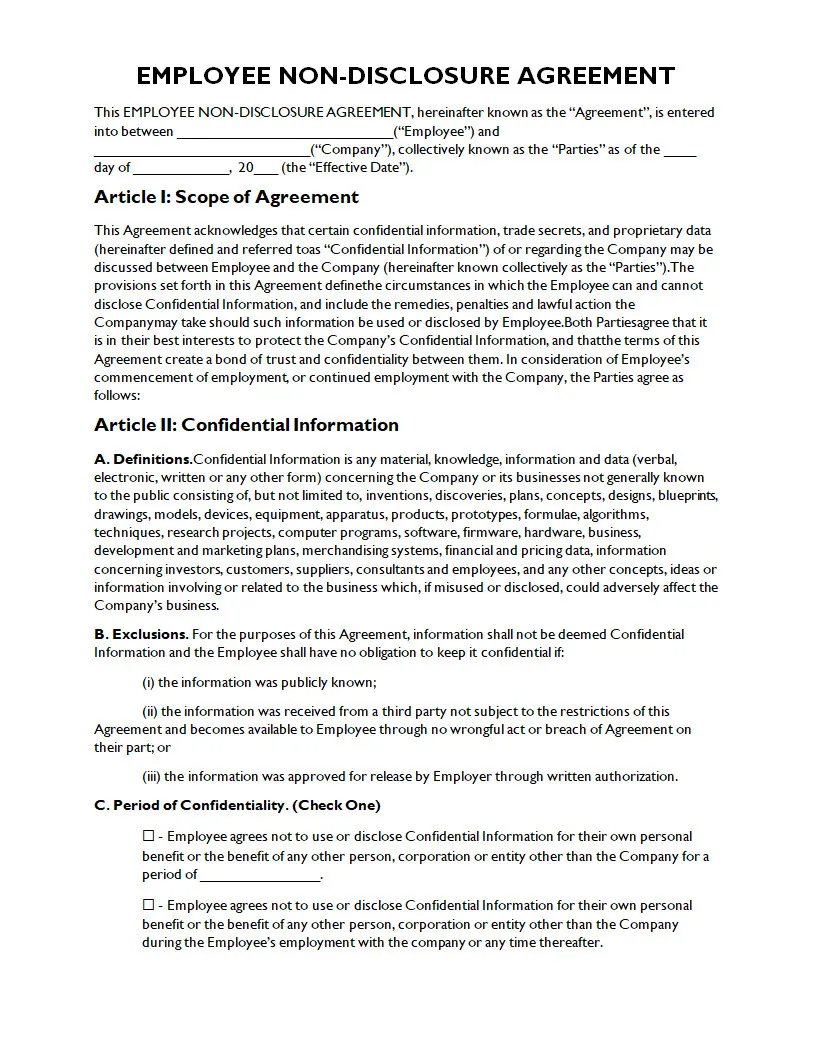
By legally binding employees to maintain confidentiality during and after their employment, NDAs help companies keep their competitive edge, protect their financial interests, and prevent potential damage that could arise from leaks or breaches of sensitive information.
What is a Non-Disclosure Agreement?
A non-disclosure agreement, commonly referred to as a confidentiality agreement, is a legal contract between an employer and an employee that outlines the confidential information to which the employee will have access during the course of their employment.
These agreements are designed to prevent employees from disclosing or sharing proprietary information, trade secrets, or intellectual property with individuals outside the organization, including competitors and the general public. By signing an NDA, employees commit to maintaining the confidentiality of the company’s sensitive data and understand the ramifications of violating the agreement.
Why Are NDAs Important for Protecting Sensitive Information?
Non-disclosure agreements play a critical role in protecting a company’s sensitive information for several compelling reasons.
Preserving Intellectual Property
Another essential aspect of NDAs is their role in safeguarding intellectual property, including patents, trademarks, copyrights, and other creative works. By preventing employees from sharing or misusing intellectual property, companies can protect their innovations and creative assets from exploitation or theft, preserving their competitive position in the industry.
Preventing Financial Damage
NDAs are also instrumental in preventing potential financial damage that could result from the unauthorized disclosure of sensitive information. If confidential data, such as financial reports, strategic plans, or client lists, were to be leaked or shared improperly, a company could suffer significant financial losses, damage to its reputation, and potential legal consequences. By requiring employees to sign NDAs, organizations can mitigate the risks associated with data breaches and protect their financial interests.
Securing Competitive Advantage
Moreover, non-disclosure agreements help companies secure and maintain their competitive advantage by ensuring that critical information remains confidential and inaccessible to competitors. In industries where innovation, research, and development are key drivers of success, protecting trade secrets and proprietary data through NDAs is essential for staying ahead of the competition and retaining market share.
Building Trust and Confidence
By implementing NDAs for employees, organizations demonstrate their commitment to protecting sensitive information and fostering a culture of trust and confidentiality within the workplace. Employees who understand the importance of maintaining confidentiality are more likely to take their responsibilities seriously and act in the best interests of the company, strengthening the overall security of the organization’s valuable assets.
Key Elements of a Non-Disclosure Agreement
When crafting a non-disclosure agreement for employees, it is essential to include specific key elements that ensure the agreement is comprehensive, clear, and legally enforceable. These key elements provide a framework for outlining the confidential information to be protected, the obligations of the employee regarding confidentiality, the duration of the agreement, and the consequences of breaching the terms.
Definition of Confidential Information
One of the critical components of an NDA is defining the confidential information that is subject to protection. This section of the agreement should clearly specify the types of data, documents, or materials that are considered confidential and outline the scope of information that employees are prohibited from disclosing or sharing. By providing a detailed description of what constitutes confidential information, companies can establish clarity and minimize ambiguity regarding the protected data.
Obligations of the Employee
The obligations of the employee regarding the confidentiality of sensitive information are a fundamental aspect of a non-disclosure agreement. This section outlines the responsibilities of the employee in safeguarding confidential data, including maintaining confidentiality, refraining from disclosing information to unauthorized parties, and using the information only for authorized business purposes. By clearly defining the obligations of the employee, companies can ensure that employees understand their role in protecting the organization’s valuable assets.
Duration of the Agreement
Another critical element of an NDA is specifying the duration for which the agreement will remain in effect. This includes outlining the start date of the agreement, the duration of the employee’s employment during which the NDA is active, and any post-employment obligations related to confidentiality. By establishing a clear timeline for the agreement’s validity, companies can ensure that sensitive information remains protected both during and after the employee’s tenure with the organization.
Consequences of Breach
One of the most crucial aspects of a non-disclosure agreement is outlining the consequences that may result from a breach of the terms. This section typically includes the penalties or legal actions that the company may take in the event of a breach, such as termination of employment, civil litigation, monetary damages, or injunctive relief. By clearly delineating the repercussions of violating the NDA, companies can deter employees from engaging in unauthorized disclosure or misuse of confidential information.
Exceptions to Confidentiality
While non-disclosure agreements are designed to protect sensitive information, it is essential to include provisions for exceptions to confidentiality in certain circumstances. These exceptions may include information that is already in the public domain, information that is independently developed by the employee without reference to the confidential data, or information that must be disclosed in compliance with applicable laws or regulations. By incorporating exceptions to confidentiality, companies can ensure that employees understand the limitations of the NDA and are aware of situations where disclosure may be permissible.
How to Implement NDAs for Employees
Implementing non-disclosure agreements for employees involves a series of steps that are essential for ensuring the effectiveness and enforceability of the agreements. From drafting comprehensive NDAs to providing employee training and monitoring compliance, proper implementation is key to protecting an organization’s sensitive information and maintaining a culture of confidentiality within the workplace.
Consultation with Legal Counsel
One of the first steps in implementing NDAs for employees is to consult with legal counsel to draft a comprehensive agreement that aligns with the organization’s specific needs and complies with relevant laws and regulations. Legal professionals can provide guidance on drafting clear and enforceable NDAs that protect the company’s confidential information and establish a strong legal foundation for the agreement.
Customization of NDAs
It is crucial to customize non-disclosure agreements to suit the unique requirements and operations of the organization. By tailoring NDAs to address the specific types of confidential information, industry regulations, and business practices of the company, organizations can ensure that the agreements effectively protect their sensitive data and align with their overall risk management strategy.
Employee Training and Education
Providing employees with comprehensive training on the importance of confidentiality and the specific requirements outlined in the NDA is essential for ensuring compliance and understanding. Training sessions should cover the scope of protected information, the obligations of employees regarding confidentiality, the consequences of breaching the agreement, and best practices for maintaining data security. By educating employees on the significance of confidentiality, companies can foster a culture of trust and accountability within the organization.
Regular Review and Updates
As business operations, technologies, and regulations change, it is essential to review and revise NDAs to reflect any modifications in the types of confidential information being protected, employee responsibilities, or legal requirements. By conducting regular reviews of the agreements and making necessary updates, companies can enhance the effectiveness of their confidentiality measures and adapt to new challenges or opportunities in safeguarding sensitive information.
Monitoring Compliance
Monitoring employee compliance with non-disclosure agreements is a critical aspect of ensuring that sensitive information remains secure and protected. Organizations should implement measures to track and verify employee adherence to the terms of the NDA, such as conducting regular audits, implementing data security protocols, and providing channels for reporting potential breaches. By actively monitoring compliance and addressing any violations promptly, companies can mitigate the risks of data leaks and maintain the integrity of their confidential information.
Enforcement of NDAs
In cases where a breach of the non-disclosure agreement occurs, companies need to take swift and appropriate action to enforce the terms of the agreement and protect their sensitive information. This may involve initiating legal proceedings, seeking injunctive relief, pursuing damages for financial losses, or implementing disciplinary actions against the employee responsible for the breach. By demonstrating a commitment to enforcing NDAs, organizations send a clear message about the importance of confidentiality and deter future breaches from occurring.
Tips for Successful Non-Disclosure Agreements
Creating effective non-disclosure agreements for employees requires careful consideration and attention to detail to ensure that the agreements serve their intended purpose of protecting sensitive information. By following some key tips and best practices, organizations can draft comprehensive NDAs that are clear, enforceable, and tailored to their specific needs.
Customize the Agreement to Your Business
When drafting an NDA, it is essential to customize the agreement to align with the unique aspects of your business operations, industry sector, and types of confidential information being protected. By tailoring the NDA to address the specific needs and risks of your organization, you can create a more effective and relevant agreement that provides comprehensive protection for your sensitive data.
Use Clear and Concise Language
Clarity and simplicity are key when drafting a non-disclosure agreement. Use clear and straightforward language to outline the obligations of the employee, the scope of protected information, and the consequences of breaching the agreement. Avoid using overly technical or convoluted language that may confuse employees and lead to misunderstandings about their responsibilities regarding confidentiality.
Consult with Legal Experts
Seeking guidance from legal professionals or experienced attorneys when drafting an NDA is crucial for ensuring that the agreement is legally sound, enforceable, and compliant with relevant laws and regulations. Legal experts can provide valuable insights into best practices for confidentiality agreements, help address any potential legal issues, and ensure that the NDA adequately protects the organization’s interests.
Include Clear Definitions and Exclusions
Define the confidential information to be protected in the NDA with specificity and detail to avoid ambiguity or confusion. Clearly outline the types of data, documents, or materials that are considered confidential and specify any exclusions or exceptions to confidentiality in the agreement. By providing clear definitions and exceptions, you can establish boundaries for what information is protected and ensure that employees understand the scope of their confidentiality obligations.
Communicate Expectations Clearly
When presenting employees with an NDA, it is essential to communicate the expectations and requirements of the agreement clearly and effectively. Provide employees with a thorough explanation of the purpose of the NDA, their responsibilities regarding confidentiality, and the consequences of breaching the agreement. Encourage open communication and address any questions or concerns that employees may have about the NDA to ensure their full understanding and compliance.
Implement Training and Education
Offering training and educational sessions on confidentiality and the NDA is essential for ensuring that employees understand their obligations and the importance of protecting sensitive information. Provide employees with the knowledge and resources they need to comply with the agreement, including best practices for data security, reporting procedures for suspected breaches, and guidelines for handling confidential information. By investing in employee education, you can strengthen compliance with the NDA and foster a culture of confidentiality within the organization.
Review and Update Regularly
Regularly reviewing and updating non-disclosure agreements is crucial for maintaining the relevance and effectiveness of the agreements over time. Conduct periodic reviews of the NDA to ensure that it aligns with current business practices, addresses new risks or challenges, and reflects any changes in the organization’s operations or sensitive information. By staying proactive in reviewing and updating NDAs, you can enhance the security of your confidential data and adapt to evolving threats to information security.
Non-disclosure Agreement Template for Employees – DOWNLOAD
