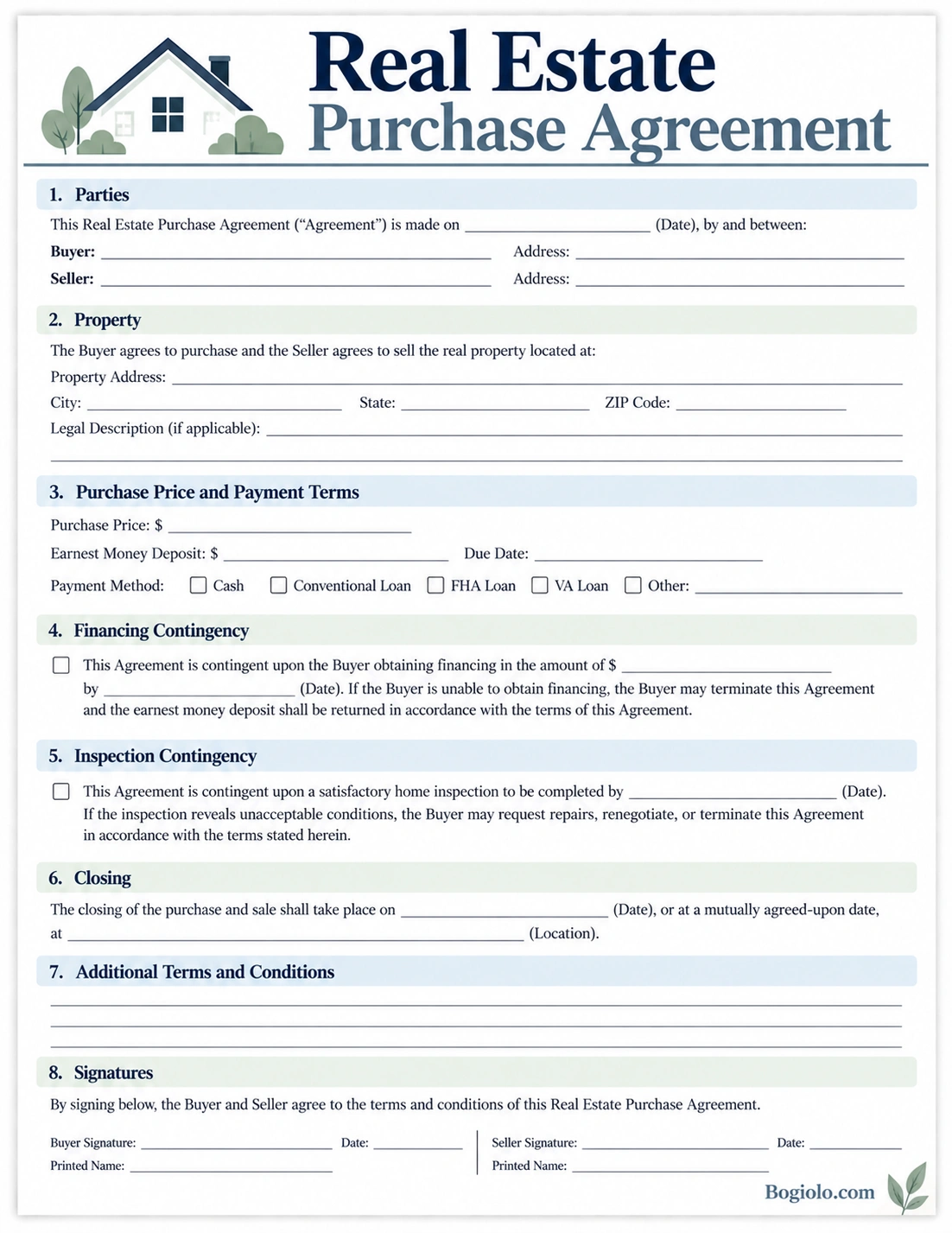
A Real Estate Purchase Agreement is an important document used to outline the terms and conditions of a property sale between a buyer and seller. It puts the details of the transaction in writing so both parties understand what is being purchased, how much it costs, when the sale will close, and what conditions must be satisfied before the transaction can be completed.
A well-prepared purchase agreement can help reduce misunderstandings by clearly defining the rights, responsibilities, deadlines, and obligations of both parties. Depending on the transaction and local requirements, the agreement may address financing, inspections, appraisals, earnest money, title matters, closing costs, and other contingencies.
Because real estate transactions can involve significant legal and financial obligations, the exact requirements for a purchase agreement can vary by state and transaction. Buyers and sellers should consider having the agreement reviewed by an appropriate real estate professional or attorney before signing.
What Is a Real Estate Purchase Agreement?
A Real Estate Purchase Agreement is a written contract between a buyer and seller that establishes the terms of a real estate transaction. It identifies the property, purchase price, payment arrangements, important dates, contingencies, and other conditions that apply to the sale.
Once properly completed and signed, the agreement can create contractual obligations for both parties. This is why the information should be accurate, complete, and consistent with what the buyer and seller have agreed upon.
A real estate purchase contract may be used for transactions involving a house, condominium, townhouse, vacant land, or other types of real property. The appropriate form and required provisions can differ depending on the location and type of transaction.
What Should a Real Estate Purchase Agreement Include?
A purchase agreement should clearly describe the major terms of the proposed property transaction. While the exact contents can vary, many agreements address several important areas.
1. Buyer and Seller Information
The agreement should identify the parties involved in the transaction. This generally includes the legal names of the buyer or buyers and seller or sellers.
Accurate names are important because the agreement establishes contractual obligations between the identified parties. If a company, trust, estate, or other legal entity is involved, additional information or documentation may be necessary.
2. Property Description
The agreement should identify the property being sold. A typical description may include the street address, city, state, ZIP code, and other identifying information.
Depending on the transaction, the agreement may also reference a legal property description or parcel information. Buyers should make sure the property description corresponds to the property they intend to purchase.
3. Purchase Price
The purchase price is one of the most important terms in a real estate purchase agreement. It specifies the amount the buyer agrees to pay for the property.
The agreement may also explain how the purchase price will be paid, including the amount of earnest money, financing arrangements, down payment, and remaining balance due at closing.
4. Earnest Money Deposit
Many real estate transactions involve an earnest money deposit. This is an amount provided by the buyer according to the terms of the agreement and is generally held according to applicable transaction procedures.
The purchase agreement should explain the amount of the deposit, when it must be delivered, who will hold it, and how it will be handled if the transaction is completed or terminated.
5. Financing Terms
If the buyer is obtaining a mortgage or other financing, the agreement may include a financing contingency. This section can specify the type or amount of financing, deadlines, and what happens if the buyer cannot obtain financing under the stated conditions.
Clear financing terms can help both parties understand how the buyer’s loan approval affects the transaction and what deadlines must be met.
6. Inspection Contingency
A home inspection contingency can give the buyer an opportunity to inspect the property before completing the purchase. The agreement should explain the inspection period and any rights or options available if the inspection identifies problems.
Depending on the contract, the buyer may have the opportunity to request repairs, negotiate certain terms, accept the property as-is, or terminate the agreement under specified conditions.
7. Appraisal Contingency
An appraisal contingency may address situations in which the property’s appraised value differs from the agreed purchase price. The agreement should specify the applicable deadlines and the parties’ rights if the appraisal does not meet the required conditions.
8. Closing Date and Closing Details
The closing date identifies when the transaction is expected to be completed. The agreement may also identify the closing location, settlement process, possession date, and other important closing requirements.
Because multiple parties may be involved in closing, including lenders, title professionals, agents, and attorneys, clearly stated deadlines can help everyone coordinate the transaction.
Common Contingencies in a Real Estate Purchase Agreement
Contingencies are conditions that must be satisfied according to the terms of the agreement. They can help define what happens when certain events occur before closing.
Common real estate purchase agreement contingencies may include:
- Financing contingency: Addresses the buyer’s ability to obtain the required financing.
- Inspection contingency: Provides terms related to property inspections and identified issues.
- Appraisal contingency: Addresses the property’s appraised value in relation to the purchase price.
- Title contingency: Addresses title-related issues that could affect the transaction.
- Sale of existing property contingency: May apply when the buyer needs to sell another property before purchasing the new one.
- Document review contingency: May provide time to review specified property or transaction documents.
Not every transaction requires the same contingencies. The appropriate provisions depend on the property, transaction structure, financing, location, and agreement between the parties.
Why a Real Estate Purchase Agreement Is Important
A written purchase agreement gives the buyer and seller a shared reference point for the transaction. Instead of relying on verbal discussions, important terms can be documented in one contract.
A detailed agreement can help clarify:
- The identity of the buyer and seller
- The property being purchased
- The agreed purchase price
- The payment and financing arrangements
- The amount and handling of earnest money
- Inspection and appraisal requirements
- Important deadlines
- Closing arrangements
- Items included or excluded from the sale
- Responsibilities of the buyer and seller
- Conditions for modifying or terminating the agreement
Having these details in writing can reduce uncertainty and provide a clearer framework for resolving questions that arise during the transaction.
Important Terms to Review Before Signing
Before signing a real estate purchase contract, both parties should carefully review every section rather than focusing only on the purchase price.
Check the Property Details
Confirm that the property address and other identifying information are correct. Make sure the agreement accurately describes what is included in the sale.
Review All Deadlines
Pay close attention to financing, inspection, appraisal, document delivery, and closing deadlines. Missing a contractual deadline can affect the rights and obligations of the parties.
Understand Contingencies
Read each contingency carefully and understand what must happen, when it must happen, and what options may be available if the condition is not satisfied.
Review Included and Excluded Items
Items such as appliances, fixtures, window treatments, or other property-related items should be clearly addressed when they are part of the agreement. Avoid relying on informal conversations for important terms.
Understand Closing Costs
The agreement may specify which party is responsible for particular closing costs, fees, taxes, or other transaction expenses. These provisions should be reviewed carefully before signing.
Tips for Using a Real Estate Purchase Agreement
A purchase agreement works best when the terms are clear, specific, and consistent with the parties’ actual understanding of the transaction.
- Use accurate information: Double-check names, property information, dates, and financial figures.
- Be specific: Avoid vague language when describing important terms and responsibilities.
- Document changes: Put agreed changes in writing rather than relying on verbal conversations.
- Track deadlines: Keep a record of inspection, financing, appraisal, and closing dates.
- Review contingencies: Understand the conditions and deadlines associated with each contingency.
- Keep signed copies: Both parties should retain a complete copy of the executed agreement and related documents.
- Get professional guidance: Consider having the agreement reviewed by a qualified real estate attorney or other appropriate professional when necessary.
Real Estate Purchase Agreement vs. Other Real Estate Documents
A purchase agreement is not the same as every other document used during a property transaction. Different documents serve different purposes.
Purchase Agreement vs. Listing Agreement
A listing agreement is generally an agreement between a property owner and a real estate brokerage or agent concerning the marketing and sale of a property. A purchase agreement, on the other hand, establishes the terms agreed upon by the buyer and seller for the transaction.
Purchase Agreement vs. Deed
A purchase agreement establishes the contractual terms of the sale, while a deed is a document used to transfer ownership of real property according to applicable law and closing procedures.
Purchase Agreement vs. Bill of Sale
A bill of sale is generally used to document the transfer of personal property. A real estate purchase agreement is designed to establish the terms of a real property transaction.
Frequently Asked Questions
What is a Real Estate Purchase Agreement?
A Real Estate Purchase Agreement is a written contract that outlines the terms and conditions of a property sale between a buyer and seller. It can include the purchase price, financing, contingencies, closing date, and other transaction terms.
Is a Real Estate Purchase Agreement legally binding?
A properly executed purchase agreement may create legally enforceable obligations, but enforceability depends on the applicable law, contract language, required formalities, and specific circumstances. Because real estate laws vary by jurisdiction, professional legal guidance may be appropriate before signing.
What should be included in a real estate purchase contract?
Common provisions include buyer and seller information, property details, purchase price, earnest money, financing terms, contingencies, inspection provisions, appraisal provisions, closing details, additional terms, and signatures.
Can a buyer cancel a Real Estate Purchase Agreement?
Whether a buyer can cancel a purchase agreement depends on the contract and applicable law. A buyer may have termination rights under certain contingencies or other contractual provisions, but those rights and deadlines should be reviewed carefully.
Does a purchase agreement need an inspection contingency?
An inspection contingency is not necessarily required for every transaction. Whether it is included depends on the agreement between the parties and the circumstances of the purchase. Buyers should understand the risks and terms associated with accepting a property without an inspection contingency.
What is an appraisal contingency?
An appraisal contingency is a contract provision that addresses the situation where an appraisal does not meet specified requirements. The agreement should explain the applicable deadline and the parties’ options if the appraisal result creates an issue.
Can the terms of a purchase agreement be changed?
The parties may be able to modify an agreement if the contract and applicable law permit the change and the required parties agree to it. Material changes should generally be documented properly rather than handled through informal conversations.
Can I use a Real Estate Purchase Agreement Template?
A Real Estate Purchase Agreement Template can provide a useful starting point for organizing common transaction information. However, a generic template may not contain provisions required for a particular state, property, financing arrangement, or transaction. Review the template carefully and consider professional legal guidance before using it for an actual property sale.
Conclusion
A Real Estate Purchase Agreement provides a written framework for a property transaction by documenting the buyer’s and seller’s agreed terms. Important provisions can include the purchase price, property description, earnest money, financing, inspections, appraisals, contingencies, closing date, and additional conditions.
The clearer the agreement, the easier it can be for both parties to understand their responsibilities and important deadlines. Before signing, carefully review every provision and make sure the document reflects the actual terms of the transaction.
Because real estate contracts can have significant legal consequences and requirements vary by location, a template should not automatically be treated as a substitute for a jurisdiction-specific legal document. When appropriate, have the agreement reviewed by a qualified real estate professional or attorney before it is signed.
Download: Real Estate Purchase Agreement Template
