A purchasing contract is a written agreement between a buyer and a seller that sets out the terms of a purchase. It can define what will be purchased, the agreed price, payment terms, delivery requirements, product specifications, and the responsibilities of both parties.
By putting the key terms of a transaction in writing, a purchasing contract can give both parties a clear record of what they agreed to do. This can be especially useful for business purchases, recurring orders, equipment, materials, services, and other transactions where the details need to be clearly documented.
A well-organized purchasing contract template can make it easier to record the important terms of a transaction before the agreement is signed. The template below provides sections for buyer and seller information, goods or services, pricing, payment, delivery, quality requirements, terms, and signatures.
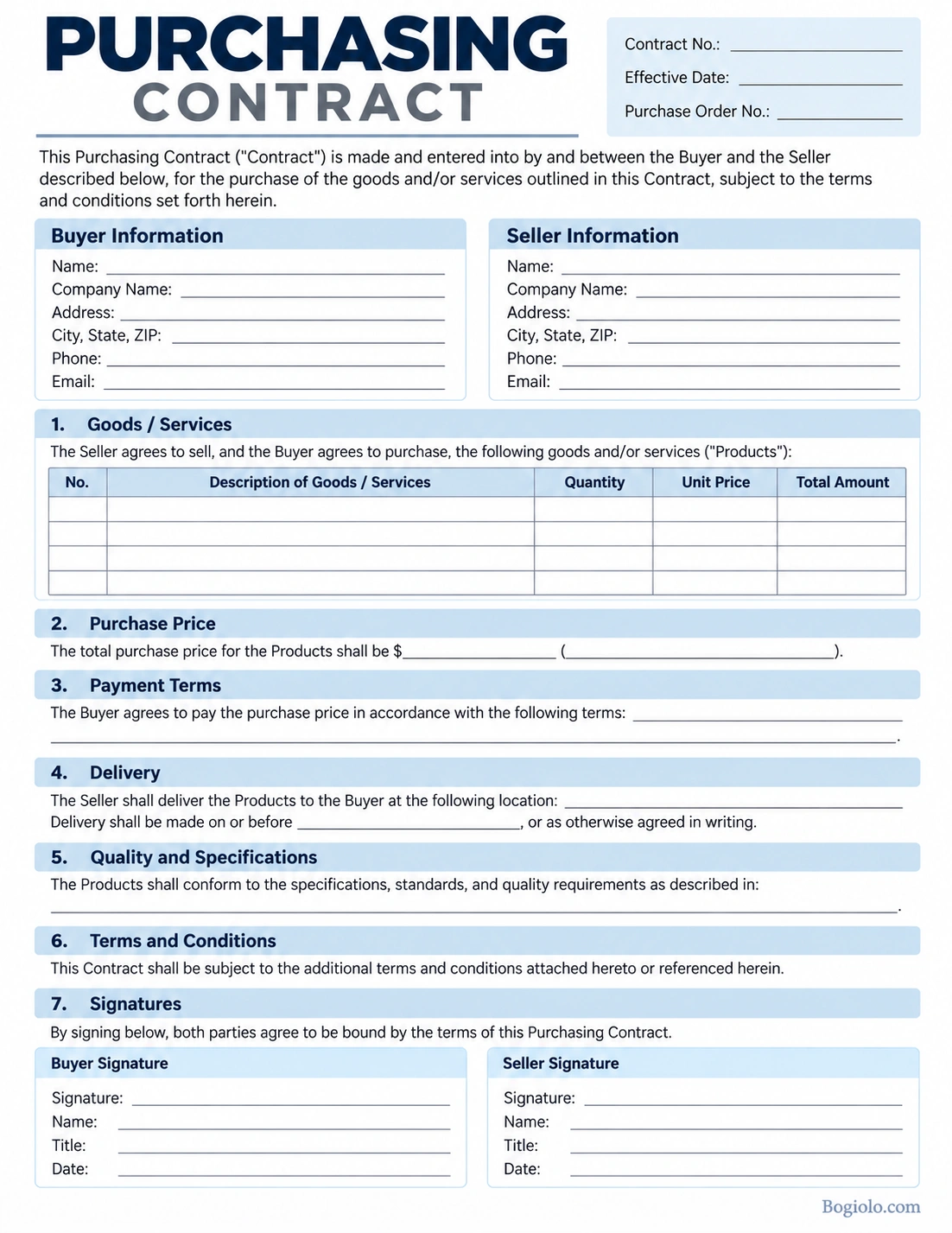
What Is a Purchasing Contract?
A purchasing contract is a formal agreement that establishes the terms of a transaction between a purchaser and a supplier or seller. It describes what the buyer agrees to purchase and what the seller agrees to provide.
The agreement can cover physical products, equipment, materials, services, or other items that are being purchased. Depending on the transaction, it may be a simple document covering a single purchase or a more detailed agreement for an ongoing business relationship.
Common terms in a purchasing contract include:
- Description of the goods or services
- Quantity and specifications
- Purchase price
- Payment schedule
- Delivery date and location
- Quality requirements
- Inspection or acceptance terms
- Responsibilities of the buyer and seller
- Additional terms and conditions
- Signatures and effective date
The exact contents should be adapted to the transaction and the laws that apply to the parties.
Why Use a Purchasing Contract?
A written purchasing agreement can reduce uncertainty by putting the important terms of a transaction in one place. Instead of relying only on conversations, emails, or informal promises, the parties can refer to the written agreement when reviewing their obligations.
Clearly Define the Purchase
The contract can identify exactly what the buyer is purchasing. Detailed descriptions can help reduce confusion about products, quantities, specifications, or services.
Document the Agreed Price
A purchasing contract can state the purchase price or the method used to calculate it. This gives both parties a written reference for the financial terms of the transaction.
Establish Payment Terms
The agreement can explain when and how the buyer will pay. Depending on the transaction, payment may be required in full, in installments, upon delivery, or according to another agreed schedule.
Set Delivery Requirements
Delivery terms can identify where products should be delivered, when delivery should occur, and which party is responsible for particular delivery arrangements.
Document Quality Expectations
For products or materials with specific requirements, the contract can describe applicable specifications, standards, quantities, or quality requirements.
Create a Record of the Agreement
A signed contract provides a documented record of the terms accepted by the parties. If a disagreement later occurs, the written agreement may help establish what the parties originally agreed to, subject to applicable law.
What Should a Purchasing Contract Include?
The contents of a purchasing contract depend on the type and complexity of the transaction. However, several sections are commonly useful.
1. Contract Information
Start with basic information such as the contract number, effective date, purchase order number if applicable, and other identifying information.
2. Buyer Information
Identify the purchaser by including the individual’s name or business name, address, email address, and other relevant contact information.
3. Seller Information
Include the seller’s legal or business name and appropriate contact information. Accurate identification of the parties is important for a formal agreement.
4. Goods or Services
Describe the products or services being purchased. Include quantities, specifications, model numbers, materials, or other details when they are relevant to the transaction.
5. Purchase Price
State the agreed price or explain how the price will be calculated. If there are multiple products or services, a table can make the pricing information easier to review.
6. Payment Terms
Specify when payment is due and how payment will be made. The agreement may also address deposits, installments, late payments, or other payment conditions where appropriate.
7. Delivery Terms
State the expected delivery date, delivery location, and any other important delivery requirements.
8. Quality and Specifications
For products that must meet particular standards, describe the applicable quality requirements, specifications, testing requirements, or acceptance criteria.
9. Terms and Conditions
Additional provisions may address issues such as changes, cancellation, warranties, confidentiality, inspection, returns, liability, dispute resolution, or termination. The appropriate provisions depend on the transaction and applicable law.
10. Signatures
The agreement should provide signature areas for the authorized representatives or individuals entering into the contract. Include printed names, titles, and dates when appropriate.
How Does a Purchasing Contract Work?
A purchasing contract generally begins when the buyer and seller negotiate the important terms of a transaction. Once the parties agree on the applicable terms, those terms are documented in a written agreement.
A typical process may include the following steps:
Step 1: Identify the Parties
Clearly identify who is purchasing the goods or services and who is providing them.
Step 2: Define the Purchase
Describe the products or services, quantities, specifications, and other relevant details.
Step 3: Agree on Pricing
Document the purchase price, unit prices, discounts, or other pricing arrangements that apply.
Step 4: Establish Payment Terms
Determine when payment is due, what payment method will be used, and whether any deposits or installments apply.
Step 5: Establish Delivery Requirements
Document the delivery location, expected timing, shipping responsibilities, and other relevant requirements.
Step 6: Review the Terms
Both parties should review the agreement carefully to confirm that the written terms accurately reflect their understanding.
Step 7: Sign the Agreement
Once the parties agree on the final terms, the appropriate parties can sign the contract and retain copies for their records.
Purchasing Contract vs. Purchase Order
A purchasing contract and a purchase order can both be used to document a business purchase, but they can serve different purposes.
A purchasing contract generally establishes the broader terms and conditions governing a transaction or business relationship. It may contain detailed provisions concerning pricing, delivery, quality, payment, responsibilities, and other contractual matters.
A purchase order is typically an order issued by the buyer that identifies the products or services being requested, quantities, prices, and other ordering information.
In some business transactions, a purchase order may operate together with a broader purchasing agreement. The exact legal effect of each document depends on its wording, the parties’ agreement, and applicable law.
Purchasing Contract vs. Sales Contract
A purchasing contract and sales contract can describe the same transaction from different perspectives. A purchasing agreement commonly focuses on the buyer’s acquisition of goods or services, while a sales contract emphasizes the seller’s agreement to sell and the buyer’s agreement to purchase.
In practice, terminology varies between industries and jurisdictions. The important consideration is not simply the title of the document but the terms and obligations established within it.
Benefits of Using a Purchasing Contract Template
A reusable purchasing contract template can provide a starting structure for documenting recurring transactions. Instead of creating a new document from scratch, you can begin with standard sections and customize them for the particular purchase.
- Saves preparation time: Common contract sections are already organized.
- Improves consistency: Similar transactions can use a familiar structure.
- Helps organize information: Buyer, seller, pricing, delivery, and payment details have designated sections.
- Supports review: A structured document makes it easier to identify missing information.
- Provides a written record: Important transaction terms can be documented in one place.
A template should be treated as a starting point rather than a substitute for reviewing the specific legal requirements of a transaction.
Tips for Creating a Clear Purchasing Contract
Be Specific About the Goods or Services
Avoid descriptions that are so general that the parties could interpret them differently. Include specifications, quantities, model numbers, service descriptions, or other identifying information when appropriate.
Make Pricing Clear
State the purchase price or pricing formula clearly. If multiple products are involved, consider using a table showing quantities, unit prices, and total amounts.
Define Payment Timing
Do not assume that both parties have the same understanding of when payment is due. Clearly state the agreed payment schedule.
Specify Delivery Details
Include the delivery location and expected timing. If shipping responsibilities or delivery conditions are important, document them clearly.
Address Changes
For ongoing purchasing arrangements, consider explaining how changes to quantities, prices, specifications, or delivery schedules will be approved and documented.
Keep the Language Clear
Contract terms should be as clear and precise as practical. Avoid unnecessary ambiguity, especially when describing important financial or performance obligations.
Review Applicable Requirements
Purchasing transactions may be subject to contract law, commercial regulations, tax requirements, industry rules, or other legal requirements. The applicable rules vary by location and transaction type.
Common Mistakes to Avoid
Small omissions can create confusion later. Before finalizing a purchasing agreement, review the document carefully for missing or inconsistent information.
- Unclear product descriptions: Make sure the goods or services can be identified accurately.
- Missing pricing information: Clearly state the price or pricing method.
- Unclear payment schedule: Specify when and how payment is expected.
- Missing delivery details: Identify important delivery dates and locations.
- Incomplete party information: Confirm that buyer and seller information is accurate.
- Unclear specifications: Include important quality or technical requirements.
- Missing signatures: Make sure the appropriate parties sign the final agreement.
- Using an outdated template: Review templates periodically and adapt them to the current transaction.
When Should You Use a Purchasing Contract?
A purchasing contract can be useful whenever a transaction involves terms that the parties want to document formally. It may be particularly useful for significant purchases, recurring supplier relationships, custom products, equipment purchases, professional services, or transactions involving detailed delivery and payment requirements.
For a very small or routine purchase, a full contract may not always be necessary. The appropriate documentation depends on the transaction, the relationship between the parties, the value involved, and applicable legal or business requirements.
How to Use a Printable Purchasing Contract Template
Start by identifying the buyer and seller and entering the contract details. Then describe the goods or services being purchased and record the applicable quantities and prices.
Next, complete the payment and delivery sections. Add any important quality specifications or additional terms that apply to the transaction.
Before signing, both parties should review the document carefully and confirm that the written terms accurately reflect their agreement. Keep a signed copy for each party’s records.
Because contract requirements can vary by jurisdiction and transaction type, consider obtaining advice from a qualified legal professional when the agreement involves significant value, complex obligations, regulated goods or services, or unusual legal risks.
Frequently Asked Questions About Purchasing Contracts
What is a purchasing contract?
A purchasing contract is a written agreement between a buyer and seller that establishes the terms of a purchase, such as the goods or services, price, payment terms, delivery requirements, and other obligations.
What should be included in a purchasing contract?
A purchasing contract commonly includes buyer and seller information, a description of the goods or services, quantity, pricing, payment terms, delivery requirements, quality specifications, additional terms and conditions, and signatures.
Is a purchasing contract legally binding?
A purchasing contract may be legally binding when the applicable requirements for an enforceable contract are satisfied. Those requirements can vary by jurisdiction and transaction, so the legal effect of a particular agreement should be assessed under the applicable law.
What is the difference between a purchasing contract and a purchase order?
A purchasing contract generally establishes broader terms and conditions for a transaction or business relationship, while a purchase order typically communicates the buyer’s order for specific goods or services. The legal effect of either document depends on its wording and applicable law.
Can I use a purchasing contract template?
Yes. A purchasing contract template can provide a useful starting structure for documenting a transaction. It should be customized to reflect the specific goods or services, pricing, payment, delivery requirements, and applicable legal considerations.
Who signs a purchasing contract?
The purchasing contract is generally signed by the buyer and seller or by authorized representatives of the parties. The appropriate signatories depend on the individuals and organizations involved.
Can a purchasing contract be used for services?
Yes. A purchasing agreement can be adapted for services as well as physical goods. Service agreements should clearly describe the services, scope, pricing, performance requirements, payment terms, and other applicable conditions.
Conclusion
A purchasing contract provides a structured way to document the terms of a transaction between a buyer and seller. By clearly recording the goods or services, pricing, payment schedule, delivery requirements, quality expectations, and other obligations, the agreement can help both parties understand their responsibilities.
A printable purchasing contract template can make it easier to organize these details before an agreement is finalized. However, every transaction is different, and legal requirements vary by jurisdiction. For important or complex transactions, the completed agreement should be reviewed carefully and, when appropriate, by a qualified legal professional.
Download: Purchasing Contract Template
