A punch list is a detailed record of unfinished work, defects, corrections, and minor tasks that need to be completed before a construction project can be considered finished. It helps project teams identify outstanding items, assign responsibility, track progress, and verify that the completed work meets the required standards.
Creating a clear punch list is an important part of the construction closeout process. Rather than relying on memory or informal conversations, the project team can use a written list to document exactly what still needs attention. This can make communication easier and provide a shared reference for contractors, subcontractors, owners, architects, and project managers.
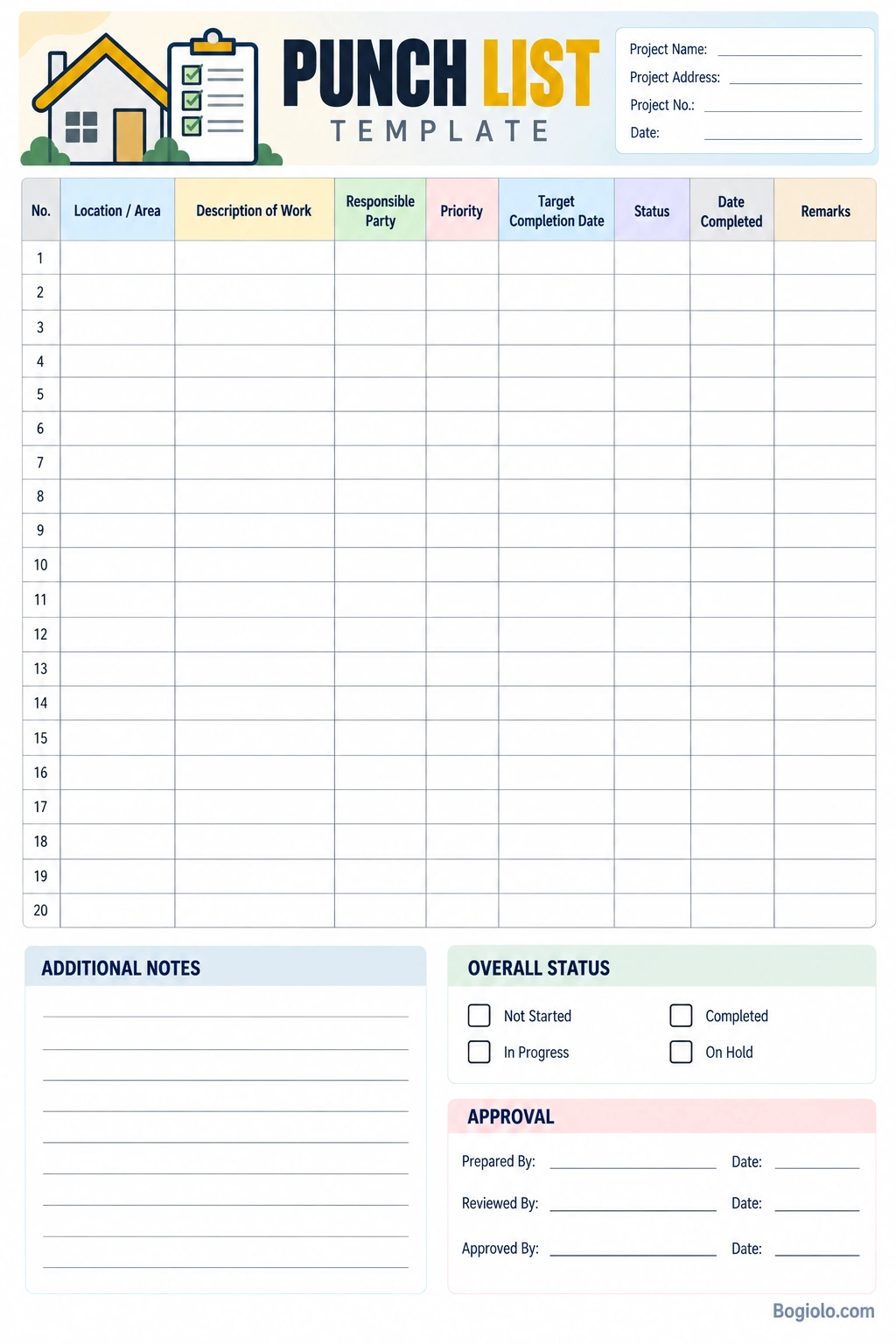
A well-organized punch list template can make this process even simpler by providing dedicated sections for each outstanding item, its location, responsible party, priority, completion date, and status.
What Is a Punch List?
A punch list is a document used to identify work that remains incomplete or requires correction near the end of a construction project. The items may include minor defects, unfinished installations, damaged materials, missing components, or work that does not meet the project requirements.
The list is typically created during a final inspection or walkthrough. Each item can be documented with enough detail for the responsible contractor or subcontractor to understand what needs to be corrected.
Once the work is completed, the item can be marked as finished and verified during a follow-up inspection.
Why Is a Punch List Important?
The final stages of construction can involve many small details. Without a centralized record, individual issues can easily be forgotten or misunderstood.
A construction punch list can help:
- Identify incomplete or defective work
- Assign responsibility for each item
- Set target completion dates
- Track the status of outstanding work
- Document corrections during project closeout
- Improve communication among project participants
- Provide a record of completed items
- Support the final inspection process
- Reduce confusion about remaining work
The punch list does not replace the project contract, plans, specifications, inspection requirements, or applicable regulations. Instead, it provides a practical way to organize the remaining work that must be addressed.
When Is a Punch List Created?
A punch list is generally developed toward the end of a construction project when the major work is substantially complete. The exact timing depends on the project, contract, and applicable procedures.
A walkthrough or inspection allows the project team to identify items that need correction before final completion or handover.
It can be useful to create the initial list early enough that contractors have adequate time to address the outstanding work rather than waiting until the last possible moment.
Who Creates a Punch List?
The person or team responsible for creating a punch list can vary depending on the project. The owner, general contractor, architect, construction manager, inspector, or another designated party may identify outstanding items.
In some projects, several parties may participate in the inspection and contribute items to the list.
Regardless of who identifies the issue, each item should be described clearly enough that the responsible party understands what needs to be completed.
What Should a Punch List Include?
A useful punch list form should contain enough information to identify, assign, and track every outstanding item.
Project Information
Start with basic information such as the project name, project address, project number, inspection date, and other relevant identifying details.
Item Number
Assigning a unique number to each item makes communication easier. Instead of referring to a general problem, team members can discuss a specific numbered item.
Location or Area
Record where the problem is located. This could be a room, floor, building section, exterior area, or another identifiable location.
Description of Work
Describe what needs to be completed or corrected. The description should be specific rather than vague.
Responsible Party
Identify the contractor, subcontractor, trade, or other party responsible for addressing the item.
Priority
A priority field can help the team distinguish between items that require immediate attention and lower-priority corrections.
Target Completion Date
Recording a target date gives the responsible party and project team a common reference for when the work should be completed.
Status
A status field can indicate whether an item is not started, in progress, completed, or otherwise requires attention.
Date Completed
Once the work has been completed, record the completion date. This provides a useful record during the final review.
Remarks
A remarks section can be used for additional instructions, inspection comments, verification notes, or other relevant information.
How to Create a Punch List
Creating a punch list is most effective when the project team approaches the inspection systematically.
1. Schedule a Final Walkthrough
Arrange a walkthrough when the project is sufficiently complete to allow the team to identify remaining work. Make sure the appropriate participants understand the purpose and scope of the inspection.
2. Inspect Each Area
Move through the project systematically rather than inspecting random areas. Depending on the project, you may proceed room by room, floor by floor, or according to the construction plans.
3. Document Every Outstanding Item
Record incomplete work, visible defects, missing components, damaged finishes, and other issues that require attention.
4. Be Specific
Describe each issue clearly. For example, instead of writing “fix wall,” specify the location and the particular correction required.
5. Assign Responsibility
Identify who is expected to address each item. Clear responsibility can reduce uncertainty and make follow-up easier.
6. Set Target Dates
Where appropriate, establish a target completion date for each item so that progress can be monitored.
7. Verify Completed Work
After corrections are made, inspect the work again and update the status. An item should not necessarily be considered complete simply because someone reports that the work has been performed.
How to Write a Good Punch List Item
A good punch list item should be concise but specific enough to eliminate unnecessary questions.
Include information such as:
- Exact location
- Type of problem
- Required correction
- Responsible trade or party
- Priority when applicable
- Target completion date
For example, instead of writing “door problem,” a more useful description might identify the specific room and explain that the door requires adjustment because it does not close properly.
The objective is to make the required action clear to the person responsible for completing it.
Common Punch List Items in Construction
Punch list items vary considerably by project type, but some categories appear frequently during final inspections.
Interior Finishes
- Paint touch-ups
- Damaged drywall
- Incomplete trim
- Flooring defects
- Missing hardware
Doors and Windows
- Door alignment
- Hardware adjustments
- Damaged frames
- Window operation issues
- Missing seals or trim
Electrical
- Missing cover plates
- Incomplete fixtures
- Labeling issues
- Unfinished installations
Plumbing
- Leaks
- Fixture adjustments
- Missing trim
- Incomplete connections
Exterior Work
- Landscaping corrections
- Exterior finish touch-ups
- Site cleanup
- Drainage-related corrections
- Incomplete exterior components
The actual requirements should always be based on the project’s drawings, specifications, contract documents, inspection requirements, and applicable standards.
Punch List vs. Final Inspection
A punch list and final inspection are related but are not necessarily the same thing.
A final inspection is an inspection or review used to determine whether the project or a particular scope of work meets the applicable requirements.
A punch list is the documented collection of outstanding items identified during the inspection or closeout process.
In practice, an inspection may result in a punch list that the contractor must address before the project can move toward final completion or handover.
How to Manage a Punch List Efficiently
Once the list has been created, the next challenge is making sure the items are actually completed and verified.
Use One Centralized List
Keeping outstanding items in one central document can reduce the risk of information being scattered across emails, notes, photographs, and conversations.
Assign Clear Responsibility
Every actionable item should have a responsible party whenever responsibility can reasonably be assigned.
Prioritize the Work
Not every item has the same urgency. A priority field can help the team organize the order in which issues should be addressed.
Update Status Regularly
Keep the list current as work progresses. Mark items as completed only after the appropriate verification has taken place.
Document Verification
Where appropriate, use remarks, photographs, inspection notes, or other project records to document how an item was resolved.
Punch List Template Benefits
A punch list template can save time by providing a consistent structure for documenting unfinished work. Instead of creating a new table from scratch, project teams can begin with predefined fields.
A printable template can be especially useful during physical walkthroughs because team members can carry the document through the project and make notes as they inspect each area.
A digital version may also be useful when multiple people need to update the same information or when the project requires photographs and electronic records.
Common Punch List Mistakes
A poorly maintained punch list can create unnecessary confusion during the final stages of a project. Avoid these common problems:
- Using vague descriptions
- Failing to identify the exact location
- Leaving responsibility unclear
- Creating duplicate items
- Not setting reasonable target dates
- Failing to update completed items
- Marking work complete without verification
- Keeping separate unofficial lists with conflicting information
- Ignoring small issues until the final day
A consistent process can make the list more useful and easier for everyone involved to understand.
Punch List Best Practices
A practical punch list should be easy to read, specific, and regularly updated.
- Inspect systematically: Follow a consistent route through the project.
- Be specific: Describe exactly what needs to be corrected.
- Use unique item numbers: Make individual issues easy to reference.
- Assign responsibility: Identify the appropriate party for each item.
- Set realistic deadlines: Allow enough time for the required work.
- Track status: Keep the list current as items progress.
- Verify completion: Review corrections before closing an item.
- Keep records: Retain the completed list with other appropriate project closeout documents.
Using a Punch List for Project Closeout
The punch list can become an important part of the transition from active construction to project closeout. Once outstanding work has been addressed, the team can review the final list to determine which items remain open.
Depending on the project and contract, other closeout documents may also be required, such as warranties, manuals, test reports, certificates, as-built information, inspection records, or other deliverables.
The punch list should therefore be treated as one component of the broader closeout process rather than as a replacement for contractual or regulatory requirements.
Frequently Asked Questions About Punch Lists
What is a punch list in construction?
A punch list in construction is a written record of unfinished work, defects, corrections, or other outstanding items that need to be addressed before a project reaches its required level of completion or closeout.
Who is responsible for creating a punch list?
The responsible party varies by project. An owner, contractor, architect, construction manager, inspector, or other designated project participant may create or contribute to a punch list.
What should be included in a punch list?
A punch list can include the item number, location, description of work, responsible party, priority, target completion date, status, completion date, and remarks.
When should a punch list be created?
A punch list is generally created when construction is sufficiently complete for the project team to identify remaining work. The exact timing should follow the project’s contract, inspection procedures, and closeout requirements.
What is the difference between a punch list and a checklist?
A checklist is generally used to confirm that required steps or items have been reviewed. A punch list specifically documents outstanding construction work, defects, or corrections that need to be addressed.
Can I use a punch list template for any construction project?
A general punch list template can provide a useful starting structure for many projects, but it should be customized to the project’s scope, contract requirements, inspection procedures, and applicable standards.
Conclusion
A punch list provides a structured way to document and manage the remaining work at the end of a construction project. By identifying each issue, recording its location, assigning responsibility, setting target dates, and tracking completion, project teams can create a clearer closeout process.
A well-designed punch list template makes this process easier by putting essential information into one organized document. Whether the form is printed for a walkthrough or maintained digitally, the goal remains the same: clearly document outstanding work and verify that each item has been addressed appropriately.
For the best results, use the punch list alongside the project’s contract documents, plans, specifications, inspection procedures, and other closeout requirements. A consistent and well-documented process can help the project team move toward final completion with fewer misunderstandings about what remains to be done.
Download: Punch List Template
