Buying or selling a property involves many important decisions, from evaluating market prices to negotiating offers and completing legal paperwork. A real estate agent helps clients navigate these steps by providing professional guidance, coordinating transactions, and supporting their interests throughout the process. Understanding real estate agent roles and responsibilities can help buyers, sellers, and aspiring professionals know what to expect from this career.
A real estate agent does more than show houses or advertise properties. Their daily duties may include researching local markets, preparing property listings, communicating with clients, arranging viewings, negotiating offers, and coordinating closing procedures. They must also follow applicable real estate laws, licensing requirements, and professional standards.
Whether you are considering hiring an agent or exploring a career in real estate, this guide explains the essential duties, daily activities, professional obligations, and skills needed to succeed in the industry.
What Is a Real Estate Agent?
A real estate agent is a licensed professional who helps people buy, sell, or rent residential and commercial properties. Agents work with clients to understand their needs, provide property information, arrange transactions, and guide them through important decisions.
Real estate agents typically work under the supervision of a licensed real estate broker, depending on state regulations. They may specialize in residential homes, commercial buildings, rental properties, land, or investment opportunities.
Their responsibilities vary depending on their clients and the type of transaction. However, their main objective is to provide professional assistance and help clients complete property transactions as smoothly as possible.
Real Estate Agent Roles and Responsibilities
The real estate agent roles and responsibilities cover several areas of property sales, client service, marketing, and transaction management. Although daily activities differ, most agents perform the following duties.
1. Represent Buyers and Sellers
One of the primary responsibilities of a real estate agent is representing clients during property transactions. Agents help buyers identify suitable properties and assist sellers in marketing their homes to potential purchasers.
Their duties may include:
- Understanding the client’s property requirements and preferences.
- Explaining the buying or selling process.
- Providing relevant market information and professional guidance.
- Communicating offers and important transaction updates.
- Acting in accordance with the agreed representation relationship and applicable legal duties.
Agents should understand whether they represent the buyer, the seller, or both parties under a legally permitted arrangement. They must also explain their agency relationship and applicable responsibilities.
2. Research Property Values and Market Conditions
Real estate agents need a strong understanding of their local property markets. Research helps them provide useful information about pricing, competition, and current market conditions.
Common research activities include:
- Reviewing recently sold properties in the area.
- Comparing similar properties and asking prices.
- Monitoring local housing market trends.
- Evaluating neighborhood features and amenities.
- Preparing comparative market analyses for clients.
This information helps buyers make informed decisions and allows sellers to establish realistic listing prices.
3. Create and Manage Property Listings
When representing sellers, agents help prepare properties for the market. An effective property listing should provide accurate information and present the property in an appealing way.
Typical listing responsibilities include:
- Collecting property details and relevant documentation.
- Preparing accurate property descriptions.
- Arranging professional photography when appropriate.
- Creating marketing materials and listing advertisements.
- Publishing listings through authorized real estate platforms.
- Updating listing information when necessary.
Agents should ensure that advertisements are truthful and comply with applicable fair housing, advertising, and real estate regulations.
4. Schedule and Conduct Property Showings
Property showings allow potential buyers to inspect homes or commercial spaces before making an offer. Real estate agents coordinate these appointments and help clients evaluate available properties.
Their responsibilities may include arranging viewing schedules, confirming property access, highlighting relevant features, and answering questions about the property.
Agents should also communicate important information about property conditions and avoid making claims that have not been verified.
5. Negotiate Offers and Sale Terms
Negotiation is an important part of many real estate transactions. Agents help clients understand offers, discuss possible counteroffers, and communicate proposed terms between the parties.
Negotiation responsibilities may involve:
- Presenting purchase offers to the appropriate party.
- Explaining proposed prices and contract conditions.
- Communicating counteroffers and requested changes.
- Discussing contingencies and transaction deadlines.
- Helping clients evaluate the terms of an offer.
The agent’s role is to support the client’s interests while following applicable laws and professional obligations. Clients make the final decisions about whether to accept or reject an offer.
6. Coordinate Real Estate Transactions
Once an offer is accepted, several tasks must be completed before the transaction can close. Real estate agents help coordinate communication and monitor important milestones.
These activities may include:
- Tracking contractual deadlines.
- Coordinating property inspections.
- Communicating with lenders and title professionals.
- Following up on required documents.
- Keeping buyers and sellers informed about transaction progress.
Agents do not replace attorneys, inspectors, lenders, or title professionals. Instead, they help coordinate the process and direct clients to qualified professionals when specialized advice is needed.
7. Follow Legal and Ethical Requirements
Real estate agents must comply with licensing rules, applicable laws, and professional standards. Their responsibilities include providing accurate information, protecting confidential client information, and handling transactions honestly.
Important professional obligations may include:
- Maintaining an active real estate license.
- Following applicable fair housing laws.
- Disclosing known material property information as required.
- Protecting client confidentiality.
- Managing client documents and personal information appropriately.
- Avoiding misleading advertising and false statements.
- Following agency and fiduciary duties when applicable.
Legal requirements differ by state and jurisdiction. Agents should understand the regulations that apply to their work and seek guidance from their supervising broker when necessary.
8. Assist With Closing and Post-Sale Activities
The closing stage is when the remaining transaction requirements are completed and ownership is transferred according to the applicable process. Agents help clients prepare for this final stage.
Their responsibilities may include confirming important dates, coordinating communication with the closing professionals, checking that outstanding tasks are addressed, and reminding clients about required documents.
After closing, agents may follow up with clients, answer general questions, and maintain professional relationships for future business and referrals.
Daily Tasks of a Real Estate Agent
A typical day in real estate can involve a combination of office work, client communication, property visits, and administrative activities. Schedules often change depending on appointments, active listings, and ongoing transactions.
Common daily tasks include:
- Checking emails, messages, and client inquiries.
- Contacting potential buyers and property sellers.
- Researching available properties and market prices.
- Preparing listing descriptions and marketing materials.
- Scheduling property showings and client meetings.
- Following up on offers and negotiations.
- Updating customer relationship management records.
- Reviewing transaction documents and upcoming deadlines.
- Attending networking events and professional meetings.
Successful agents organize their schedules carefully because they often manage several clients and transactions at the same time.
Essential Skills Every Real Estate Agent Should Have
Understanding the duties of a real estate professional is important, but performing those duties effectively also requires specific skills. The following abilities can help agents build trust and provide better client service.
Communication Skills
Agents communicate with buyers, sellers, brokers, lenders, inspectors, and other professionals. Clear communication helps prevent misunderstandings and keeps transactions organized.
Negotiation Skills
Strong negotiation skills help agents explain offers, communicate counteroffers, and support clients when discussing property prices and contractual terms.
Market Knowledge
Understanding local property values, neighborhood conditions, and market trends allows agents to provide more relevant information to their clients.
Organization and Time Management
Agents often handle multiple listings, appointments, and transaction deadlines. Good organizational skills help them complete tasks on time and avoid overlooking important details.
Problem-Solving Skills
Property transactions can involve unexpected delays, inspection concerns, financing issues, or disagreements. Agents need to identify problems, communicate possible solutions, and involve qualified professionals when appropriate.
Marketing and Technology Skills
Modern real estate professionals use online listing platforms, social media, customer management systems, and digital marketing tools to attract potential clients and promote properties effectively.
Real Estate Agent Roles and Responsibilities Checklist
A roles and responsibilities checklist can help agents organize their daily duties, monitor important activities, and evaluate their professional performance. It can also be useful for real estate brokerages when training new agents or establishing workplace expectations.
A practical checklist may include the following categories:
- Client management: Respond to inquiries, understand client needs, and maintain regular communication.
- Market research: Review property values, analyze comparable sales, and monitor local market conditions.
- Property marketing: Prepare listings, coordinate photography, and promote available properties.
- Showings: Schedule appointments, prepare property information, and assist clients during viewings.
- Negotiations: Communicate offers, discuss counteroffers, and track agreed transaction terms.
- Compliance: Maintain licensing requirements, follow applicable regulations, and protect confidential information.
- Transaction management: Monitor deadlines, coordinate documents, and communicate with relevant professionals.
- Professional development: Attend training, maintain industry knowledge, and build professional relationships.
Agents can review these responsibilities weekly or monthly to identify completed tasks and areas that need improvement.
Real Estate Agent Roles and Responsibilities Sample
A sample responsibilities overview provides a convenient reference for understanding the main duties of a real estate professional. It can be used for employee orientation, training materials, job descriptions, or personal performance reviews.
The following sample summarizes the key responsibilities across client representation, market research, property marketing, negotiations, legal compliance, and closing support.
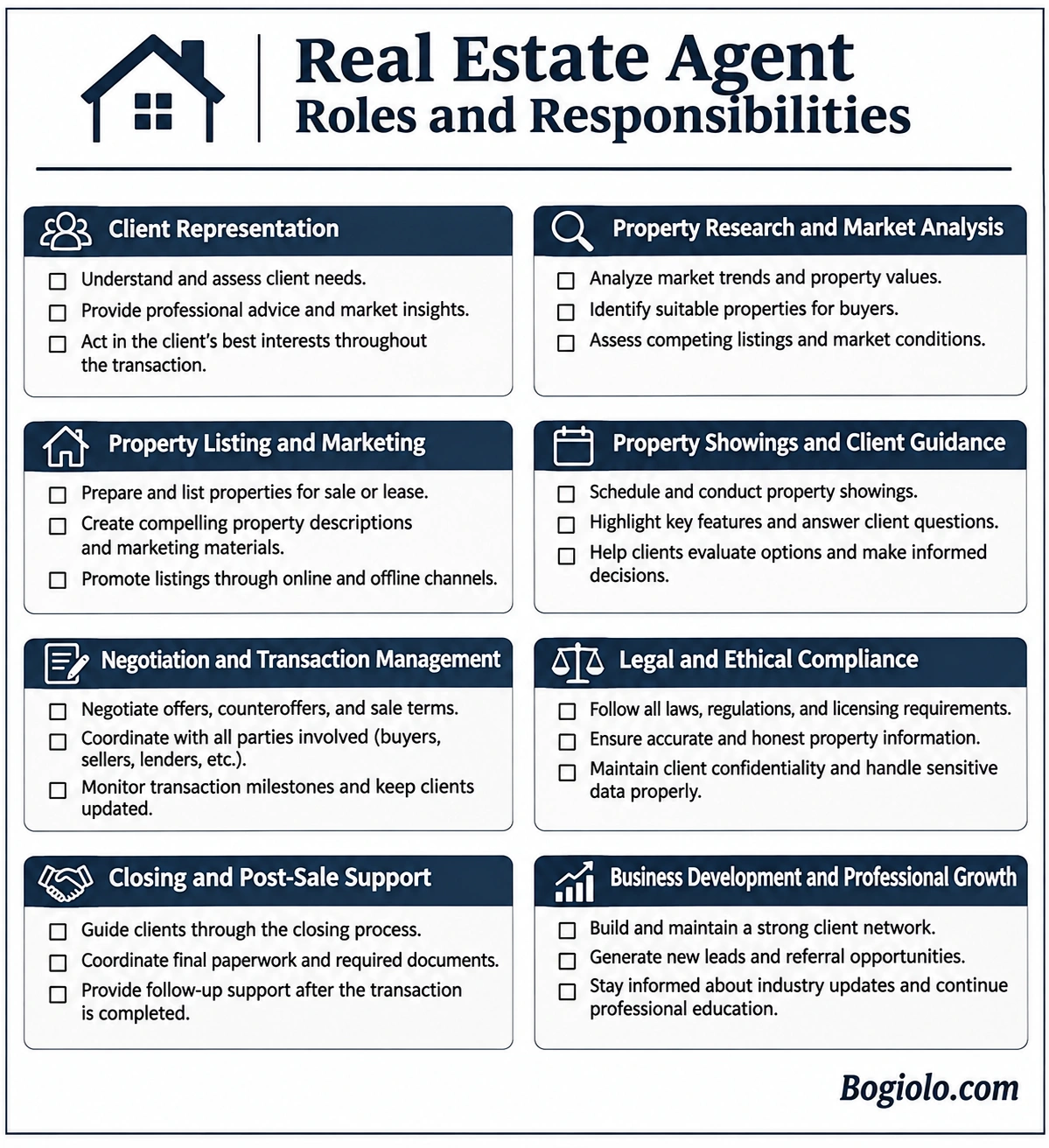
This sample can help agents review their professional duties and identify the activities that should be included in their daily workflow. Brokerages can also adapt the checklist to reflect their internal procedures and local licensing requirements.
How to Evaluate a Real Estate Agent’s Performance
Performance evaluation helps real estate agents and their supervising brokers understand how effectively responsibilities are being completed. Rather than focusing only on sales numbers, a balanced evaluation should consider client service, compliance, organization, and business development.
Useful performance indicators include:
- Client satisfaction: Feedback, communication quality, and client retention.
- Lead management: Response times, follow-up activities, and lead conversion.
- Listing performance: Listing accuracy, marketing quality, and property presentation.
- Transaction management: Ability to meet deadlines and coordinate required tasks.
- Professional compliance: Proper documentation and adherence to applicable regulations.
- Business development: New client relationships, networking, and referrals.
These indicators should be adjusted to the agent’s experience, market conditions, brokerage policies, and business responsibilities. They provide a more complete picture of professional performance than sales volume alone.
Frequently Asked Questions
What are the main roles and responsibilities of a real estate agent?
The main responsibilities include representing buyers and sellers, researching property markets, preparing listings, conducting showings, negotiating offers, coordinating transactions, following legal requirements, and assisting clients through closing.
What does a real estate agent do on a daily basis?
Daily activities may include responding to client inquiries, researching properties, arranging showings, preparing marketing materials, following up on leads, negotiating offers, and managing transaction paperwork.
What is the difference between a real estate agent and a real estate broker?
A real estate agent is generally a licensed professional who assists clients with property transactions under a broker’s supervision. A real estate broker typically holds an additional license and may have the authority to operate a brokerage and supervise other agents, depending on state regulations.
What skills are important for a real estate agent?
Important skills include communication, negotiation, organization, market research, customer service, problem-solving, and marketing. Knowledge of local real estate regulations is also essential.
Are real estate agents responsible for property inspections?
Agents may help arrange inspections and coordinate communication between clients and inspectors. However, they are generally not responsible for performing specialized property inspections unless separately qualified and authorized to do so.
Do real estate agents handle legal documents?
Agents commonly help prepare, organize, explain, and coordinate transaction documents within the scope of their licenses and applicable laws. However, they should not provide legal advice or perform services that require an attorney or other licensed professional.
Can a real estate agent represent both the buyer and seller?
In some jurisdictions, an agent may represent both parties under a permitted arrangement, often called dual agency. This arrangement is subject to specific legal requirements, disclosures, and informed consent. Some states restrict or prohibit it.
Why is a real estate agent responsibilities checklist useful?
A checklist helps agents organize daily activities, monitor transaction progress, and maintain consistent service standards. It can also support employee training, performance evaluations, and brokerage operations.
Conclusion
Understanding real estate agent roles and responsibilities is essential for anyone considering a career in the property industry or planning to work with a real estate professional. Agents handle much more than property showings. Their work includes client representation, market research, property marketing, negotiations, legal compliance, and transaction coordination.
Successful agents combine industry knowledge with communication, organization, and problem-solving skills. They also maintain professional standards and keep clients informed throughout the buying or selling process.
Whether you are an aspiring agent, an experienced professional, or a real estate brokerage, a clear responsibilities checklist can help establish expectations, improve daily operations, and support better client service.
Download: Real Estate Agent Roles and Responsibilities Template
