The Senate Majority Leader plays an important role in shaping the legislative agenda, coordinating party members, and guiding the work of the United States Senate. As the leader of the majority political party, this individual helps determine which issues receive attention and works to build support for legislation.
Understanding Senate Majority Leader roles and responsibilities helps students learn how the U.S. government operates and how political leadership influences the legislative process. The position involves more than simply leading a political party. It requires negotiation, communication, strategic planning, and a strong understanding of Senate rules and procedures.
Whether you are a student studying American government, a teacher preparing a civics lesson, or someone interested in the legislative branch, this guide explains what the Senate Majority Leader does, how the position works, and why it matters. You will also find a printable worksheet to help organize your learning.
What Is a Senate Majority Leader?
The Senate Majority Leader is the chief spokesperson and principal floor leader of the political party holding the most seats in the United States Senate. This individual is selected by members of the majority party and helps coordinate their legislative priorities and activities.
One of the leader’s most important responsibilities is managing the party’s legislative agenda. This includes working with senators to determine which bills should receive consideration, coordinating floor debates, and negotiating agreements that help legislation move forward.
The Senate Majority Leader is an influential political position, but it is not an office established by the U.S. Constitution. Instead, it developed through Senate traditions and party organization.
It is also important to distinguish the Senate Majority Leader from the Vice President of the United States. The Vice President serves as President of the Senate and may cast tie-breaking votes, while the Majority Leader focuses on party leadership and legislative business.
How Is the Senate Majority Leader Chosen?
The Senate Majority Leader is chosen by members of the political party that holds the majority of seats in the Senate. Senators from that party select their leader through an internal party process.
The selection usually takes place during a party conference or caucus meeting. Senators consider leadership experience, political influence, communication skills, and the ability to build cooperation among party members.
Requirements for Becoming Senate Majority Leader
There is no separate constitutional qualification for becoming Senate Majority Leader. However, the individual must already be a U.S. senator and receive the support of the majority party’s members.
Important qualities often include:
- Experience serving in the United States Senate.
- Strong leadership and communication skills.
- Knowledge of legislative procedures and Senate rules.
- The ability to negotiate with other senators.
- Political judgment and strategic thinking.
- The ability to maintain cooperation within the party.
Senate Majority Leader Roles and Responsibilities
The Senate Majority Leader performs several important duties that influence how the Senate operates. These responsibilities involve legislative planning, party coordination, negotiation, and communication.
1. Setting the Legislative Agenda
One of the primary responsibilities of the Senate Majority Leader is helping establish the legislative agenda. The leader works with other senators to determine which bills, nominations, and important issues should receive attention.
This responsibility includes:
- Identifying important legislative priorities.
- Planning when bills should be considered.
- Coordinating the Senate’s schedule.
- Working with committee leaders to advance legislation.
- Prioritizing major policy issues.
Although the Majority Leader has considerable influence over the Senate calendar, the leader does not have unlimited authority to determine everything the Senate considers. Senate rules, unanimous consent agreements, committee processes, and negotiations with other senators also influence the schedule.
2. Leading the Majority Party
The Senate Majority Leader serves as the principal leader of the majority party within the Senate. This involves coordinating party members and encouraging them to work toward shared legislative goals.
The leader communicates party priorities, discusses upcoming legislation, and works to maintain cooperation among senators with different opinions.
Because senators represent different states and constituencies, they may not always agree on every issue. The Majority Leader must balance these differences while trying to maintain support for the party’s broader agenda.
3. Managing Senate Floor Activities
Another important responsibility involves coordinating legislative business on the Senate floor. The Majority Leader frequently takes the lead in bringing legislation forward for consideration and helping organize the debate process.
Typical activities include:
- Scheduling consideration of proposed legislation.
- Consulting with senators about debate arrangements.
- Working to secure agreements on voting procedures.
- Coordinating legislative priorities with other Senate leaders.
The Majority Leader does not independently control every debate or vote. Senate procedures and agreements among senators determine how much time is available and how legislative business proceeds.
4. Negotiating with the Minority Party
The Senate Majority Leader often works with the Minority Leader to negotiate agreements that allow the Senate to conduct its business efficiently.
These negotiations may involve debate schedules, voting arrangements, amendments, and agreements on how legislation will be considered.
Cooperation is particularly important because Senate rules often allow the minority party to influence the legislative process. Building bipartisan support can help important bills move forward, especially when a proposal requires more votes than the majority party can provide on its own.
5. Building Support for Legislation
Introducing a bill is only one part of the legislative process. The Majority Leader also works to gather enough support for important proposals.
This may involve meeting with senators, discussing policy concerns, answering questions, and negotiating changes to proposed legislation.
Successful leadership requires understanding different political positions and finding common ground whenever possible.
6. Representing the Majority Party
The Senate Majority Leader is an important public representative of the majority party’s legislative priorities and political positions.
The leader may speak to journalists, participate in public discussions, explain legislative decisions, and communicate the party’s position on important national issues.
This responsibility helps the public understand what the majority party hopes to accomplish through its work in the Senate.
What Is the Difference Between the Senate Majority Leader and Minority Leader?
Both positions are important leadership roles in the United States Senate. However, their responsibilities differ based on the political party they represent and their position within the chamber.
Senate Majority Leader
The Majority Leader represents the party with the most Senate seats. This leader generally has a greater role in planning the legislative agenda and coordinating the scheduling of Senate business.
Senate Minority Leader
The Minority Leader represents the party with fewer Senate seats. This individual organizes the minority party, communicates its priorities, challenges proposals from the majority party, and negotiates with Senate leadership.
Both leaders play important roles in debate, negotiation, and legislative decision-making.
Why Is the Senate Majority Leader Important?
The Senate Majority Leader is important because the position helps organize the legislative work of the Senate. Without effective leadership and coordination, it can become difficult for senators to agree on priorities, schedule debates, and move legislation forward.
The role matters for several reasons:
- Legislative organization: Helps coordinate the Senate’s workload and legislative priorities.
- Political leadership: Provides direction for the majority party’s activities.
- Policy development: Helps advance important proposals and legislative initiatives.
- Negotiation: Encourages cooperation among senators from different political parties.
- Government accountability: Communicates the majority party’s decisions and legislative objectives to the public.
The Majority Leader’s decisions can influence which issues receive attention and how quickly legislation moves through the Senate. However, the position operates within a system of shared powers, Senate rules, and constitutional requirements.
Senate Majority Leader Roles and Responsibilities Worksheet
A Senate Majority Leader roles and responsibilities worksheet can help students understand the position through structured learning activities. It provides an organized way to review the leader’s duties, identify important leadership qualities, and explain how the position influences the legislative process.
This printable worksheet is suitable for American government classes, civics lessons, history assignments, and independent study activities.
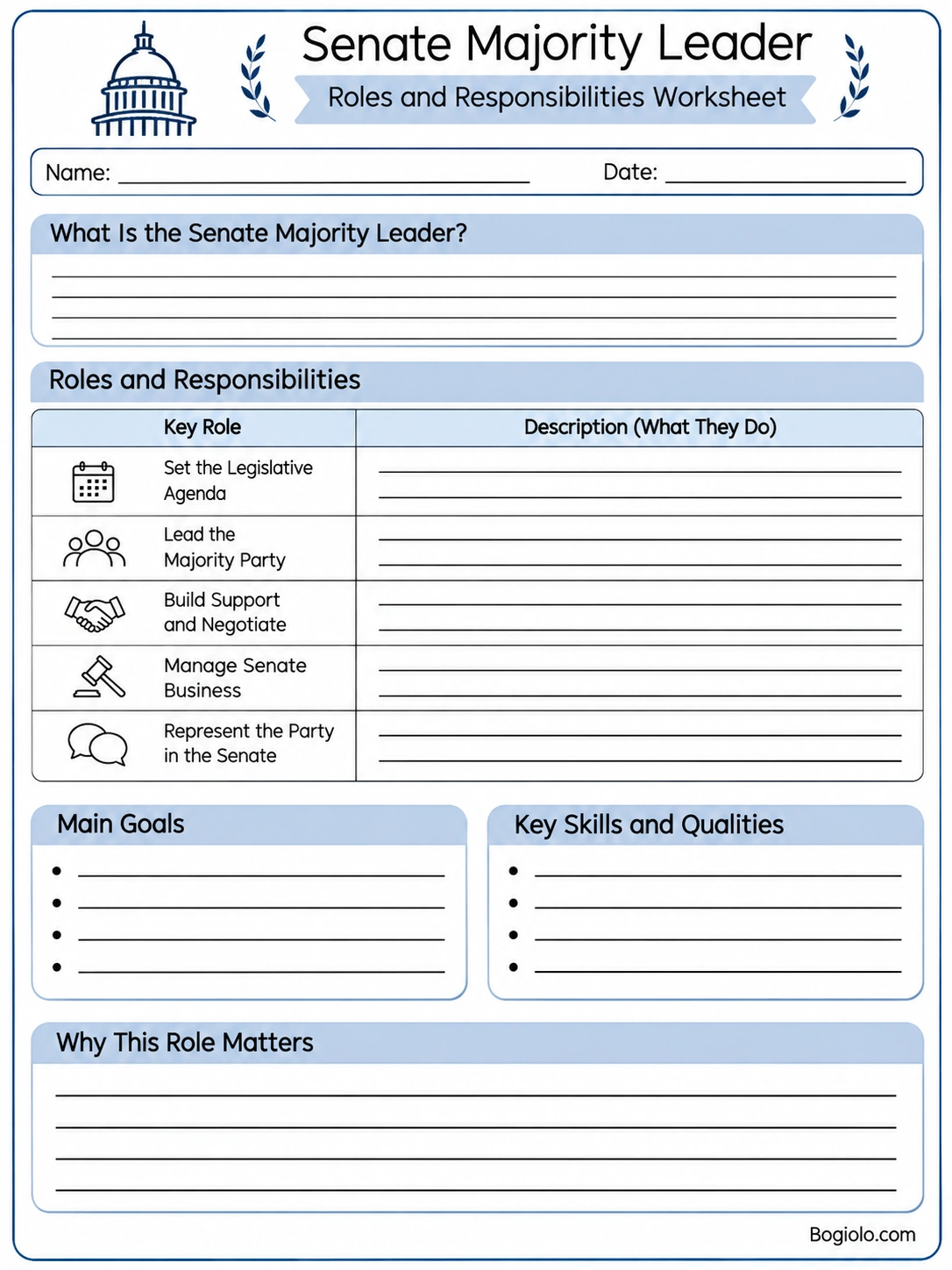
Students can use the worksheet to explore the position and organize their answers using the following activities:
- Explain what the Senate Majority Leader is.
- Identify five major responsibilities of the position.
- Describe the leader’s main legislative goals.
- List important skills needed to become an effective leader.
- Explain why the position matters in the U.S. government.
Important Skills of an Effective Senate Majority Leader
Leading a political party in the Senate requires more than political experience. The Majority Leader must possess several skills to manage competing priorities and build support for legislative decisions.
Communication Skills
Clear communication helps the leader explain legislative priorities, discuss policy proposals, and maintain productive relationships with other senators.
Negotiation Skills
Negotiation is essential because senators may disagree about legislation, spending priorities, and public policy. An effective leader must identify compromises and build support for shared objectives.
Strategic Thinking
The Majority Leader must understand political circumstances, Senate procedures, and legislative timing. Strategic planning helps determine which issues should receive attention and how to approach difficult votes.
Decision-Making
Leaders frequently face difficult choices involving competing political and legislative priorities. Good decision-making helps them evaluate options and select practical approaches.
Team Leadership
The ability to coordinate senators and encourage cooperation is essential. A successful leader recognizes that party members may have different perspectives while still working toward common goals.
Frequently Asked Questions About Senate Majority Leader Roles and Responsibilities
What is the main responsibility of the Senate Majority Leader?
The main responsibility is leading the majority party in the Senate and helping coordinate its legislative agenda. The leader also plays an important role in scheduling Senate business, negotiating with other senators, and building support for legislation.
Who elects the Senate Majority Leader?
Members of the political party holding the majority of Senate seats select their Majority Leader through an internal party process, usually during a party conference or caucus meeting.
Does the Senate Majority Leader control the Senate?
No. The Majority Leader has significant influence over legislative priorities and scheduling, but does not have complete control over the Senate. Senate rules, committees, individual senators, and agreements between political parties also influence the legislative process.
What is the difference between the Senate Majority Leader and the Senate President?
The Senate Majority Leader is the principal floor leader of the majority party. The Vice President of the United States serves as President of the Senate and may cast a tie-breaking vote. The President pro tempore also has a formal role in presiding over the Senate.
Can the Senate Majority Leader introduce a bill?
Yes. Like other senators, the Majority Leader can introduce legislation. However, the leader’s influence also comes from coordinating the legislative agenda and helping determine when proposals receive consideration.
Does the Senate Majority Leader work with the President?
Yes. The Majority Leader may communicate with the President and administration officials about legislative priorities, nominations, and government policy. The level of cooperation depends on political circumstances and the relationship between the legislative and executive branches.
How long does the Senate Majority Leader serve?
There is no fixed constitutional term for Senate Majority Leader. The individual generally remains in the position as long as they retain the support of their party members and continue to serve as a senator.
What skills are needed to become a Senate Majority Leader?
Important skills include communication, negotiation, strategic planning, decision-making, political judgment, and team leadership. Experience in the Senate and the ability to build relationships with other senators are also valuable.
Can the Senate Majority Leader stop a bill from being considered?
The Majority Leader can influence which bills receive priority and when legislation is scheduled. However, the leader cannot always prevent a bill from receiving consideration because Senate rules and procedural mechanisms allow other senators to influence the legislative process.
Conclusion
The Senate Majority Leader plays a central role in organizing the work of the United States Senate. From setting legislative priorities and leading the majority party to negotiating with other senators, the position requires strong leadership, communication, and strategic thinking.
Understanding Senate Majority Leader roles and responsibilities helps students recognize how political leadership influences the legislative process and how different members of government work together to make decisions.
Whether you are studying American government or preparing a classroom assignment, learning about this position provides valuable insight into the organization and operation of the legislative branch.
Download: Senate Majority Leader Roles And Responsibilities
