A recipe book or recipe card is a practical way to organize cooking instructions, ingredient lists, preparation notes, and favorite dishes in one convenient place. Whether you are collecting family recipes, planning weekly meals, or simply trying new dishes, a well-organized recipe format makes cooking easier and more consistent.
A good recipe card provides a clear structure for recording ingredients, cooking times, servings, directions, and personal notes. A recipe book takes that idea further by bringing multiple recipes together into an organized collection. Both can help preserve treasured family traditions while making it easier to build a personal collection of reliable meals.
Printable recipe templates are especially useful because they provide a ready-made structure that can be filled in by hand or customized digitally. With the right layout, you can create a useful recipe collection that is both practical and enjoyable to use.
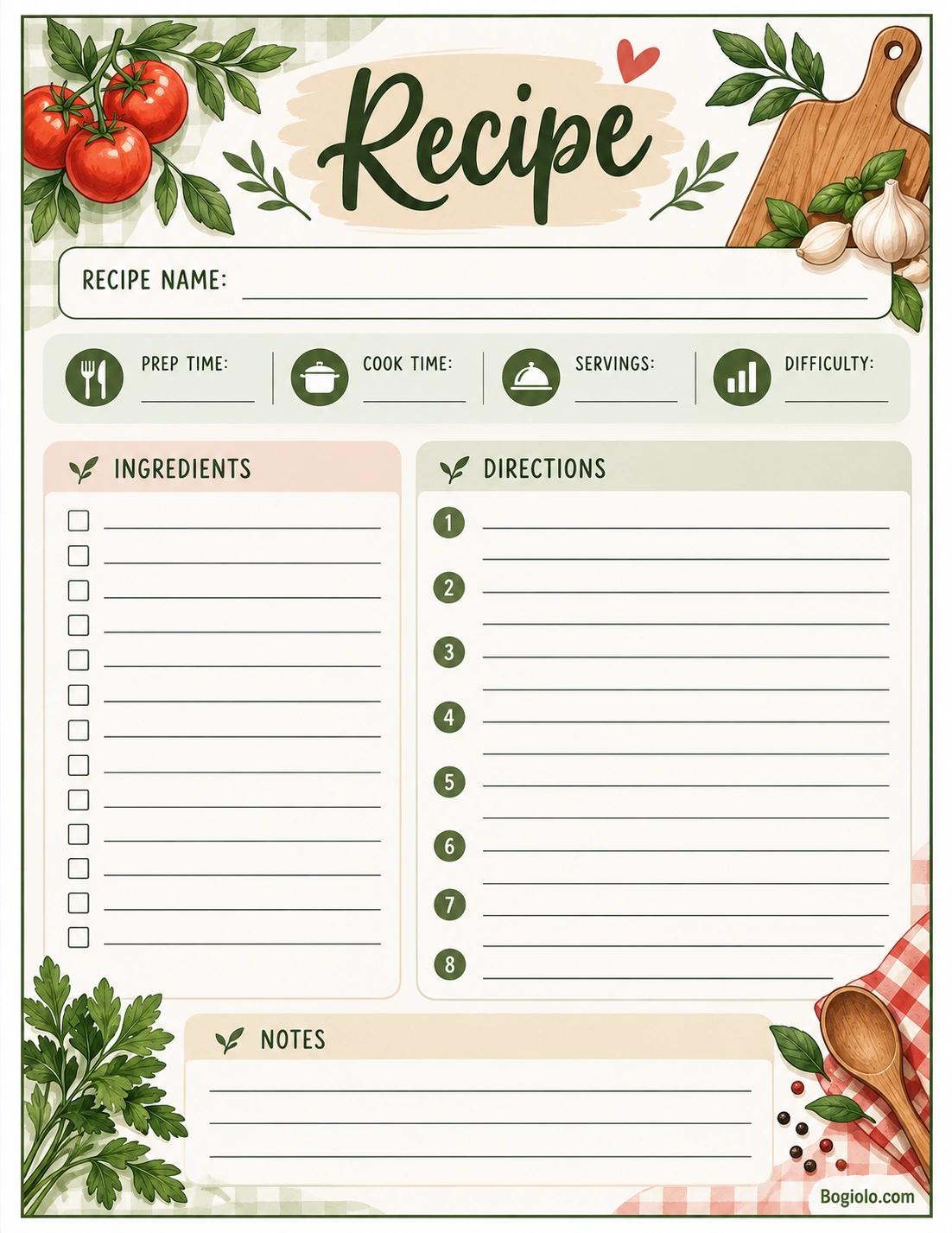
What Is a Recipe Book or Recipe Card?
A recipe card is a structured page used to record one recipe. It usually includes the recipe name, ingredients, preparation instructions, cooking time, serving information, and additional notes. Because the information is organized into clearly labeled sections, a recipe card makes it easier to follow a recipe from beginning to end.
A recipe book is a collection of multiple recipes organized into one place. It may contain handwritten family recipes, printed recipes, original creations, favorite meals, baking recipes, or dishes collected from different culinary traditions.
Although a recipe card and recipe book serve slightly different purposes, they work well together. Individual recipe cards can be stored in a binder or organized into categories to create a personalized recipe book.
Why Use a Recipe Book or Recipe Card?
Cooking from memory can work for familiar dishes, but a written recipe provides a reliable reference when you want consistent results. Recording exact ingredients and techniques also makes it easier to repeat a successful dish.
Here are several practical reasons to use a recipe book or recipe card:
- Organize recipes: Keep favorite dishes in one easy-to-access location.
- Improve consistency: Record measurements, temperatures, and cooking times for repeatable results.
- Save family recipes: Preserve recipes that have been passed down through generations.
- Explore new dishes: Build a collection of recipes from different cuisines and cooking styles.
- Record personal adjustments: Note ingredient substitutions or changes that improve a recipe.
- Plan meals: Use your recipe collection as a reference when preparing weekly menus.
- Preserve traditions: Keep meaningful recipes and culinary traditions available for future generations.
What to Include on a Recipe Card
A useful recipe card should contain enough information to guide someone through the entire cooking process. The exact format can vary depending on the type of recipe, but several sections are especially helpful.
Recipe Name
Start with a clear recipe name. A descriptive title makes the recipe easy to identify when you are searching through a collection of recipe cards.
Ingredients
List every ingredient needed for the recipe, including the quantity and unit of measurement. Arrange the ingredients in an order that makes sense for the cooking process. For more complicated recipes, consider grouping ingredients by component, such as sauce, filling, dough, or topping.
Preparation and Cooking Time
Include the preparation time and cooking time when possible. This helps the cook understand how much time is needed before starting the recipe.
Servings
Adding the number of servings makes it easier to determine whether a recipe is suitable for a particular meal. It can also help when adjusting ingredient quantities for a larger or smaller group.
Directions
Write the cooking instructions in a logical sequence. Numbered steps are particularly useful because they allow the cook to move through the recipe without losing their place.
Notes
A notes section provides room for useful details that do not fit into the main instructions. You can record substitutions, preferred cooking temperatures, storage information, serving suggestions, or changes you would make the next time.
How to Organize a Recipe Book
A recipe book becomes much easier to use when recipes are organized into logical categories. Instead of keeping recipes in random order, create sections that match the way you cook.
Organize Recipes by Category
Common recipe book categories include:
- Breakfast
- Lunch
- Dinner
- Appetizers
- Soups and salads
- Main dishes
- Side dishes
- Desserts
- Breads and baking
- Drinks and beverages
- Family favorites
- Holiday recipes
You can also create categories based on dietary needs, cooking methods, cuisines, or occasions. For example, a personal recipe collection could include sections for quick meals, vegetarian dishes, slow cooker recipes, holiday baking, and traditional family recipes.
Use Consistent Formatting
Keeping the same basic format throughout your recipe book makes information easier to find. If every recipe has separate sections for ingredients, directions, cooking time, and notes, you can quickly scan a page without having to search for important details.
Add Indexes or Dividers
If your recipe collection becomes large, use tabs, dividers, or an index. Alphabetical organization can also be useful for finding specific recipes quickly.
How to Write a Recipe That Is Easy to Follow
A recipe should be written with the cook in mind. Even a simple dish can become confusing if the instructions are vague or the ingredients are poorly organized.
Use Clear Instructions
Describe each major action in simple language. Instead of combining several unrelated actions into one long paragraph, separate them into individual steps.
Be Specific About Measurements
Use consistent measurements and clearly identify quantities. For example, specify whether an ingredient requires one teaspoon, one tablespoon, one cup, or another measurement.
Include Important Cooking Details
When relevant, mention oven temperature, cooking time, pan size, resting time, or visual indicators that show when the food is ready. These details can make a significant difference in the final result.
Record Variations
If you regularly make substitutions, write them down. A recipe card can become more valuable over time when it includes practical information based on your own cooking experience.
Recipe Card Ideas for Different Types of Cooks
One advantage of a printable recipe card is that it can be adapted to different cooking styles and needs.
Family Recipe Cards
Use recipe cards to preserve recipes that have special meaning to your family. Add the name of the person who originally created or shared the recipe, along with notes about family traditions or special occasions.
Meal Prep Recipe Cards
For meal preparation, include serving sizes, storage instructions, reheating information, and preparation time. This can make weekly cooking more efficient.
Baking Recipe Cards
Baking recipes benefit from precise measurements and detailed instructions. Consider including oven temperature, baking time, pan size, and cooling instructions.
Recipe Cards for Beginners
Beginning cooks may benefit from especially detailed instructions. Include preparation steps, cooking temperatures, estimated times, and simple explanations of unfamiliar techniques.
Tips for Using Printable Recipe Templates
A printable recipe template can save time because the basic structure is already prepared. Before printing a large collection, however, consider how you plan to use and store the pages.
- Choose a readable layout: Make sure headings and writing areas are easy to see.
- Leave enough writing space: Ingredient and instruction sections should accommodate the information you need.
- Print on suitable paper: A slightly heavier paper can make recipe pages more durable.
- Protect frequently used recipes: Consider using sheet protectors or laminating individual cards.
- Keep a consistent format: Using the same template throughout your collection makes it easier to browse.
- Make backup copies: Digitally save especially important family recipes in case a physical copy is damaged.
How to Make a Personal Recipe Book
Creating a personal recipe book does not have to be complicated. Start with the recipes you use most often and gradually add new dishes.
- Choose a recipe card format that fits your needs.
- Write or type your favorite recipes into the template.
- Group recipes into useful categories.
- Add cooking notes, substitutions, and family memories where appropriate.
- Print the completed recipe cards.
- Store them in a binder, recipe box, or other organized system.
- Update the collection whenever you discover a new favorite recipe.
The result can become more than a simple cooking reference. Over time, a recipe book can become a personal record of meals, celebrations, experiments, and family traditions.
How Recipe Books Preserve Culinary Traditions
Recipes often contain more than instructions for preparing food. They can carry memories, cultural traditions, family stories, and techniques that might otherwise be forgotten.
Writing down a traditional recipe allows future cooks to understand not only the ingredients but also the methods that make a dish meaningful. Adding notes about where a recipe came from, who prepared it, or when it was traditionally served can make a recipe collection even more valuable.
A recipe book can therefore serve as both a practical cooking guide and a record of culinary heritage. Sharing these recipes with family members can help keep important food traditions alive across generations.
Common Mistakes to Avoid When Creating Recipe Cards
A recipe card is most useful when another person can understand it without needing additional explanations. Avoid these common problems:
- Leaving out important ingredients or quantities.
- Using vague instructions such as “cook until done” without additional guidance.
- Failing to specify cooking temperature when it matters.
- Combining too many cooking actions into one confusing step.
- Leaving out serving sizes or preparation times.
- Using inconsistent measurement formats throughout the recipe book.
- Forgetting to record successful substitutions or personal adjustments.
Taking a few extra minutes to make each recipe clear can make your entire collection more useful.
Frequently Asked Questions About Recipe Books and Recipe Cards
What is the purpose of a recipe card?
The purpose of a recipe card is to provide a structured guide for preparing one dish. It typically records ingredients, measurements, cooking directions, timing, servings, and additional notes so the recipe can be followed consistently.
What is the difference between a recipe book and a recipe card?
A recipe card generally contains information for one recipe, while a recipe book contains a collection of recipes. Multiple recipe cards can be organized together in a binder or box to create a personalized recipe book.
What should every recipe card include?
A useful recipe card should include the recipe name, ingredient list, measurements, directions, preparation or cooking time, servings, and space for notes. Additional information can be added depending on the recipe.
How can I organize a recipe book?
You can organize a recipe book by meal type, cuisine, cooking method, ingredient, dietary preference, or occasion. Categories such as breakfast, main dishes, desserts, baking, and family favorites are simple starting points.
Are printable recipe cards useful?
Yes. Printable recipe cards provide a ready-to-use structure for recording recipes and can be stored in binders, recipe boxes, or protective sleeves. They are particularly useful for creating a consistent personal recipe collection.
How can I preserve family recipes?
Write family recipes on durable recipe cards and include useful details about their origin, preparation method, and traditional occasions. Keeping digital backups can also help protect important recipes from loss or damage.
Conclusion
A recipe book or recipe card is more than a place to write down ingredients and cooking instructions. It is a practical tool for creating consistent meals, discovering new flavors, organizing favorite dishes, and preserving recipes that have personal or cultural significance.
With a well-structured printable recipe template, you can record recipes in a clear and organized format. Whether you are building a personal cookbook, preserving family traditions, preparing meals more efficiently, or experimenting with new dishes, a recipe card provides a simple foundation for keeping your culinary knowledge organized.
Download: Recipe Book Template
