A reception schedule is a practical timeline that organizes everything that happens during a wedding reception, from the couple’s entrance and dinner service to speeches, dancing, cake cutting, and the final send-off. A clear schedule helps coordinate the couple, wedding party, caterers, DJ, photographer, venue staff, and other vendors.
Without a planned timeline, even a beautiful reception can experience unnecessary delays, awkward downtime, or confusion about what should happen next. A well-organized reception schedule gives everyone a shared plan while allowing enough flexibility for unexpected changes.
Whether you are planning a formal wedding reception, an intimate celebration, or a large event, a printable reception schedule can help keep the evening organized, engaging, and enjoyable for everyone.
What Is a Reception Schedule?
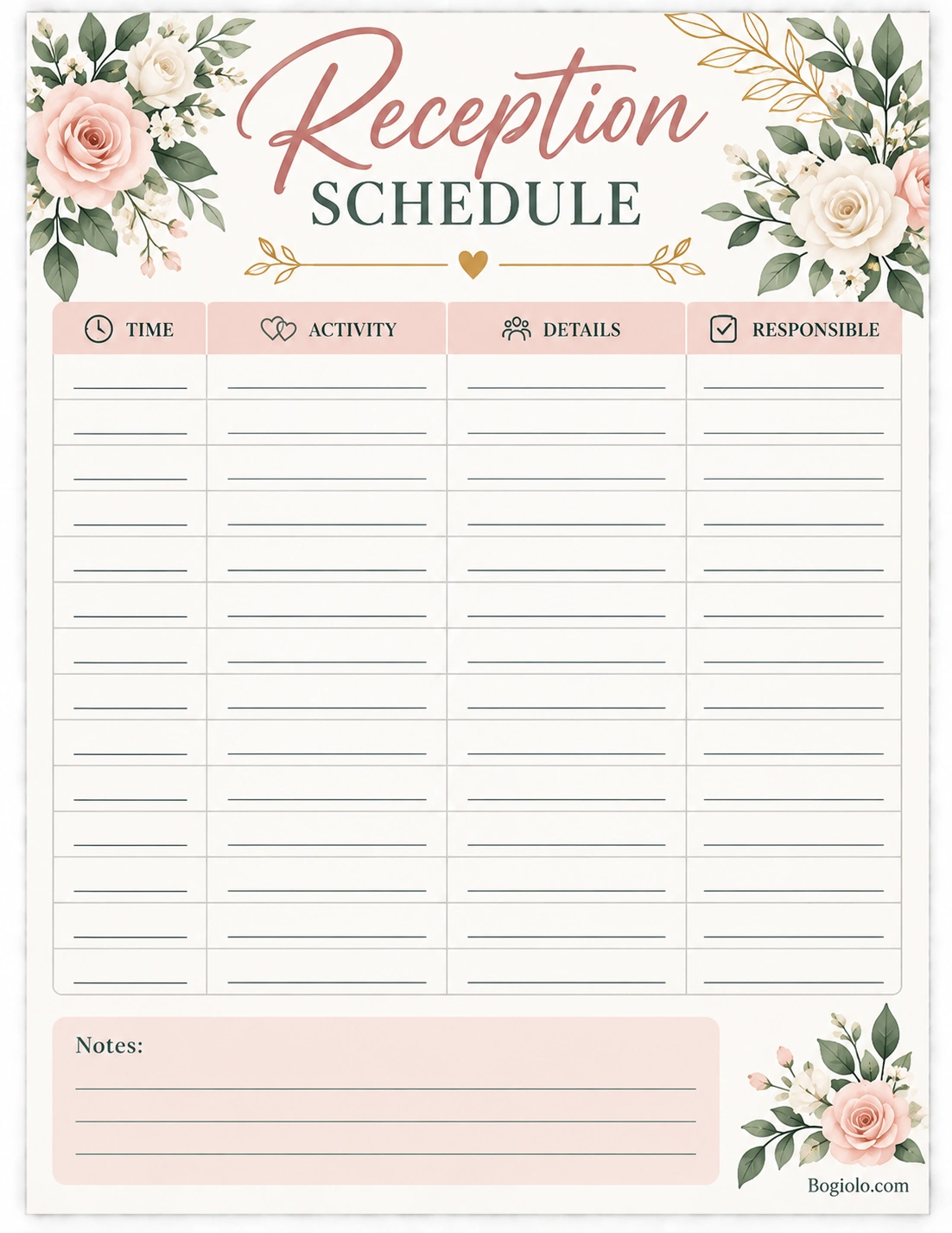
A reception schedule is a chronological outline of the activities planned for a wedding reception. It typically includes the start and end time of each activity, important details, and the person or vendor responsible for making it happen.
A reception timeline can include guest arrival, introductions, dinner, speeches, first dance, parent dances, cake cutting, entertainment, open dancing, and the couple’s departure.
The schedule can be as detailed or as simple as necessary. A couple may use a detailed master timeline for vendors while providing guests with a shorter version that highlights the main events.
Why Is a Reception Schedule Important?
A wedding reception involves many moving parts. Catering, music, photography, venue logistics, speeches, entertainment, and guest activities often need to happen in a specific order.
- Keeps the event organized: Everyone knows what should happen next.
- Coordinates vendors: Caterers, DJs, photographers, venue staff, and other vendors can work from the same timeline.
- Prevents awkward downtime: Activities can be planned so guests remain engaged throughout the reception.
- Protects important moments: Key events such as speeches and dances are less likely to be overlooked.
- Improves communication: Vendors and members of the wedding party have clear responsibilities.
- Reduces stress: A written plan makes it easier to manage the reception without relying on memory.
- Creates a smoother guest experience: The evening can transition naturally from one activity to another.
What to Include in a Reception Schedule
A useful reception timeline should include more than just the names of activities. Adding practical details can help vendors and the wedding party understand exactly what needs to happen.
- Time
- Reception activity
- Location
- Duration
- Important instructions
- Person responsible
- Vendor responsible
- Music or announcement cues
- Photography requirements
- Catering requirements
- Special notes
For example, instead of simply writing “Dinner,” a detailed schedule might specify when dinner begins, whether it is buffet or plated service, and when the DJ should make the dinner announcement.
Sample Wedding Reception Schedule
Every wedding reception is different, but a sample timeline can provide a useful starting point. The exact timing should be adjusted according to the venue, guest count, meal service, cultural traditions, and couple’s preferences.
Guest Arrival
Guests arrive at the reception venue, find their seats or tables, and socialize while background music plays. This period gives the venue team time to make final preparations before the formal program begins.
Grand Entrance
The DJ or emcee announces the wedding party and newlyweds. The couple’s entrance can be followed by a welcome announcement or immediate transition into the next reception activity.
Welcome and Toast
A host, family member, or designated speaker welcomes guests and may offer a short toast. Keeping the welcome concise helps maintain the event’s momentum.
Dinner Service
Dinner begins after the welcome. Depending on the reception format, the meal may be plated, buffet-style, family-style, or served through stations.
Speeches and Toasts
Selected speakers deliver their speeches or wedding toasts. Coordinate the speaker order in advance so the DJ, photographer, and venue staff know when this portion of the program begins.
First Dance
The newlyweds take their first dance. Parent dances or other special dances may follow depending on the couple’s preferences.
Cake Cutting
The couple participates in the cake-cutting tradition. The photographer should be informed in advance so this moment is not missed.
Open Dancing
The DJ or band opens the dance floor. This is usually the less structured portion of the reception and gives guests an opportunity to celebrate freely.
Final Dance and Send-Off
The evening concludes with a final dance, farewell announcement, or planned send-off. Vendors should know the expected ending time so they can prepare for breakdown and departure.
How to Create a Reception Schedule
Creating a reception timeline becomes easier when you start with the major events and then fill in the smaller details.
1. Confirm the Reception Start and End Times
Start by confirming when guests can enter the reception and when the event must end. Venue restrictions, noise rules, and vendor contracts may influence the available timeframe.
2. List the Major Events
Write down the key activities that must happen during the reception. These might include introductions, dinner, speeches, dances, cake cutting, entertainment, and the final send-off.
3. Estimate the Duration
Assign a realistic amount of time to each activity. Speeches, dinner service, photography moments, and entertainment can take longer than expected, so avoid creating an overly tight schedule.
4. Add Vendor Responsibilities
Identify which vendor or person is responsible for each activity. The DJ may manage announcements, the caterer may coordinate meal service, and the photographer may need advance notice of important moments.
5. Build Transition Time
Allow time between major activities for guests to move, vendors to prepare, and the wedding party to get into position. Small transition periods can prevent the schedule from feeling rushed.
6. Share the Final Timeline
Provide the final schedule to the people who need it before the reception. The venue coordinator, DJ, caterer, photographer, wedding planner, and members of the wedding party may each need access to the timeline.
How to Coordinate Reception Vendors
A reception schedule becomes especially useful when several vendors need to coordinate their work. Giving each vendor clear information can reduce confusion during the event.
Caterer
The caterer needs to know when guests will be seated, when dinner should begin, when speeches may take place, and whether there are planned interruptions to meal service.
DJ or Band
The entertainment team typically needs the order of introductions, special songs, announcements, dances, cake cutting, and other music cues.
Photographer
The photographer should know when important moments will occur. Sharing the timeline in advance can help them prepare for speeches, dances, cake cutting, group photographs, and other planned events.
Venue Coordinator
The venue coordinator may manage room transitions, catering logistics, lighting, furniture, cleanup, and the overall flow of the event. Include venue-specific requirements in the master timeline.
Wedding Planner or Coordinator
If a wedding planner or day-of coordinator is involved, they can use the reception schedule as the central reference document. They may also communicate timing changes to vendors during the event.
Reception Schedule Tips for a Smooth Event
The best reception timeline is organized but not overly rigid. Weddings rarely follow a schedule down to the exact minute, so it is useful to create a plan that allows reasonable flexibility.
- Build in buffer time: Leave small gaps between activities to accommodate delays.
- Keep speeches concise: Set expectations with speakers before the reception.
- Coordinate meal timing: Make sure the DJ, caterer, and venue team understand when dinner begins.
- Give the photographer advance notice: Highlight moments that require photography coverage.
- Use clear time blocks: Avoid overly complicated schedules that are difficult to read quickly.
- Assign responsibilities: Every major activity should have someone responsible for coordinating it.
- Prepare a backup plan: Consider what happens if a vendor is delayed or an activity takes longer than expected.
- Keep guests informed: Announcements can help guests understand what is happening next.
How to Prevent Downtime During a Wedding Reception
Long periods with no planned activity can make a reception feel disorganized. A well-designed timeline creates natural transitions without requiring constant entertainment.
For example, background music can continue while guests move from one part of the venue to another. During photography sessions, the wedding party can have a planned activity for guests so the reception does not feel paused.
Another useful strategy is to avoid scheduling too many formal activities back-to-back. Alternating structured moments with dinner, conversation, music, and dancing can create a more natural rhythm.
Reception Schedule for Different Wedding Styles
The structure of a reception schedule can change significantly depending on the style and traditions of the celebration.
Traditional Wedding Reception
A traditional reception may include a grand entrance, welcome speech, dinner, formal toasts, first dance, parent dances, cake cutting, and open dancing.
Casual Wedding Reception
A casual reception may have fewer formal announcements and more time for food, conversation, music, and socializing. The timeline can remain simple while still coordinating vendors.
Formal Dinner Reception
A formal dinner may require more precise coordination between courses, speeches, entertainment, and table service. The catering team should have a detailed timeline.
Outdoor Reception
Outdoor events may require additional planning for weather, lighting, transportation, power, and changes between ceremony and reception spaces. Build flexibility into the schedule.
Reception Schedule vs. Wedding Day Timeline
A reception schedule focuses specifically on activities during the reception. A wedding day timeline is broader and may cover the entire day, including getting ready, transportation, ceremony, photographs, reception, and departure.
For a large wedding, it can be useful to have both. The wedding day timeline provides the complete schedule, while the reception timeline gives vendors and the wedding party a more focused reference for the evening celebration.
Printable Reception Schedule Checklist
A printable schedule can make it easier to keep the reception timeline accessible during the event. Consider including the following information on your working copy:
- Reception start time
- Reception end time
- Guest arrival
- Grand entrance
- Welcome announcement
- Dinner service
- Toasts and speeches
- First dance
- Parent or special dances
- Cake cutting
- Entertainment
- Open dancing
- Final dance
- Send-off
- Vendor contact information
- Special instructions
- Notes and backup plans
Frequently Asked Questions About Reception Schedules
What is a reception schedule?
A reception schedule is a timeline that organizes the activities, announcements, meals, dances, entertainment, and other events taking place during a wedding reception.
How long should a wedding reception schedule be?
The length depends on the reception duration and number of activities. A four- to six-hour reception may require a detailed timeline covering guest arrival, dinner, speeches, dancing, special traditions, and the final send-off.
Who should receive the reception schedule?
The master schedule should generally be shared with the wedding planner or coordinator, venue team, caterer, DJ or band, photographer, and relevant members of the wedding party.
Should dinner come before speeches?
There is no universal order. Some receptions have speeches before dinner, while others place toasts between courses or after the meal. Choose an order that works with the catering plan and overall flow of the event.
How much time should be allowed between reception activities?
Allow enough time for guests and vendors to transition between activities. Small buffer periods can help absorb delays and prevent the timeline from feeling rushed.
Should the reception schedule include vendor responsibilities?
Yes. Including responsibilities can make coordination easier. Note which vendor or person handles announcements, music cues, meal service, photography moments, transitions, and other important tasks.
How can I prevent awkward downtime at my reception?
Create smooth transitions between activities, coordinate vendor timing, keep speeches reasonably concise, and provide music or another planned activity during unavoidable transition periods.
Can I customize a printable reception schedule?
Yes. A printable reception schedule can be customized with the couple’s activities, vendor responsibilities, special traditions, timing, and notes. The goal is to create a timeline that reflects the actual event.
Conclusion
A reception schedule is an essential planning tool for creating a smooth and organized wedding celebration. By mapping out each activity, assigning responsibilities, coordinating vendors, and allowing reasonable transition time, you can reduce confusion and keep the reception moving naturally.
The most effective timeline balances structure with flexibility. It should give the DJ, caterer, photographer, venue team, wedding party, and coordinator a shared understanding of what needs to happen without making the celebration feel rigid.
Whether your wedding reception is formal, casual, intimate, or large, a printable Reception Schedule Template can help you coordinate the details from start to finish. With a clear plan in place, you can spend less time worrying about logistics and more time enjoying the celebration with your guests.
Download: Reception Schedule Template
