Bartender roles and responsibilities include preparing drinks, serving customers, managing bar operations, and maintaining a clean and safe environment. Bartenders work in restaurants, bars, hotels, resorts, and other hospitality venues where drink quality and customer service are essential.
Whether you are applying for a bartending position, hiring bar staff, or creating a bartender job description, understanding these responsibilities helps clarify what the role involves. A professional bartender needs practical drink-making skills, strong communication abilities, attention to detail, and knowledge of responsible alcohol service.
In this guide, you will learn about the main duties of a bartender, the skills required for the job, daily work routines, and the qualifications employers commonly look for in a bartender.
What Does a Bartender Do?
A bartender prepares and serves alcoholic and non-alcoholic beverages while ensuring customers receive friendly and professional service. The role also involves managing supplies, processing payments, cleaning equipment, and following workplace procedures.
Depending on the establishment, a bartender may work independently or collaborate with servers, kitchen staff, barbacks, supervisors, and managers. Some bartenders focus primarily on customer service and standard drinks, while others specialize in cocktails, wine, or beverage menu development.
The main goal is to provide consistent drink quality, maintain efficient bar operations, and create a welcoming experience for customers while following applicable laws and safety standards.
Main Bartender Roles and Responsibilities
The bartender roles and responsibilities may vary by workplace, but most positions include the following core duties.
1. Prepare and Serve Drinks
Preparing beverages is one of the most important bartender duties. Bartenders must understand drink recipes, use the correct measurements, and follow preparation techniques to maintain consistent quality.
Typical drink preparation responsibilities include:
- Prepare alcoholic and non-alcoholic beverages according to established recipes.
- Mix cocktails using appropriate ingredients, measurements, and techniques.
- Serve beer, wine, spirits, mocktails, and other menu beverages when offered.
- Use glassware, garnishes, and presentation methods appropriate for each drink.
- Accommodate reasonable customer preferences and approved modifications.
- Maintain consistent drink quality and presentation during busy periods.
Bartenders should understand the establishment’s beverage menu and communicate when an ingredient or drink is unavailable. Accuracy matters because incorrect ingredients or measurements can affect both customer satisfaction and beverage costs.
2. Provide Excellent Customer Service
Customer service is another essential part of a bartender’s job. Bartenders interact directly with customers, answer questions, recommend beverages, and help create a positive atmosphere.
Common customer service duties include:
- Welcome customers and respond to their requests professionally.
- Explain drink options, ingredients, and menu prices.
- Recommend beverages based on customer preferences.
- Listen carefully and handle complaints calmly.
- Communicate expected waiting times during busy shifts.
- Maintain professional boundaries and treat customers respectfully.
Good customer service requires patience, active listening, and the ability to remain composed under pressure. A friendly and attentive bartender can improve the overall guest experience and encourage repeat visits.
3. Manage Bar Operations
Bartenders help keep daily bar operations organized and efficient. Their responsibilities may include preparing the bar before service, monitoring supplies, and following opening and closing procedures.
- Set up the bar with the necessary ingredients, glassware, tools, and supplies.
- Check stock levels and identify items that need replenishing.
- Restock beverages, garnishes, mixers, and other supplies.
- Store ingredients and beverages according to workplace procedures.
- Rotate stock using the appropriate first-in, first-out method where applicable.
- Follow opening, closing, and shift handover procedures.
Effective bar management helps reduce waste, avoid unnecessary delays, and ensure that essential ingredients are available throughout the shift.
4. Follow Responsible Alcohol Service Practices
Responsible service is a critical bartender responsibility in establishments that serve alcohol. Bartenders must follow local laws, licensing conditions, and company policies when serving alcoholic beverages.
- Check identification when required to verify legal drinking age.
- Follow procedures for refusing service to underage customers.
- Recognize signs of intoxication and follow the venue’s refusal-of-service policy.
- Avoid serving alcohol in situations prohibited by applicable law or workplace policy.
- Encourage safe and responsible alcohol consumption.
- Notify a supervisor or security staff when a situation requires additional support.
These responsibilities help protect customers, coworkers, and the business. Bartenders should understand the laws and training requirements that apply in their location.
5. Maintain Cleanliness and Hygiene
A clean bar is essential for food safety, drink quality, and customer confidence. Bartenders must maintain sanitary work surfaces and clean tools and equipment throughout their shifts.
Cleaning and hygiene duties may include:
- Wash and sanitize glassware, utensils, and bar equipment according to procedure.
- Clean counters, preparation areas, sinks, and storage spaces.
- Handle garnishes and other ingredients hygienically.
- Dispose of waste and broken glass safely.
- Keep floors and work areas free from avoidable hazards.
- Report equipment problems, spills, or maintenance concerns promptly.
Cleaning should be part of the regular work routine rather than something left entirely until closing time.
6. Process Payments and Maintain Accurate Records
Many bartenders are responsible for processing customer transactions and following the establishment’s cash-handling procedures. Accuracy is important when accepting payments, closing tabs, and recording sales.
- Enter orders and prices correctly into the point-of-sale system.
- Process approved payment methods according to workplace procedures.
- Provide receipts when requested or required.
- Follow policies for discounts, refunds, voids, and complimentary items.
- Reconcile assigned cash or sales records at the end of a shift.
- Report discrepancies to the appropriate supervisor.
Some venues assign these duties to cashiers or supervisors instead. The exact responsibilities depend on the establishment’s operating procedures.
7. Monitor Inventory and Reduce Waste
Inventory management helps a bar control costs and maintain sufficient supplies. Bartenders may be expected to track frequently used ingredients, report low stock, and follow procedures for recording waste.
- Monitor beverage and ingredient availability.
- Inform management when supplies need to be reordered.
- Measure ingredients consistently to control portion sizes.
- Follow storage and stock rotation procedures.
- Record spills, damaged products, or expired ingredients when required.
- Use supplies efficiently without compromising drink quality.
Good inventory practices support profitability while helping the bar maintain consistent service.
8. Work as Part of a Hospitality Team
Bartenders frequently coordinate with other hospitality staff to keep service running smoothly. They may communicate with servers about drink orders, work with kitchen staff during events, or assist barbacks with restocking.
- Communicate clearly with coworkers during busy service periods.
- Coordinate drink orders and service priorities.
- Support colleagues when the workload increases.
- Follow instructions from supervisors and managers.
- Participate in shift handovers and team briefings.
Teamwork helps prevent errors, reduce delays, and create a more consistent customer experience.
Bartender Roles and Responsibilities Sample
The following sample summarizes the key duties of a bartender in a format suitable for a job description, employee handbook, or training document.
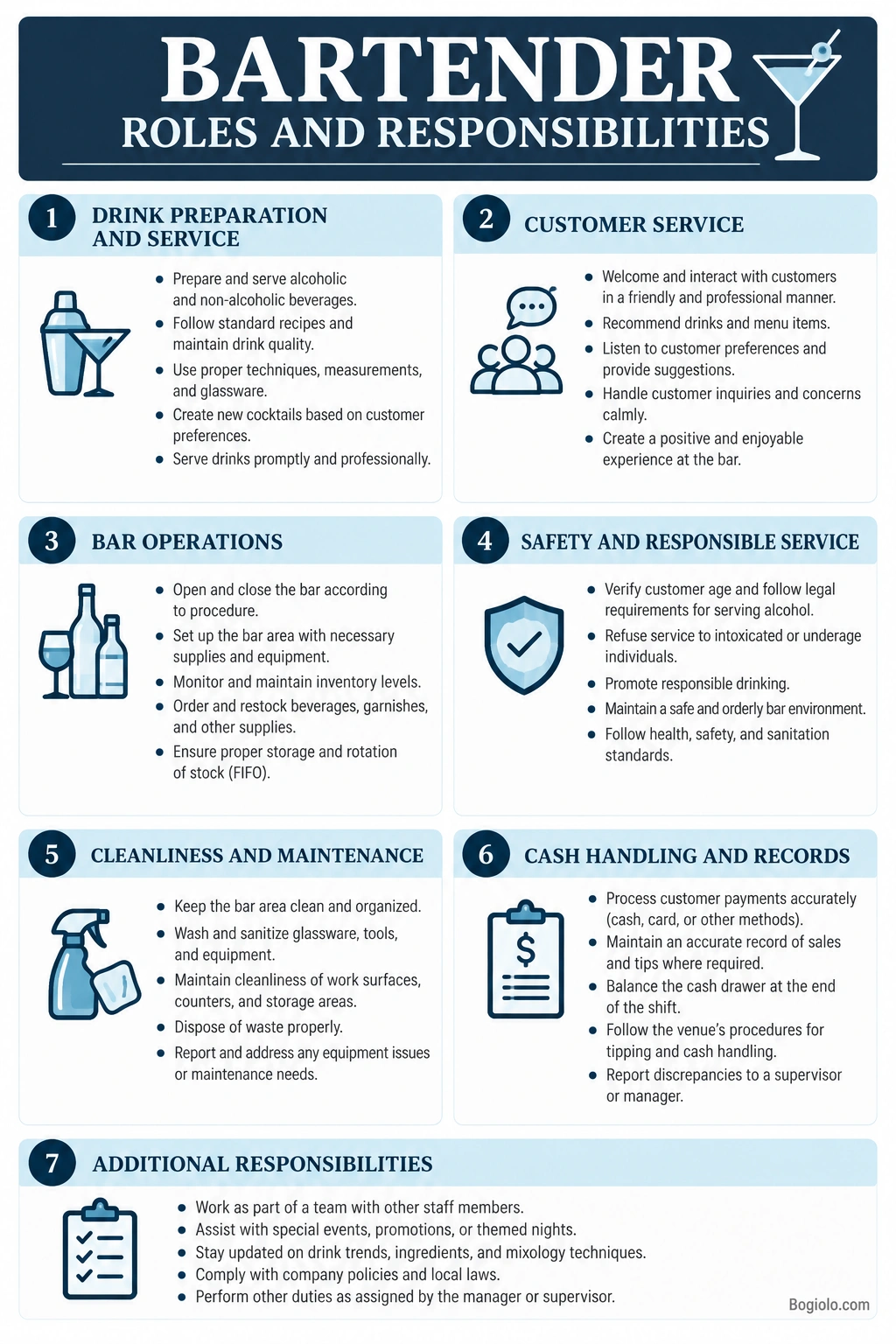
Sample job responsibilities:
- Prepare and serve alcoholic and non-alcoholic beverages according to established recipes.
- Deliver friendly, professional, and efficient customer service.
- Maintain a clean, organized, and properly stocked bar area.
- Monitor inventory and report supply shortages to management.
- Process customer transactions and maintain accurate sales records as assigned.
- Follow responsible alcohol service requirements and applicable laws.
- Coordinate with team members to maintain smooth service.
- Complete opening, closing, cleaning, and shift handover duties.
Employers can customize this list based on the venue, staffing structure, service style, and experience required for the position.
Essential Skills for a Bartender
Successful bartenders combine practical beverage knowledge with communication, organization, and problem-solving skills. Employers often look for candidates who can deliver reliable service while managing several tasks at once.
Communication Skills
Bartenders need to understand orders, explain menu options, and communicate effectively with customers and coworkers. Clear communication helps prevent order errors and resolve misunderstandings.
Time Management and Multitasking
Busy shifts require bartenders to prioritize orders, prepare multiple drinks, monitor customer needs, and keep their workstations organized. Good time management helps maintain service quality during peak hours.
Attention to Detail
Accurate measurements, correct ingredients, careful payment processing, and proper hygiene all require attention to detail. Small mistakes can affect drink quality, safety, and operating costs.
Product Knowledge
Bartenders should understand the drinks on the menu, common ingredients, preparation methods, and available non-alcoholic alternatives. Knowledge of allergens and ingredient substitutions is also useful, with any uncertainty checked before making recommendations.
Conflict Resolution
Customer complaints and difficult interactions can occur in hospitality settings. Bartenders should remain calm, follow company procedures, and seek support from a manager or security team when a situation becomes unsafe.
Typical Daily Duties of a Bartender
A bartender’s workday generally includes preparation before service, customer service during the shift, and cleaning and recordkeeping afterward.
Before Service
- Inspect and organize the bar workstation.
- Prepare garnishes and other ingredients according to procedure.
- Check glassware, tools, equipment, and beverage supplies.
- Review menu updates, specials, and relevant shift instructions.
During Service
- Take and prepare drink orders accurately.
- Serve customers professionally and respond to questions.
- Monitor supplies and replenish items when needed.
- Keep work surfaces clean and follow safety procedures.
- Communicate with coworkers to coordinate service.
After Service
- Clean and sanitize the bar area and equipment.
- Store ingredients and supplies correctly.
- Record inventory issues, waste, or maintenance needs.
- Complete assigned cash reconciliation and sales records.
- Prepare the workstation for the next shift.
Exact duties vary by venue. A hotel bartender, for example, may also support banquets and special events, while a restaurant bartender may coordinate closely with dining room staff.
Qualifications and Requirements for Bartenders
Qualification requirements depend on the employer and local regulations. Some entry-level positions provide on-the-job training, while specialized cocktail bars or upscale hotels may prefer candidates with previous experience.
Common requirements may include:
- Previous bartending or hospitality experience, where required.
- Knowledge of common beverage recipes and service techniques.
- Strong customer service and communication skills.
- Ability to work evenings, weekends, holidays, or rotating shifts.
- Physical ability to perform the essential duties of the position, with reasonable accommodations where applicable.
- Required alcohol service certification, food safety training, or other credentials where applicable.
- Knowledge of workplace safety and responsible alcohol service policies.
Employers should clearly distinguish required qualifications from preferred experience when writing a bartender job description.
Frequently Asked Questions About Bartender Roles and Responsibilities
What are the main roles and responsibilities of a bartender?
The main bartender responsibilities include preparing and serving beverages, providing customer service, managing bar supplies, maintaining cleanliness, processing payments when assigned, and following responsible alcohol service procedures.
What are the five most important bartender duties?
Five core duties are preparing drinks accurately, serving customers professionally, keeping the bar clean, managing supplies, and following safety and alcohol service requirements. Other duties depend on the workplace.
What skills should a bartender have?
Important bartender skills include communication, customer service, time management, multitasking, attention to detail, beverage preparation, teamwork, and conflict resolution.
Do bartenders have to handle cash?
Many bartenders process payments and reconcile sales, but this depends on the establishment. Some venues assign payment processing or cash reconciliation to separate staff members.
Do bartenders need previous experience?
Not always. Some employers hire entry-level candidates and provide training. Other positions require previous experience, knowledge of cocktail preparation, or relevant hospitality certifications.
What is the difference between a bartender and a barista?
A bartender typically prepares and serves a range of alcoholic and non-alcoholic beverages in bars, restaurants, hotels, and similar venues. A barista primarily prepares and serves coffee and other coffee-based drinks, although duties can overlap in some establishments.
Can bartender roles and responsibilities be used in a job description?
Yes. The responsibilities can serve as a starting point for a bartender job description. Employers should customize the duties to match their venue, operating procedures, legal requirements, and expectations for the position.
Conclusion
Bartender roles and responsibilities extend beyond mixing and serving drinks. Bartenders help deliver excellent customer service, maintain bar operations, monitor inventory, process transactions when required, and promote a clean and safe environment.
Understanding these duties helps job seekers prepare for hospitality roles and enables employers to create clear job descriptions and training plans. By combining beverage knowledge, attention to detail, teamwork, and responsible service, bartenders contribute to a positive guest experience and the smooth operation of a hospitality business.
Download: Bartender Roles and Responsibilities Template
