
In the world of business, understanding your company’s financial health is crucial for making informed decisions. One of the key tools for assessing this is the profit and loss statement, also known as an income statement. This document provides a snapshot of your company’s financial performance over a specific period, summarizing revenues, costs, and expenses to show whether the business made a profit or a loss. Let’s delve deeper into why the profit and loss statement is essential for your business.
What is a Profit and Loss Statement?
A profit and loss statement is a financial document that provides an overview of your company’s revenues, costs, and expenses during a specific period, typically monthly, quarterly, or annually. It serves as a vital tool for assessing the financial performance of your business and can help you make informed decisions about future strategies. By analyzing the data presented in the profit and loss statement, you can gain insights into your company’s profitability and identify areas where you may need to make adjustments.
The statement typically includes the following components:
– Revenues: The total income generated from sales of goods or services.
– Costs of Goods Sold (COGS): The direct costs associated with producing the goods or services sold.
– Gross Profit: The difference between revenues and COGS.
– Operating Expenses: The costs incurred to run the business, such as rent, utilities, salaries, and marketing expenses.
– Net Income: The final figure after deducting all expenses from revenues, indicating whether the business made a profit or a loss.
Why is a Profit and Loss Statement Important?
A profit and loss statement is crucial for several reasons:
– Financial Health Assessment: It provides a clear picture of your company’s financial performance, allowing you to assess its profitability.
– Decision Making: By analyzing the data in the statement, you can make informed decisions about pricing, cost-cutting measures, and investment opportunities.
– Investor Confidence: Investors and stakeholders use the profit and loss statement to evaluate the financial health of your business before making investment decisions.
– Compliance: Many regulatory bodies require businesses to prepare and submit profit and loss statements for tax purposes, ensuring compliance with financial reporting standards.
What to Include in a Profit and Loss Statement
When preparing a profit and loss statement for your business, it’s essential to include the following components:
– Revenues: The total income generated from sales.
– Cost of Goods Sold (COGS): The direct costs associated with producing the goods or services sold.
– Gross Profit: The difference between revenues and COGS.
– Operating Expenses: The costs incurred to run the business.
– Net Income: The final figure after deducting all expenses from revenues.
It’s important to categorize expenses accurately to ensure a clear understanding of your company’s financial performance.
Samples of Basic Profit And Loss Statement Template:

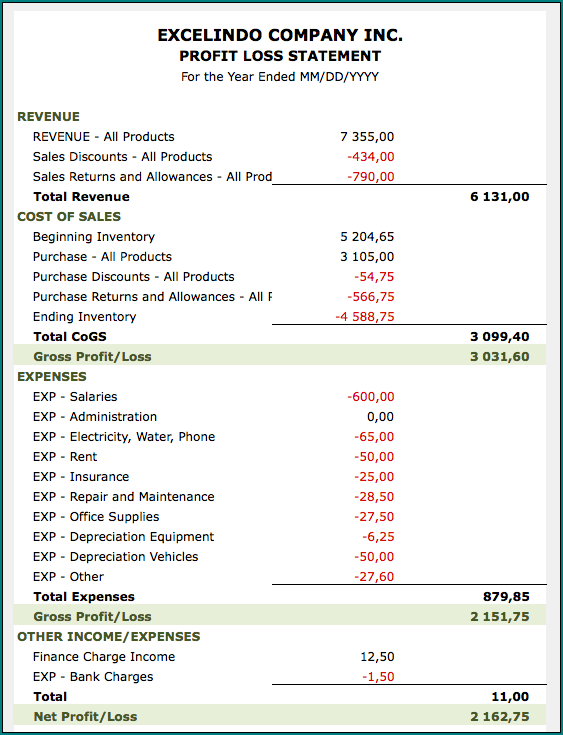
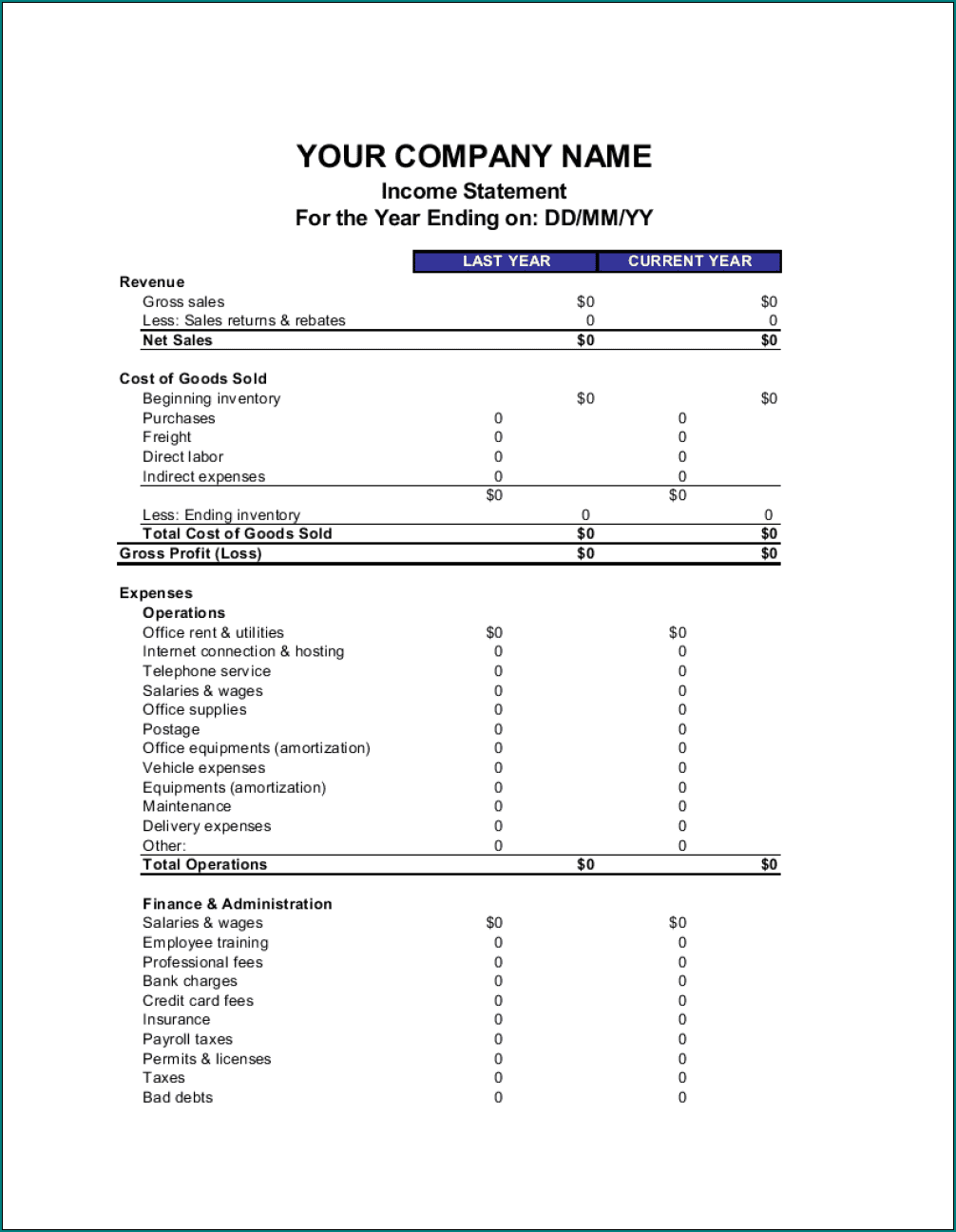
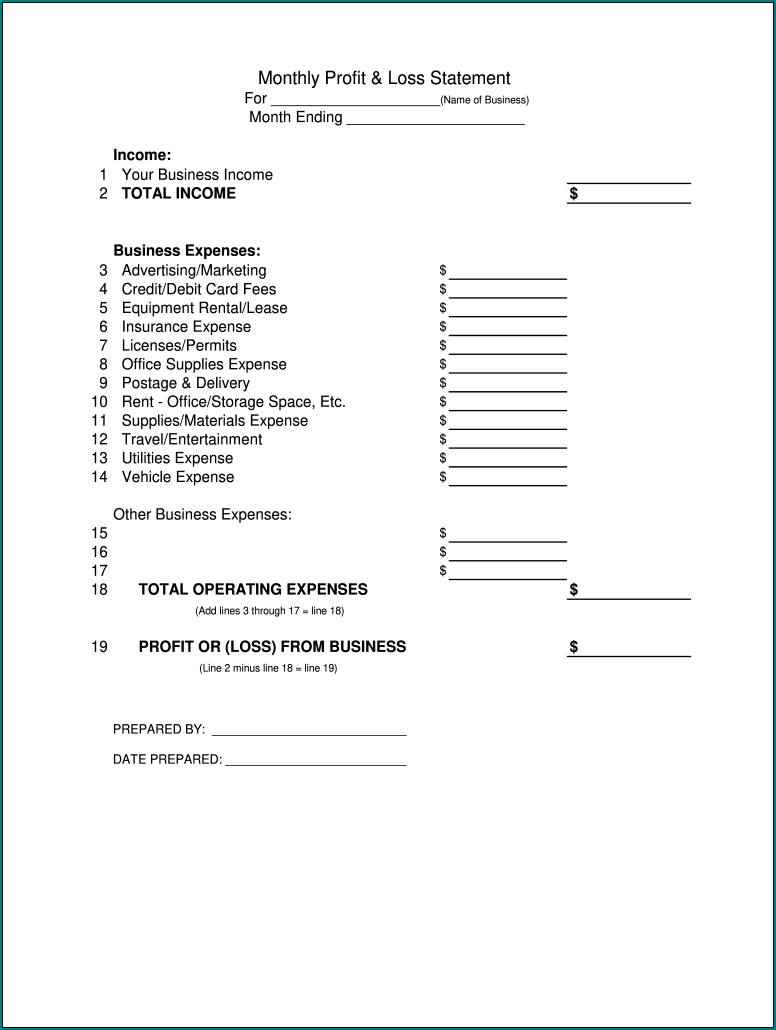
How to Analyze a Profit and Loss Statement
Analyzing a profit and loss statement involves several steps:
1. Calculate Gross Profit: Subtract COGS from revenues to calculate the gross profit.
2. Assess Operating Expenses: Review operating expenses to identify any areas of overspending or cost-cutting opportunities.
3. Evaluate Net Income: Analyze the net income to determine whether your business made a profit or a loss.
4. Compare Periods: Compare the current statement with previous periods to track your company’s financial performance over time.
5. Identify Trends: Look for trends in revenues, costs, and expenses to identify areas for improvement or growth opportunities.
6. Seek Professional Advice: If you’re unsure how to interpret the data in your profit and loss statement, consider seeking advice from a financial expert.
Tips for Creating an Effective Profit and Loss Statement
To ensure your profit and loss statement is accurate and useful, consider the following tips:
– Regular Updates: Prepare profit and loss statements regularly to track your company’s financial performance effectively.
– Accurate Categorization: Categorize revenues and expenses correctly to provide a clear overview of your financial situation.
– Review Periodically: Regularly review and analyze your profit and loss statement to identify any red flags or areas for improvement.
– Seek Professional Help: If you’re unsure how to prepare a profit and loss statement, consider hiring a financial professional to assist you.
– Use Accounting Software: Utilize accounting software to streamline the process of creating and analyzing profit and loss statements.
In conclusion, a profit and loss statement is a valuable tool for assessing the financial health of your business. By understanding the components of this document and how to analyze it effectively, you can make informed decisions to drive your company’s success. Remember to regularly review and update your profit and loss statement to stay on top of your financial performance.
Basic Profit And Loss Statement Template | Excel download
