A residential lease agreement is an important document that outlines the terms under which a tenant can rent and occupy a property owned by a landlord. It establishes clear expectations for both parties, including rent payments, lease duration, security deposits, property maintenance, and other responsibilities.
Whether you are a landlord renting out a house or apartment or a tenant preparing to sign a lease, understanding this document can help prevent misunderstandings. A well-prepared rental agreement provides a written record of the agreed terms and helps both parties understand their rights and obligations.
This guide explains what a residential lease agreement should include, how to prepare one, and which details deserve careful attention before signing. You will also learn how a residential lease template can simplify the process while helping you organize essential rental information.
What Is a Residential Lease Agreement?
A residential lease agreement is a written contract between a landlord and a tenant that establishes the terms for renting a home, apartment, condominium, or other residential property. It identifies the property, specifies the rental period, and explains the financial and practical conditions of the tenancy.
The agreement typically covers monthly rent, payment deadlines, security deposits, utility responsibilities, maintenance obligations, occupancy limits, and procedures for ending the tenancy. It may also address pets, parking, property alterations, and other rules that apply to the rental.
A residential lease is sometimes called a residential rental agreement, house lease agreement, apartment lease, or tenant lease agreement. The exact terminology and legal effect can vary depending on the jurisdiction and the type of tenancy.
Why Is a Residential Lease Agreement Important?
A written lease helps landlords and tenants understand the terms of a rental arrangement. It creates a shared reference point and can reduce disputes caused by unclear expectations.
1. Clarifies the Responsibilities of Both Parties
A lease explains what the landlord must provide and what the tenant must do during the tenancy. For example, it can clarify who handles routine maintenance, how repairs should be reported, and which utilities each party must pay.
Clear responsibilities make it easier to manage the property and resolve questions before they become serious disagreements.
2. Establishes Rental and Payment Terms
The agreement records the rent amount, payment schedule, accepted payment methods, and any other permitted charges. It should also explain how the parties will handle changes to the rent when legally allowed.
Written payment terms help both parties keep accurate records and understand their financial obligations throughout the tenancy.
3. Provides a Record of the Agreement
A signed lease documents the terms accepted by the landlord and tenant. If a disagreement arises, the document can help establish what the parties agreed to, subject to applicable law and other relevant evidence.
Both parties should retain a complete copy of the signed agreement and any written amendments.
What to Include in a Residential Lease Agreement
A complete residential lease should address the essential details of the tenancy. The following sections provide a useful starting point, although local laws may require additional disclosures or specific wording.
1. Landlord and Tenant Information
Identify the landlord or authorized property manager and every tenant who will be legally responsible under the agreement. Include the names and appropriate contact information for each party.
If a property management company handles the rental, clarify its role and provide the correct contact details for notices, maintenance requests, and other tenancy matters.
2. Property Description
Specify the complete rental property address, including the unit number when applicable. If the tenancy includes a parking space, storage area, or other shared or private facilities, describe those arrangements clearly.
Accurate property identification helps prevent confusion about what the tenant is entitled to occupy or use under the lease.
3. Lease Term and Renewal Conditions
State when the tenancy begins and, where applicable, when it ends. A fixed-term lease establishes a defined rental period, while a periodic tenancy may continue from month to month or according to another agreed schedule.
Explain any renewal procedures and the notice requirements for ending or changing the tenancy. Make sure these provisions comply with the applicable law rather than relying on a generic template.
4. Rent Amount and Payment Terms
Specify the amount of rent, the due date, the accepted payment methods, and the process for recording payments. If the agreement permits late fees or other charges, describe them clearly and ensure they are lawful.
Consider including instructions for reporting payment errors and the method for communicating any permitted changes to the payment arrangements.
5. Security Deposit
If a security deposit is required, state the amount and explain how it will be handled under local law. Include any applicable rules about deposit protection, permitted deductions, accounting, and the return of the remaining balance.
Security deposit limits and handling requirements differ by location. Before finalizing the lease, verify the rules that apply to the property.
6. Utilities and Other Expenses
Clarify who is responsible for electricity, water, gas, internet, waste collection, and other relevant services. If expenses are shared, explain how they are calculated and when payments are due.
Also identify any additional charges associated with the tenancy, such as parking fees or agreed service costs. Every charge should be described transparently and comply with local requirements.
7. Maintenance and Repairs
Explain how tenants should report maintenance problems and how the landlord will communicate about necessary repairs. The lease can also describe reasonable tenant responsibilities, such as keeping the premises clean and reporting damage promptly.
Do not use a general lease clause to remove responsibilities that the landlord must retain under applicable law. Rules about habitability, essential services, repairs, and maintenance vary by jurisdiction.
8. Occupancy and House Rules
Identify the permitted occupants and outline reasonable rules for using the property. Depending on the rental, this section may address noise, smoking, pets, parking, shared facilities, and alterations.
Rules should be clear, consistent with the rental listing and any applicable building requirements, and compliant with fair housing and other relevant laws.
9. Entry, Privacy, and Property Access
Explain how the landlord may access the property for inspections, repairs, or other permitted purposes. The agreement should reflect applicable requirements for notice, reasonable timing, emergencies, and tenant privacy.
Because access rules vary, avoid assuming that one standard notice period applies everywhere. Confirm the requirements for the property’s location.
10. Signatures and Required Disclosures
The agreement should provide signature and date fields for the parties whose signatures are required. Depending on local law, additional disclosures or attachments may be necessary.
These may relate to safety conditions, known property hazards, building regulations, or other legally required information. Attachments should be identified clearly and supplied as required before or when the lease is signed.
How to Create a Residential Lease Agreement Step by Step
Preparing a lease is easier when you gather the necessary information before drafting the document. Follow these steps to create a clear and organized agreement.
Step 1: Gather the Property and Party Details
Collect the landlord’s information, tenant names, property address, rental dates, rent amount, deposit details, and utility arrangements. Verify all names and figures before entering them into the document.
Step 2: Choose a Suitable Lease Template
A residential lease agreement template can help organize the document into familiar sections. It provides a starting structure for property information, payment terms, occupancy rules, and signatures.
Choose a template designed for the relevant location and type of tenancy. A generic template may omit local requirements, so it should be reviewed and adapted before use.
Step 3: Customize the Rental Terms
Fill in the specific terms of the arrangement and remove provisions that do not apply. Make sure the agreement accurately reflects what the landlord and tenant have discussed.
Use plain language wherever possible. If a clause is important or potentially ambiguous, clarify its meaning before asking the parties to sign.
Step 4: Review Legal Requirements
Check the rules that apply to residential rentals in the property’s jurisdiction. These may govern deposits, rent increases, required disclosures, notice periods, entry rights, habitability, and termination procedures.
Consider consulting a qualified local attorney or housing professional if the agreement involves unusual terms or significant legal questions.
Step 5: Sign and Keep Copies
Give all parties an opportunity to review the completed agreement and ask questions before signing. Provide each party with a fully signed copy and retain related documents securely.
Record any later changes in writing and have them approved according to the agreement and applicable law.
Common Residential Lease Agreement Mistakes to Avoid
Small omissions can lead to confusion during a tenancy. Review the following points before finalizing a rental contract.
- Using an unsuitable template: Choose a document appropriate for the property’s location and tenancy type.
- Leaving important terms unclear: Specify rent, payment dates, responsibilities, and lease duration.
- Ignoring local laws: Confirm requirements for deposits, notices, fees, and property access.
- Overlooking additional occupants: Identify the parties and occupants as required by the arrangement and applicable law.
- Failing to document the property’s condition: Consider a move-in inspection report and dated photographs where appropriate.
- Making verbal changes without records: Document agreed amendments in writing.
- Skipping the final review: Check all figures, dates, names, attachments, and signature fields before execution.
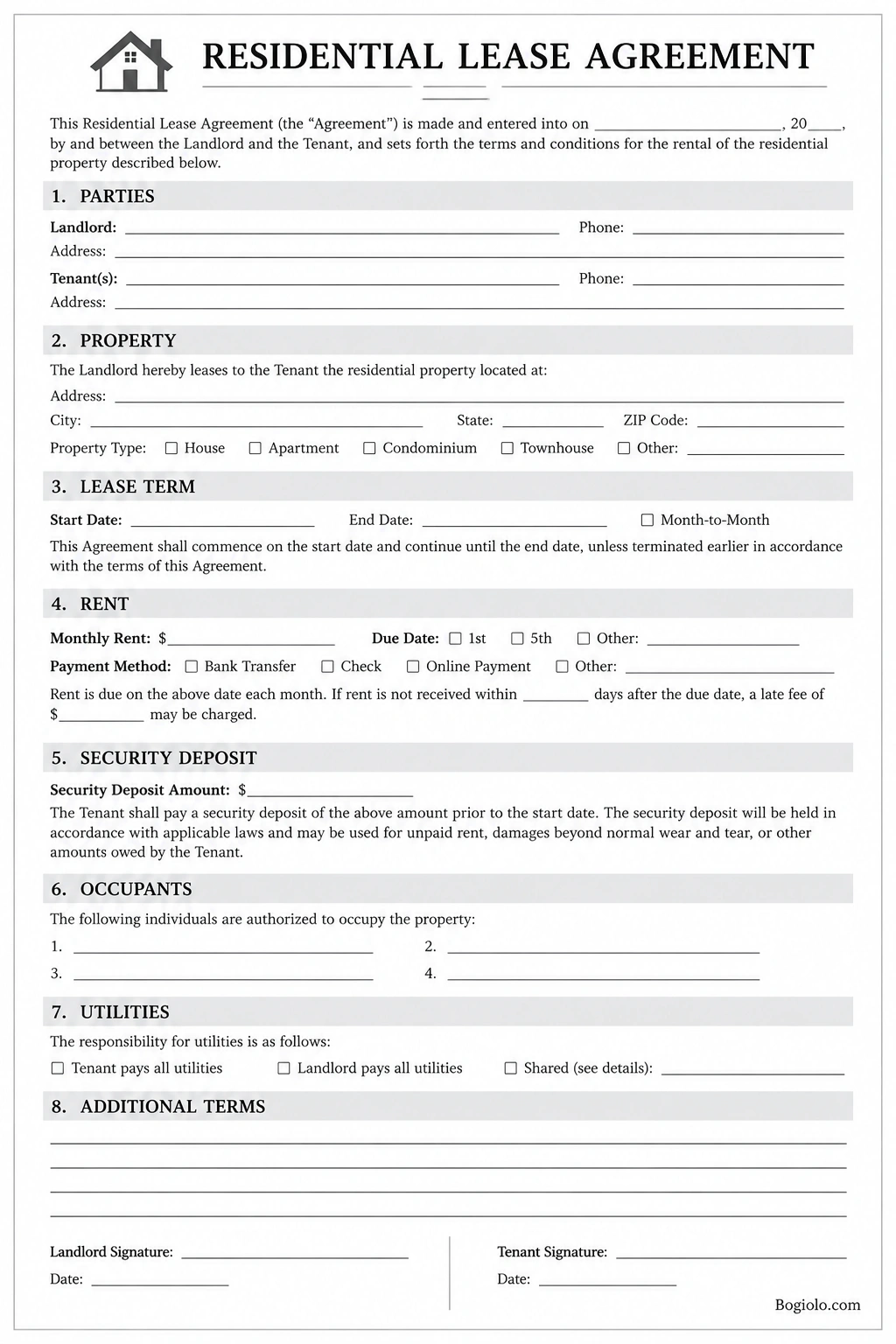
Residential Lease Agreement Template and Example
A residential lease agreement template can save time by providing a structured format for the main terms of a tenancy. It is particularly useful when preparing a straightforward rental agreement for a house, apartment, or condominium.
A typical template may include sections for landlord and tenant details, the rental property, lease term, rent, security deposit, utilities, occupants, additional conditions, and signatures. More detailed agreements may also cover maintenance, insurance, entry, pets, parking, and termination procedures.
For example, a landlord renting an apartment for a fixed period may use a lease to record the start and end dates, monthly rent, payment deadline, deposit arrangements, and responsibility for utilities. The agreement should also explain how repairs are reported and what notice is required when the tenancy ends.
This example is illustrative rather than a complete legal agreement. The appropriate wording depends on local law, the property, and the specific rental arrangement.
Before using a printable residential lease template, review every clause, add required disclosures, and confirm that the terms comply with local requirements. A template is a drafting aid, not a guarantee that the agreement is legally enforceable.
Frequently Asked Questions About Residential Lease Agreements
What is the purpose of a residential lease agreement?
A residential lease agreement records the terms under which a tenant can occupy a rental property. It explains the rental period, rent payments, security deposit, maintenance responsibilities, house rules, and other conditions agreed upon by the parties.
What is the difference between a lease and a rental agreement?
The terms can have different meanings depending on the jurisdiction. In common usage, a lease often refers to a fixed-term tenancy, while a rental agreement may refer to a periodic arrangement. However, the legal distinction and consequences depend on local law and the wording of the contract.
Can I use a free residential lease agreement template?
Yes, a free template can provide a useful starting point. However, you should confirm that it suits the property’s location and tenancy type, includes required provisions, and complies with applicable law before signing.
What happens if a residential lease agreement is not signed?
The legal effect depends on the jurisdiction and the circumstances. Some rental arrangements may be enforceable without a signed written lease, while others require particular formalities. A written agreement helps document the terms, so landlords and tenants should check the applicable rules before relying on an informal arrangement.
Can a residential lease agreement be changed after signing?
Changes may be possible when the parties follow the agreement and applicable law. Many changes should be documented in writing and approved by the relevant parties. Certain changes, such as rent increases or tenancy termination, may require specific notice or procedures.
What should tenants check before signing a lease?
Tenants should review the rent, lease dates, deposit terms, utility responsibilities, maintenance obligations, occupancy rules, entry provisions, and termination conditions. They should also inspect the property and confirm that any important promises are recorded in writing.
Does a residential lease agreement need to be notarized?
Not every residential lease requires notarization. The requirements depend on local law, the type of agreement, and the circumstances. Check the rules that apply to the property before signing.
How long should a residential lease agreement be?
There is no universal required length. A straightforward agreement may be relatively short, while a complex tenancy may require additional clauses and disclosures. The document should cover all relevant terms clearly without including unnecessary or contradictory provisions.
Conclusion
A residential lease agreement helps landlords and tenants establish clear expectations for renting and occupying a home. By documenting the property details, lease duration, rent, deposit, maintenance duties, and other conditions, both parties can better understand their responsibilities.
Start by gathering accurate information and selecting a suitable lease template. Customize the terms, check the legal requirements for the property’s location, and review the complete document before signing.
Whether you are renting out a house or preparing to move into an apartment, a clear and properly reviewed residential lease agreement provides a valuable foundation for a more organized rental relationship.
Download: Residential Lease Agreement Template
