A retainer agreement helps establish a clear, ongoing working relationship between a client and a service provider. Instead of negotiating every task separately, both parties agree on the services covered, payment terms, availability, responsibilities, and other conditions for continuing work. This arrangement is common in consulting, marketing, design, legal services, and other professional fields.
Using a retainer agreement template can make it easier to document expectations before work begins. A well-written agreement helps reduce misunderstandings, clarifies what the recurring fee covers, and explains how either party can request changes or end the relationship.
In this guide, you will learn what a retainer agreement is, how it works, which clauses to include, and how to customize a printable retainer contract template for your business. You will also find practical tips and answers to common questions about ongoing service agreements.
What Is a Retainer Agreement?
A retainer agreement is a contract between a client and a service provider that establishes the terms of an ongoing professional relationship. It typically describes the services available, the retainer fee, payment schedule, duration, responsibilities, and conditions for termination.
Depending on the arrangement, the client may pay a recurring fee for a defined amount of work, a specified number of service hours, priority access, or availability during an agreed period. The exact arrangement should be stated clearly in the contract.
For example, a business may hire a marketing consultant for a monthly retainer that covers campaign planning, performance reviews, and a set number of consulting hours. A graphic designer may provide ongoing design support, while a legal professional may offer services under a separate engagement agreement that complies with applicable professional rules.
A retainer agreement does not automatically mean unlimited work or guaranteed results. The contract should define the actual services, limits, and conditions so both parties understand what is included.
Why Is a Retainer Agreement Important?
A written retainer agreement creates a shared understanding of how an ongoing service relationship will operate. It can protect both parties by making important expectations explicit before work begins.
1. Defines the Scope of Services
The agreement identifies the work the service provider is expected to perform. It can also specify deliverables, service hours, response times, exclusions, and the process for approving additional work.
2. Establishes Predictable Payments
A retainer arrangement gives the provider a clearer payment schedule and helps the client plan expenses. The contract should explain the fee, invoice dates, payment deadlines, taxes where applicable, and how extra services will be charged.
3. Clarifies Availability and Expectations
Clients may expect quick responses or ongoing access to a provider. A written agreement can set realistic working hours, response-time targets, communication channels, and service limits.
4. Reduces Misunderstandings
When the scope, payment terms, and responsibilities are documented, both parties have a reference point if questions arise. Clear language can help prevent disputes about what was promised or which tasks require an additional fee.
5. Explains How the Relationship Can End
Termination provisions describe how either party can end the agreement, how much notice is required, and how outstanding fees or unfinished work will be handled. These details are especially important for ongoing arrangements.
Printable Retainer Agreement Template
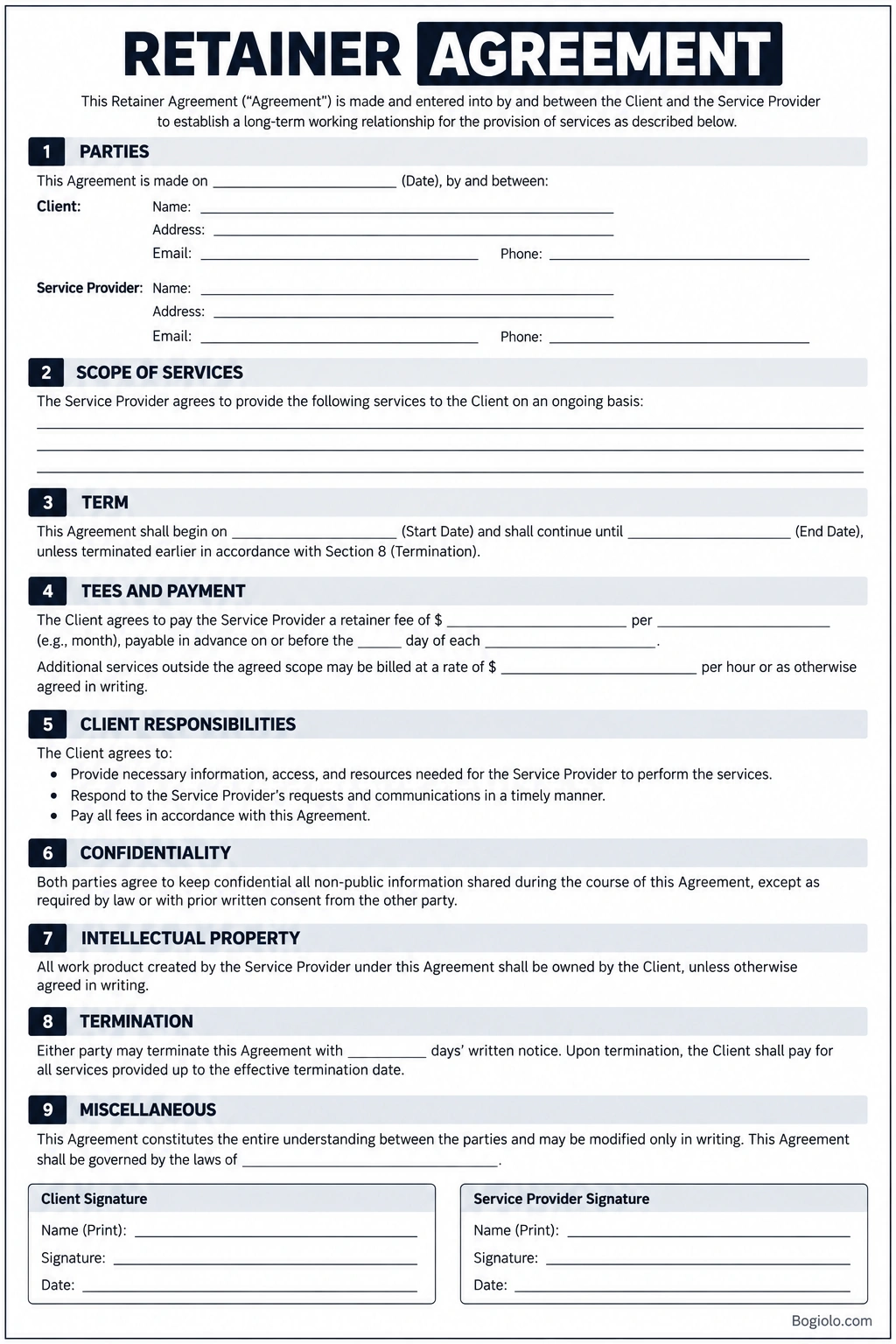
A printable retainer agreement template provides a structured starting point for documenting the relationship between a client and a service provider. It can be adapted for consulting, marketing, design, administrative support, and other recurring professional services.
The template below uses a clean black-and-white document layout with numbered sections and blank fields. It covers the parties, scope of services, agreement term, fees and payment, client responsibilities, confidentiality, intellectual property, termination, miscellaneous terms, and signature blocks.
Before signing, customize the template to reflect the actual business arrangement. In particular, clarify whether the retainer covers a set number of hours, specific deliverables, availability, or another defined service model. Review any clauses that may need to comply with local law or industry-specific requirements.
What Should a Retainer Agreement Include?
The exact clauses depend on the service and jurisdiction, but most retainer agreements benefit from several essential sections.
Parties to the Agreement
Identify the client and service provider using their correct legal names and relevant business details. Include addresses and appropriate contact information so each party can be identified and contacted.
Scope of Services
Describe the services included in the retainer. Be specific about deliverables, the amount of work covered, service hours, revision limits, response times, and any exclusions.
For example, a monthly marketing retainer might include a defined number of strategy meetings, campaign reviews, and reports. Work outside that scope could require written approval and a separate fee.
Retainer Fee and Payment Terms
State the retainer amount, billing frequency, invoice date, payment deadline, and accepted payment methods. Explain how taxes, reimbursable expenses, late payments, and additional services will be handled where applicable.
If unused hours or fees carry forward, expire, or are refundable, spell out the policy clearly. Avoid assuming that these rules are understood simply because the agreement uses the word retainer.
Term and Renewal
Specify when the agreement starts and whether it continues for a fixed period or renews automatically. If automatic renewal applies, explain the renewal interval and the notice required to prevent another term from beginning.
Responsibilities of Each Party
Explain what the provider must deliver and what the client must supply, such as project information, access credentials, feedback, approvals, or materials. Delays caused by missing client input should be addressed where relevant.
Confidentiality and Data Protection
Describe how confidential information will be protected and identify any exceptions or permitted disclosures. If the work involves personal data or sensitive business information, additional privacy and security provisions may be necessary.
Intellectual Property
Explain who owns the work created under the agreement and when any transfer of ownership or license becomes effective. Consider existing materials, third-party assets, software, and other content that may be subject to separate rights.
Termination and Outstanding Payments
State how either party can terminate the agreement, the required notice period, and what happens to work in progress, prepaid fees, outstanding invoices, and access to materials. The terms should be clear and consistent with applicable law.
Signatures and Governing Law
Provide signature lines for authorized representatives and record the signing date. A governing-law clause may identify the law intended to apply to the agreement, subject to applicable legal requirements.
Common Types of Retainer Agreements
Retainer agreements can be structured in different ways. Choosing the right model helps align the fee with the services the client actually needs.
Monthly Service Retainer
A monthly service retainer provides an agreed set of services or deliverables for a recurring fee. It is commonly used for ongoing marketing, design, content production, and business support.
Hourly Retainer
An hourly retainer may cover a defined number of professional hours during each billing period. The agreement should explain how hours are recorded, whether unused hours expire or roll over, and what happens when the allocation is exceeded.
Availability-Based Retainer
An availability-based arrangement pays for access to a provider or reserved capacity during an agreed period. The contract should distinguish availability from actual work and define any limits on response times or service access.
Project Support Retainer
A project support retainer provides continuing assistance while a larger project is underway. It may cover recurring consultations, reviews, troubleshooting, or specified support tasks.
How to Create a Retainer Agreement
Creating a useful retainer agreement starts with a clear understanding of the working relationship. Follow these steps before sending the document for signature.
Step 1: Define the Business Arrangement
Decide what the client is paying for, how long the arrangement will last, and how services will be delivered. Identify any limits on hours, deliverables, availability, or revisions.
Step 2: Agree on Fees and Billing
Confirm the retainer amount, payment schedule, additional service rates, and expense policy. Make sure the financial terms reflect the actual scope and expected workload.
Step 3: Set Communication Rules
Agree on the main communication channels, expected response times, meeting frequency, and process for requesting new work. This helps prevent routine messages from turning into unplanned service obligations.
Step 4: Document Risk and Exit Terms
Review confidentiality, intellectual property, liability, termination, and dispute-resolution provisions. The appropriate wording depends on the services, jurisdiction, and risks involved.
Step 5: Review and Sign
Check the agreement for missing information, inconsistent dates, unclear fees, and undefined terms. Both parties should have time to review the final version and retain a signed copy.
Best Practices for Managing an Ongoing Retainer
A signed agreement is only the starting point. Regular communication and consistent recordkeeping help keep the relationship productive.
- Review the scope regularly. Confirm that the agreed services still match the client’s needs.
- Track work and hours. Maintain clear records if the retainer includes an hour allowance or defined deliverables.
- Document scope changes. Approve additional work and fee changes in writing.
- Invoice consistently. Follow the agreed billing schedule and keep payment records.
- Communicate early. Raise capacity concerns, delays, or unresolved questions before they become larger problems.
- Review renewal dates. Discuss changes before the next term begins and follow any required notice provisions.
- Protect confidential information. Use appropriate access controls and follow agreed data-handling procedures.
Frequently Asked Questions About Retainer Agreements
What is the main purpose of a retainer agreement?
The main purpose is to document an ongoing service relationship, including the scope of work, fees, payment schedule, responsibilities, duration, and termination conditions. It helps both parties understand their obligations.
Is a retainer agreement a contract?
Yes, a retainer agreement is generally intended to be a contract. Its enforceability depends on the terms, circumstances, and applicable law. Important agreements should be reviewed by a qualified legal professional when appropriate.
How does a retainer fee work?
A retainer fee is paid according to the arrangement described in the contract. It may cover a defined amount of work, specified deliverables, or access to a provider during a particular period. The agreement should explain exactly what the fee includes.
Is a retainer fee refundable?
Refundability depends on the contract, the nature of the payment, and applicable law. The agreement should state how unused fees, prepaid services, and outstanding work will be handled if the relationship ends.
What is the difference between a retainer agreement and a service agreement?
A service agreement can cover a one-time project or ongoing services. A retainer agreement specifically establishes a recurring or continuing arrangement, often with recurring payments or reserved access to the provider.
Can a retainer agreement be terminated?
Many retainer agreements include termination provisions that explain how either party can end the relationship. The required notice, payment obligations, and other consequences depend on the agreed terms and applicable law.
Who needs a retainer agreement?
Retainer agreements are useful for freelancers, consultants, agencies, designers, marketing professionals, and other service providers who work with clients on an ongoing basis. Certain regulated professions may require additional or specialized engagement documents.
Can I use a free retainer agreement template?
Yes, a free template can provide a starting structure. However, you should customize the clauses to match the service, payment model, risks, and jurisdiction. A generic template may omit important provisions for your particular situation.
Conclusion
A retainer agreement creates a clear framework for an ongoing client-service provider relationship. By documenting the scope of work, fees, payment schedule, responsibilities, confidentiality, intellectual property, and termination terms, both parties can establish realistic expectations from the beginning.
A printable retainer agreement template is a convenient starting point for organizing these details. Customize the document carefully, define how recurring fees relate to the services provided, and make sure both parties understand the final terms before signing.
For complex or high-value arrangements, consider having a qualified legal professional review the agreement. A clear, tailored contract can help support a more predictable and productive long-term working relationship.
Download: Retainer Agreement Template
