A Project Proposal is a structured document that explains what a project is, why it matters, how it will be completed, and what resources are needed to achieve the desired results. Whether you are proposing a business initiative, academic project, community program, or organizational improvement, a well-prepared proposal helps decision-makers understand the idea before approving it.
A strong project proposal does more than describe an idea. It connects the problem with a practical solution, establishes clear objectives, defines the scope of work, outlines a timeline and budget, and explains the expected outcomes. Using a clear structure also makes it easier for stakeholders to review the proposal and make informed decisions.
What Is a Project Proposal?
A Project Proposal is a formal document created to present a proposed project to a person, organization, client, manager, committee, or other decision-maker. It provides enough information to evaluate the project’s purpose, feasibility, requirements, costs, timeline, and expected benefits.
The exact format can vary depending on the type of project and the audience. However, most effective proposals answer several basic questions: What problem needs to be addressed? What solution is being proposed? What will the project accomplish? How will the work be performed? How long will it take? What resources are required? And what results are expected?
Why Is a Project Proposal Important?
A project proposal provides a common starting point for everyone involved. Instead of relying on informal conversations or incomplete ideas, stakeholders can review the same document and understand the project’s intended direction.
A well-written proposal can help you:
- Explain the project idea: Clearly describe what you want to accomplish and why.
- Define project objectives: Establish specific goals that can guide the work.
- Clarify the scope: Identify what the project will and will not include.
- Plan resources: Determine the people, materials, tools, and funding required.
- Establish expectations: Set realistic timelines, deliverables, and responsibilities.
- Support approval: Give decision-makers the information they need to evaluate the proposal.
- Reduce misunderstandings: Create a written reference that stakeholders can review throughout the project.
What Should a Project Proposal Include?
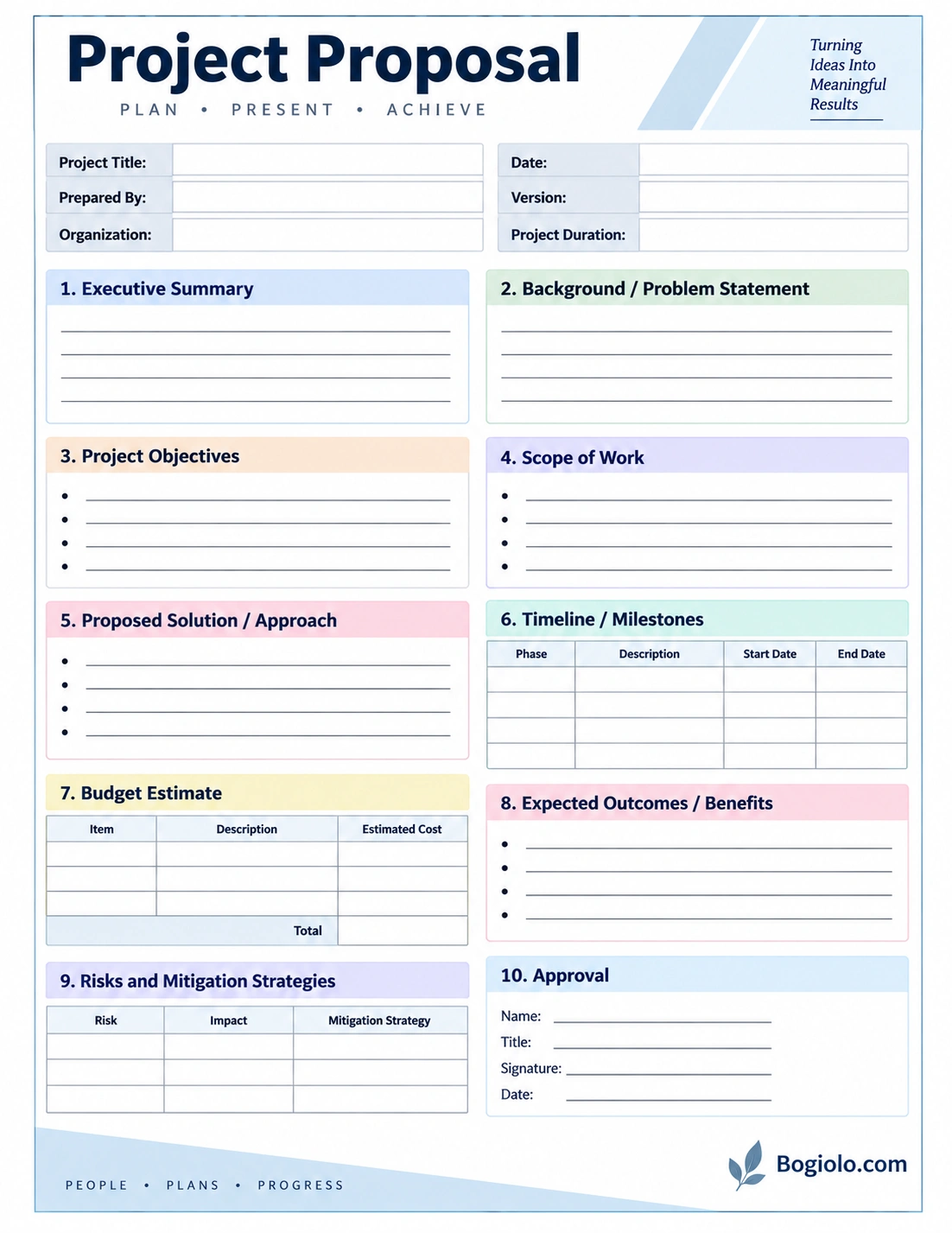
There is no single format that works for every project. However, a professional project proposal commonly includes several important sections.
Project Title and Basic Information
Start with essential information such as the project title, date, organization, person preparing the proposal, version number, and proposed project duration. This information makes the document easy to identify and organize.
Executive Summary
The executive summary provides a concise overview of the entire proposal. It should explain the main problem or opportunity, proposed solution, primary objectives, and expected results.
Although it appears near the beginning, many writers find it easier to write the executive summary after completing the rest of the proposal. This allows the summary to accurately reflect the complete project plan.
Background or Problem Statement
This section explains the situation that led to the proposed project. Describe the current problem, unmet need, opportunity, or challenge and provide enough context for the reader to understand why action is necessary.
Project Objectives
Project objectives describe what the project is intended to accomplish. Good objectives should be specific enough to guide implementation and evaluation.
Instead of writing a vague objective such as “Improve customer service,” a proposal could state that the project will “develop and implement a customer feedback system to improve response tracking and follow-up.” The second version gives the project a clearer direction.
Scope of Work
The scope defines the boundaries of the project. It can identify major activities, deliverables, features, services, or tasks that are included in the project.
A clear scope is important because it helps prevent uncontrolled expansion of the project. If necessary, you can also include exclusions to explain which activities are outside the proposed scope.
Proposed Solution or Approach
Explain how the project will address the problem. Describe the major methods, activities, phases, or strategies that will be used to achieve the objectives.
Timeline and Milestones
A project timeline shows when important activities are expected to take place. Major milestones can be used to divide the project into manageable phases and make progress easier to track.
Budget Estimate
The budget section identifies the estimated resources and costs required to complete the project. Depending on the project, this may include materials, software, equipment, labor, services, travel, training, or other expenses.
Expected Outcomes and Benefits
Explain what the project is expected to produce or improve. Outcomes may include completed deliverables, improved processes, increased efficiency, better customer experiences, new capabilities, or other measurable results.
Risks and Mitigation Strategies
Projects can face risks related to schedule, resources, technology, scope, communication, or implementation. Identifying major risks in advance demonstrates that the proposal has considered potential challenges.
Approval
If formal authorization is required, include an approval section with space for the appropriate person’s name, title, signature, and date.
How to Write a Project Proposal
Writing a project proposal becomes easier when you build it in a logical sequence. Start by understanding the problem and the audience, then develop the project plan around that foundation.
Identify the Problem or Opportunity
Begin by defining the reason for the project. Explain the current situation and identify the specific problem, need, or opportunity that the project will address.
Define Clear Objectives
Translate the problem into practical objectives. Consider what should be different when the project is finished and how success will be recognized.
Develop the Project Approach
Describe the major activities required to achieve the objectives. Keep the explanation practical and focus on the work that matters to the proposed outcome.
Build a Realistic Timeline
Break the project into major phases and assign reasonable timeframes. Include important milestones and deliverables rather than attempting to document every small task.
Estimate Required Resources
Determine what the project will need to succeed. Resources may include staff time, equipment, technology, materials, external services, or funding.
Explain the Expected Results
Show the reader what value the project is expected to create. Whenever possible, connect outcomes to measurable indicators so that project success can be evaluated later.
Tips for Creating an Effective Project Proposal
A proposal does not need to be complicated to be professional. Clear organization and relevant information are usually more valuable than unnecessary detail.
- Know your audience: Focus on the information that matters to the person reviewing the proposal.
- Keep the purpose clear: Make it easy to understand why the project should be considered.
- Use specific language: Replace vague statements with concrete objectives and deliverables.
- Make the scope realistic: Avoid promising more work than the available resources can support.
- Support important claims: Include relevant evidence, research, data, or supporting information when appropriate.
- Use consistent formatting: Headings, tables, spacing, and terminology should be easy to follow.
- Review the budget: Make sure major project activities are reflected in the resource estimate.
- Proofread before submission: Correct spelling, grammar, calculations, dates, and inconsistencies.
Project Proposal vs. Project Plan
A Project Proposal and a project plan are related, but they serve different purposes. A proposal is generally created to present and obtain approval for a proposed project. It explains the project concept, justification, approach, resources, timeline, and expected results.
A project plan is typically used after the project has been approved. It provides more detailed information about implementation, including tasks, responsibilities, schedules, dependencies, communication, resources, and monitoring.
In simple terms, the proposal helps answer “Why should we do this project and how will it work?” while the project plan focuses more heavily on “How will we manage and execute the approved project?”
Using a Project Proposal Template
A Project Proposal Template can make the writing process faster by providing a ready-made structure for the information you need to organize. Instead of starting with a blank page, you can work through each section systematically.
A printable template can be particularly useful during planning meetings, brainstorming sessions, or early project discussions. You can write down ideas, objectives, risks, estimated resources, and important milestones before preparing the final digital document.
When using a template, customize the sections to match your project. A small internal project may need only a few core sections, while a large client proposal or organizational initiative may require additional research, technical details, schedules, or supporting documentation.
Common Project Proposal Mistakes
Even a promising project can be difficult to approve if the proposal is unclear or incomplete. Avoid these common problems:
- Unclear objectives: The reader cannot determine what the project is supposed to accomplish.
- Too much background information: The proposal spends more time describing the problem than presenting the solution.
- Unrealistic timelines: The proposed schedule does not match the amount of work required.
- Incomplete budgets: Important costs or resources are left out.
- Undefined scope: The proposal does not establish clear boundaries for the project.
- Weak outcomes: The proposal does not explain what success should look like.
- Ignoring risks: Potential challenges are not acknowledged or addressed.
- Inconsistent information: Dates, costs, objectives, or deliverables conflict between sections.
Project Proposal Checklist
Before submitting your proposal, review the document using a simple checklist:
- Project title and basic information are complete.
- The problem or opportunity is clearly explained.
- The proposed solution directly addresses the problem.
- Project objectives are specific and understandable.
- The scope of work is clearly defined.
- Major activities and milestones are identified.
- The proposed timeline is realistic.
- Required resources and estimated costs are included.
- Expected outcomes and benefits are clearly described.
- Major risks and mitigation strategies have been considered.
- Approval requirements are included when necessary.
- The proposal has been reviewed for accuracy and readability.
Conclusion
A well-structured Project Proposal turns an idea into a clear and organized plan that stakeholders can evaluate. By explaining the problem, objectives, scope, proposed approach, timeline, budget, risks, and expected outcomes, you give decision-makers a practical understanding of what the project involves.
Whether you are preparing a business initiative, academic project, nonprofit program, client proposal, or internal improvement project, a structured Project Proposal Template can help you organize the essential information before presenting the final proposal. The goal is not to make the document unnecessarily long, but to make the project clear, realistic, and easy to evaluate.
Download: Project Proposal Template
