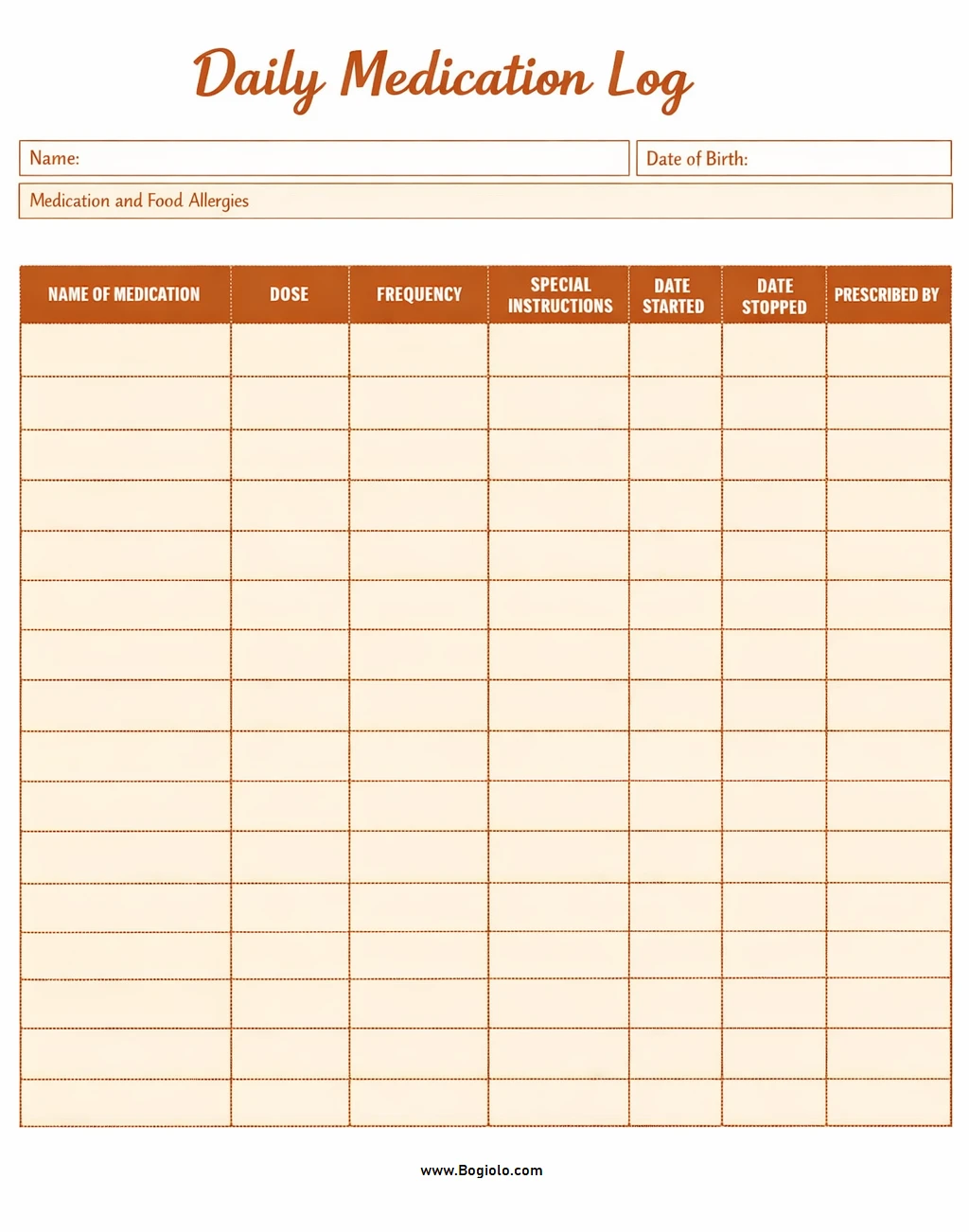
Keeping track of your medications can be a daunting task, especially if you are managing multiple prescriptions. A medication log is a valuable tool that can help you document your medication administration, track medication-related information, and ensure safe and accurate medication practices.
Using a medication log can prevent errors, promote medication adherence, and facilitate communication among healthcare providers and patients.
What is a Medication Log?
A medication log is a document or journal in which you can record important information about your medications, including the name, dosage, frequency, and any special instructions.
It serves as a comprehensive record of your medications, making it easier for you to stay organized and informed about your treatment plan.
Why Use a Medication Log?
There are several reasons why using a medication log is beneficial for individuals managing their medications:
- Preventing errors: By keeping a detailed record of your medications, you can reduce the risk of medication errors such as double-dosing or missing a dose.
- Promoting medication adherence: A medication log can help you stay on track with your medication schedule and ensure that you are taking your medications as prescribed.
- Facilitating communication: Sharing your medication log with healthcare providers enables better communication about your treatment plan and any changes that may be needed.
Key Elements of a Medication Log
When creating a medication log, there are several key elements that you should include to ensure its effectiveness:
- Medication name: Record the name of each medication you are taking.
- Dosage: Note the dosage amount for each medication.
- Frequency: Document how often you need to take each medication.
- Special instructions: Include any special instructions provided by your healthcare provider.
- Date and time: Record the date and time you took each dose of medication.
- Side effects: Note any side effects or allergic reactions you experience.
How to Create a Medication Log
Creating a medication log is simple and can be done using a notebook, spreadsheet, or mobile app. Here are some steps to help you get started:
- Gather information: Collect all the information about your medications, including their names, dosages, and frequencies.
- Choose a format: Decide on the format for your medication log, whether it’s a physical journal or a digital document.
- Create categories: Organize your medications by categories such as morning, afternoon, and evening doses.
- Record information: Fill in your medication log each time you take a dose, noting the date, time, and any special instructions.
- Review regularly: Review your medication log regularly to ensure accuracy and make any necessary updates.
Tips for Using a Medication Log
Here are some tips to help you make the most of your medication log:
- Keep it up to date: Make sure to update your medication log every time you take a dose or experience any changes in your treatment plan.
- Share with healthcare providers: Show your medication log to your healthcare providers during appointments to help them better understand your medication regimen.
- Use reminders: Set reminders on your phone or use a pill organizer to help you remember to take your medications on time.
- Store it in a safe place: Keep your medication log in a secure location where it is easily accessible but protected from damage or loss.
In Conclusion
A medication log is a valuable tool for anyone managing multiple medications. By documenting your medication administration, tracking medication-related information, and ensuring safe and accurate medication practices, you can take control of your health and well-being. Make sure to create a medication log that includes all the key elements and use it consistently to reap the benefits of improved medication management.
Medication Log Template – DOWNLOAD
