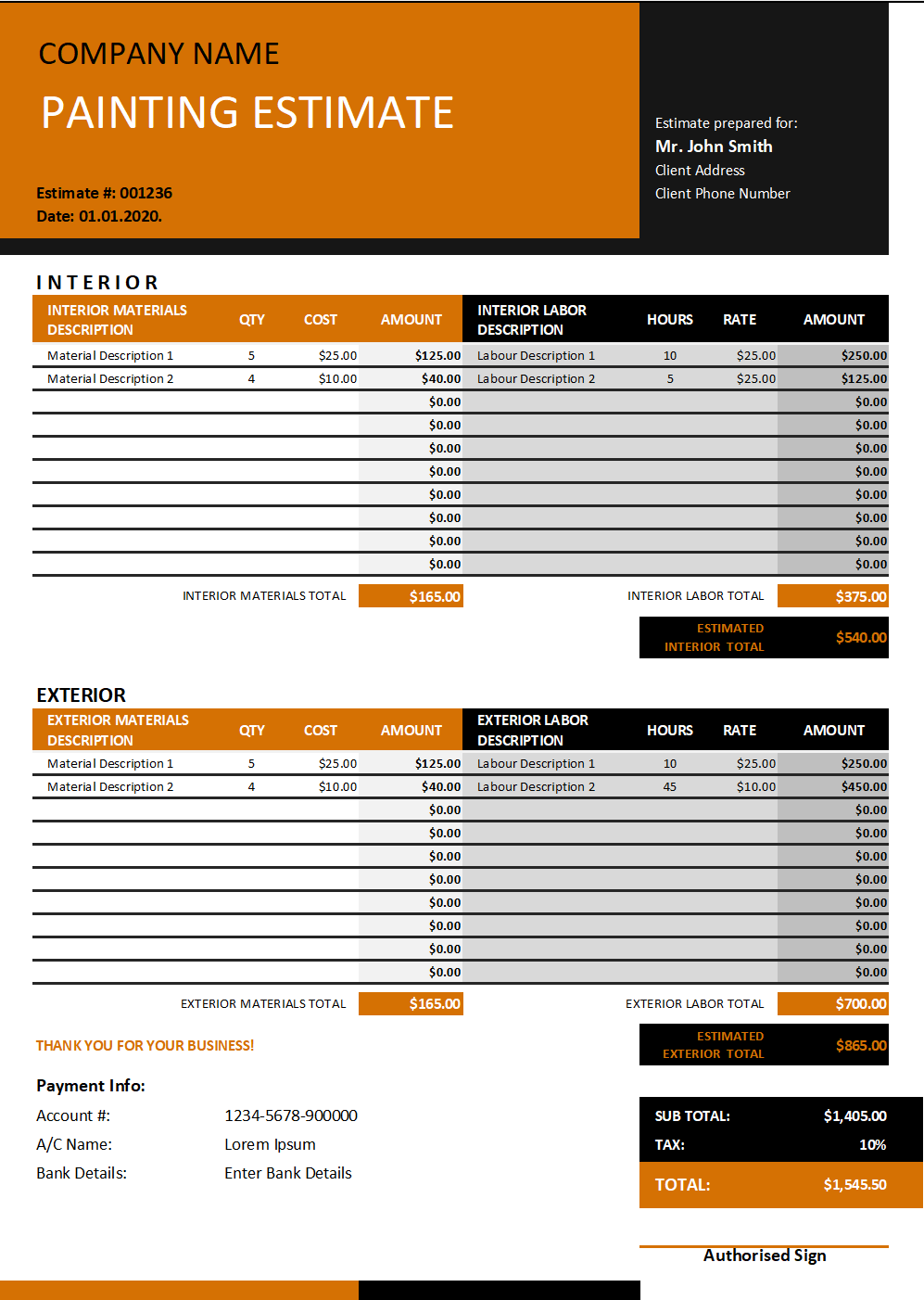
When it comes to hiring a painter for your home or business, one of the first steps in the process is obtaining a painting estimate. A painting estimate provides a preliminary, approximate cost of a project to a potential client, helping them with budgeting and comparison shopping. It also serves as a tool for the painter to communicate the project’s scope of work, materials, and labor costs, and to set clear expectations for the job.
What is a Painting Estimate?
A painting estimate is an essential part of the painting process as it outlines the expected costs and details of the project. It provides a breakdown of the materials needed, the labor costs, and the overall scope of work. This estimate gives the client an idea of what to expect in terms of cost and timeline for the project.
Why is a Painting Estimate Important?
There are several reasons why a painting estimate is crucial for both the client and the painter. For the client, a painting estimate helps with budgeting by providing a clear understanding of the costs involved in the project. It also allows the client to compare prices and services from different painters to make an informed decision. For the painter, a painting estimate helps in setting clear expectations for the job, ensuring that both parties are on the same page regarding the scope of work and costs involved.
What to Include in a Painting Estimate
When creating a painting estimate, it is important to include specific details to provide an accurate representation of the project. Some key elements to include in a painting estimate are:
- Scope of Work. Clearly outline the tasks that will be performed, such as surface preparation, priming, painting, and cleanup.
- Materials. List the materials that will be used, including paint, brushes, rollers, drop cloths, and any other supplies needed for the job.
- Labor Costs. Break down the labor costs, including the hourly rate or flat fee for the project.
- Timeline. Provide an estimated timeline for the project, including the start date and expected completion date.
- Payment Terms. Clearly state the payment terms, such as the deposit required, payment schedule, and accepted payment methods.
- Additional Services. Include any additional services that may be offered, such as color consultations or touch-up services.
- Terms and Conditions. Outline any terms and conditions related to the project, such as warranties or guarantees on the work performed.
How to Create a Painting Estimate
Creating a painting estimate requires careful consideration of the project details and costs involved. Here are some steps to follow when creating a painting estimate:
- Assess the Project. Visit the site and assess the scope of work required, including the size of the area to be painted and any special considerations.
- Calculate Materials. Determine the amount of materials needed for the project, including paint, primer, and any additional supplies.
- Estimate Labor Costs. Calculate the labor costs based on the time required to complete the project and the hourly rate or flat fee for the painter.
- Include Additional Costs. Factor in any additional costs, such as equipment rental, travel expenses, or permits required for the job.
- Provide a Detailed Breakdown. Clearly outline the costs for materials, labor, and any additional services in the estimate to give the client a comprehensive view of the project.
- Review and Finalize. Review the estimate with the client to ensure all details are accurate and address any questions or concerns before finalizing the agreement.
Tips for a Successful Painting Estimate
When creating a painting estimate, there are some tips to keep in mind to ensure a successful and professional presentation:
- Be Detailed. Include specific details about the project, materials, and costs to provide a clear understanding for the client.
- Be Transparent. Clearly outline the terms and conditions of the estimate, including payment terms and any warranties or guarantees offered.
- Be Accurate. Take the time to accurately calculate the costs involved in the project to avoid any surprises or misunderstandings later on.
- Be Responsive. Be available to answer any questions or concerns the client may have about the estimate to build trust and confidence in your services.
- Be Professional. Present the estimate in a professional manner, including a detailed breakdown of costs, timeline, and services offered to showcase your expertise and reliability.
- Follow Up. After providing the estimate, follow up with the client to see if they have any additional questions or if they are ready to move forward with the project.
In Conclusion
A painting estimate is an essential tool for both clients and painters in the painting process. It helps clients budget for the project, compare prices, and make informed decisions, while also allowing painters to communicate the scope of work, costs, and expectations for the job. By following these tips and guidelines for creating a painting estimate, both clients and painters can ensure a successful and transparent painting experience.
Painting Estimate Template Word
