A cashier plays an important role in the daily operations of retail stores, supermarkets, restaurants, and other businesses. As one of the main employees who interact directly with customers, a cashier helps process transactions, handle payments, answer questions, and create a positive checkout experience.
Understanding the roles and responsibilities of a cashier is essential for anyone interested in applying for a cashier position or managing employees in a retail environment. The job involves more than simply receiving payments. Cashiers must maintain transaction accuracy, follow company procedures, assist customers, and support smooth business operations.
Whether you are preparing a cashier job description, writing a resume, or learning about this career, this guide explains the main cashier duties, daily tasks, required skills, and workplace expectations. You will also find practical examples to help you understand what employers typically expect from a professional cashier.
What Is the Role of a Cashier?
A cashier is an employee responsible for processing customer purchases and handling payment transactions at a business. Cashiers typically work at checkout counters in supermarkets, retail stores, restaurants, convenience stores, and other customer-facing businesses.
The primary role of a cashier is to ensure that every transaction is completed accurately and efficiently. This includes scanning products, entering prices, accepting payments, issuing receipts, and providing the correct change when necessary.
However, cashier responsibilities often extend beyond payment processing. Depending on the workplace, cashiers may also assist customers, handle returns, maintain checkout areas, answer product questions, and help with basic store operations.
A good cashier combines accuracy, customer service, communication, and organization to provide a smooth shopping experience.
Key Roles and Responsibilities of a Cashier
Although cashier duties can vary depending on the industry and employer, most positions share several important responsibilities. The following sections explain the main tasks expected from cashiers in retail and service environments.
1. Processing Customer Transactions
One of the most important cashier responsibilities is processing customer purchases accurately. Cashiers must ensure that every item is correctly entered into the point-of-sale (POS) system before completing a transaction.
Typical transaction duties include:
- Scanning product barcodes or entering item prices manually.
- Checking product quantities and descriptions.
- Applying approved discounts and promotional offers.
- Calculating the final purchase amount.
- Completing transactions through the POS system.
- Providing customers with accurate receipts.
Accuracy is essential because transaction errors can affect sales records, inventory information, and customer satisfaction.
2. Handling Cash and Other Payments
Cashiers are responsible for receiving payments and ensuring that transactions are recorded correctly. Depending on the business, customers may pay using cash, debit cards, credit cards, mobile payment applications, or other approved methods.
Payment-related responsibilities include:
- Accepting approved forms of payment.
- Counting cash carefully.
- Providing the correct change.
- Processing electronic payments according to company procedures.
- Issuing receipts or transaction confirmations.
- Following cash-handling and payment security policies.
Cashiers must remain attentive throughout the payment process to prevent errors and protect company assets.
3. Providing Excellent Customer Service
Customer service is another essential part of a cashier’s job. Since cashiers regularly interact with customers, their behavior can influence how people feel about the business.
Common customer service duties include:
- Greeting customers politely.
- Answering basic questions about products and services.
- Assisting customers during checkout.
- Explaining available promotions and discounts.
- Listening to customer concerns.
- Maintaining a friendly and professional attitude.
A cashier should remain patient and respectful, even when dealing with long checkout lines or dissatisfied customers.
4. Handling Returns, Exchanges, and Refunds
Some cashier positions require employees to process product returns, exchanges, and refunds. These transactions must follow the company’s policies and applicable procedures.
Responsibilities may include checking purchase receipts, verifying product conditions, entering return information into the POS system, and directing unusual cases to a supervisor.
Cashiers should never approve refunds or exceptions outside their authorized responsibilities. Following established procedures helps prevent transaction disputes and financial losses.
5. Maintaining Accurate Transaction Records
Cashiers must ensure that sales transactions are properly recorded. Accurate records help businesses monitor revenue, reconcile registers, and identify potential discrepancies.
Recordkeeping responsibilities may include:
- Keeping receipts and transaction documents organized.
- Recording transactions through the POS system.
- Reporting payment errors or unusual transactions.
- Following register reconciliation procedures.
- Providing transaction information when requested by supervisors.
Good recordkeeping supports accountability and helps maintain accurate business records.
6. Maintaining a Clean and Organized Checkout Area
A cashier is often responsible for keeping the checkout station clean, organized, and ready for customers. An orderly workspace helps transactions move smoothly and creates a professional shopping environment.
Typical duties include:
- Keeping the checkout counter clean.
- Organizing shopping bags and receipt paper.
- Checking that necessary supplies are available.
- Keeping the payment terminal and equipment in proper condition.
- Reporting damaged or malfunctioning equipment.
7. Balancing the Cash Register
At the end of a shift, some cashiers are required to count the cash in their registers and compare it with the recorded sales totals.
This process helps identify whether the register balance matches the expected amount. If a discrepancy occurs, the cashier should report it to the appropriate supervisor and follow company procedures.
Cashiers should never attempt to hide or independently adjust unexplained differences in register balances.
8. Following Security and Loss Prevention Procedures
Cashiers help protect business assets by following workplace security procedures. They must handle payments responsibly and remain alert to unusual transaction activity.
Security-related responsibilities may include:
- Following authorized cash-handling procedures.
- Protecting register access and login credentials.
- Verifying transactions when required.
- Reporting suspicious activities to management.
- Following company policies for voids, refunds, and discounts.
- Protecting customer payment information.
9. Supporting Daily Store Operations
In many workplaces, cashier responsibilities also include helping other team members and supporting daily store activities.
Depending on the employer, these tasks may involve organizing shopping baskets, directing customers to products, checking basic stock availability, assisting with bagging purchases, or helping maintain an orderly checkout area.
Cashiers should understand their assigned duties and cooperate with colleagues to keep business operations running efficiently.
Daily Duties of a Cashier
A cashier’s daily routine generally follows a consistent process, although specific tasks may vary between businesses. Understanding these activities can help new employees prepare for their responsibilities.
Before Starting a Shift
- Arrive on time and prepare for the assigned shift.
- Check the checkout station and POS equipment.
- Confirm the opening cash balance if required.
- Make sure receipt paper and other supplies are available.
- Review important announcements or promotional information.
During the Shift
- Greet customers and process purchases.
- Accept payments and provide accurate change.
- Answer basic customer questions.
- Apply authorized promotions and discounts.
- Maintain an organized checkout area.
- Follow company procedures for returns and refunds.
- Report technical problems or transaction discrepancies.
At the End of a Shift
- Complete the required cash register reconciliation.
- Report any cash shortages or overages.
- Organize receipts and transaction records.
- Clean and prepare the checkout station for the next employee.
- Complete any required shift reports.
- Inform the supervisor about unresolved issues.
Essential Skills Every Cashier Should Have
Successful cashiers need a combination of technical abilities and interpersonal skills. These qualities help employees perform transactions accurately while maintaining good customer relationships.
1. Basic Math Skills
Cashiers should understand basic arithmetic to verify purchase totals, count cash, and provide the correct change. Although POS systems perform most calculations, numerical accuracy remains important.
2. Communication Skills
Clear communication helps cashiers interact with customers, answer questions, and coordinate with coworkers. A polite and professional approach can improve the checkout experience.
3. Attention to Detail
Cashiers must pay attention to product prices, quantities, discounts, and payment amounts. Careful checking helps reduce transaction mistakes.
4. Customer Service Skills
Patience, friendliness, and problem-solving abilities are essential when assisting customers. Cashiers should remain calm and professional when handling complaints or unexpected situations.
5. Time Management
During busy periods, cashiers must process transactions efficiently without sacrificing accuracy. Good time management helps reduce waiting times and keeps checkout operations moving.
6. Computer and POS Skills
Many businesses use electronic checkout systems to record sales and process payments. Cashiers should be comfortable operating POS terminals, barcode scanners, receipt printers, and payment devices.
7. Honesty and Reliability
Cashiers handle customer payments and company transactions, so trustworthiness is essential. Employers expect cashiers to follow procedures, arrive on time, and report problems honestly.
Cashier Job Description Example
If you are an employer preparing a job advertisement, the following example provides a simple overview of a cashier position and its main responsibilities.
Job Title: Cashier
Job Summary:
We are looking for a reliable and customer-focused cashier to join our team. The successful candidate will be responsible for processing customer transactions, handling payments, maintaining accurate sales records, and providing excellent customer service. The ideal applicant should have good communication skills, basic math abilities, and attention to detail.
Key Responsibilities:
- Process customer purchases accurately using the POS system.
- Accept cash, card, and other approved payment methods.
- Provide correct change and issue receipts.
- Assist customers with questions and basic product information.
- Process returns and exchanges according to company policies.
- Maintain a clean and organized checkout area.
- Balance the cash register and report discrepancies.
- Follow company security and cash-handling procedures.
- Work with team members to support daily store operations.
Qualifications and Skills:
- High school diploma or equivalent, depending on employer requirements.
- Basic mathematical and communication skills.
- Friendly and professional customer service attitude.
- Ability to work in a fast-paced environment.
- Attention to detail and strong organizational skills.
- Previous cashier or retail experience is an advantage but may not be required.
Sample Roles and Responsibilities of a Cashier
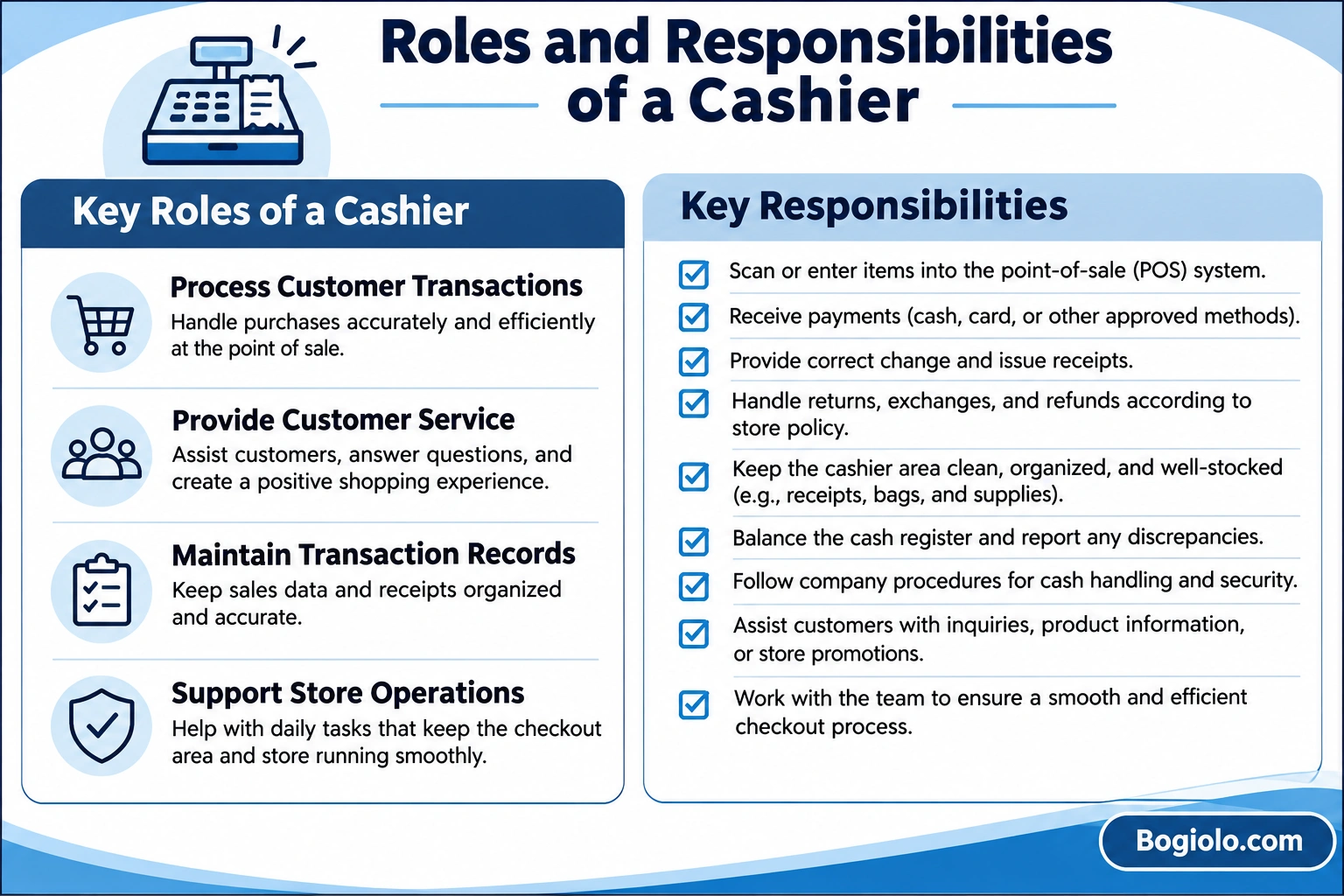
The following is a simple summary of the main duties that can be used when preparing a cashier job description, employee handbook, or workplace responsibility checklist.
- Process customer purchases accurately and efficiently.
- Scan products and enter prices into the POS system.
- Receive payments through approved payment methods.
- Count cash and provide correct change.
- Issue receipts and maintain transaction records.
- Assist customers with questions and concerns.
- Handle returns, exchanges, and refunds according to company policies.
- Keep the checkout station clean and organized.
- Balance the cash register and report discrepancies.
- Follow cash-handling, security, and loss prevention procedures.
- Monitor checkout supplies and report shortages.
- Work with colleagues to maintain efficient store operations.
Common Challenges Cashiers Face at Work
Working as a cashier can be rewarding, but the position also involves several challenges. Understanding these situations can help employees prepare and respond professionally.
Handling Long Checkout Lines
Busy periods can create pressure to process transactions quickly. Cashiers should remain organized, focus on accuracy, and communicate politely with waiting customers.
Dealing with Difficult Customers
Some customers may be frustrated about pricing, payment issues, or store policies. Cashiers should listen carefully, avoid arguments, and involve a supervisor when a problem requires additional authority.
Preventing Transaction Errors
Incorrect prices, missed items, and payment mistakes can affect transaction accuracy. Cashiers should carefully review the checkout screen and follow established procedures.
Managing Multiple Tasks
Cashiers may need to process payments, answer questions, and maintain their workstations at the same time. Prioritizing customer transactions while staying aware of other responsibilities can help maintain an efficient workflow.
Tips for Becoming a Better Cashier
Improving cashier performance requires consistent attention to accuracy, communication, and customer service. These practical habits can help employees become more confident and effective.
- Learn the POS system: Practice using checkout equipment and understand the main transaction functions.
- Double-check transactions: Review prices, quantities, discounts, and payment amounts before completing sales.
- Communicate clearly: Use polite language and listen carefully to customer requests.
- Stay organized: Keep the checkout station clean and ensure necessary supplies are available.
- Follow company policies: Understand procedures for refunds, discounts, cash handling, and security.
- Remain calm under pressure: Handle busy periods and customer complaints professionally.
- Ask for guidance: Consult a supervisor when dealing with unfamiliar transactions or situations beyond your authority.
Frequently Asked Questions About the Roles and Responsibilities of a Cashier
What are the main responsibilities of a cashier?
The main responsibilities of a cashier include processing customer transactions, accepting payments, providing correct change, issuing receipts, assisting customers, maintaining transaction records, and keeping the checkout area organized.
What are the five most important duties of a cashier?
Five important cashier duties are processing purchases, handling payments, providing customer service, maintaining accurate transaction records, and following cash-handling procedures. These tasks support accurate sales transactions and a positive customer experience.
What does a cashier do on a daily basis?
Daily cashier duties typically include preparing the checkout station, scanning products, processing payments, answering customer questions, maintaining the work area, and completing register reconciliation when required.
What skills are required to become a cashier?
Important cashier skills include basic mathematics, communication, attention to detail, customer service, time management, computer literacy, and honesty. Employers also value reliability and the ability to work effectively in a busy environment.
Is being a cashier a difficult job?
The difficulty depends on the workplace, customer volume, and assigned responsibilities. Cashiers may experience busy checkout periods, challenging customer interactions, and pressure to maintain transaction accuracy. Training and consistent practice can make the job easier.
What is the difference between a cashier and a sales associate?
A cashier primarily focuses on processing purchases and handling payments. A sales associate generally helps customers find products, provides product information, maintains merchandise displays, and supports sales activities. Some retail positions combine both roles.
Can a cashier be responsible for inventory?
Some employers assign basic inventory-related tasks to cashiers, such as checking product availability, reporting low stock, or helping organize merchandise. However, inventory management is not a standard responsibility in every cashier position.
What should I include in a cashier job description?
A cashier job description should include the job title, position summary, main duties, qualifications, required skills, and workplace expectations. It should clearly explain payment processing, customer service, transaction accuracy, and other responsibilities relevant to the position.
Conclusion
Understanding the roles and responsibilities of a cashier helps employees perform their duties effectively and allows employers to establish clear workplace expectations. Although processing payments is the primary function, the position also involves customer service, transaction accuracy, recordkeeping, security, and daily operational support.
A successful cashier needs more than basic math skills. Communication, honesty, attention to detail, and the ability to work under pressure are equally important for maintaining an efficient checkout process.
Whether you are preparing a cashier job description, applying for a retail position, or training new employees, knowing these responsibilities provides a useful foundation for professional performance and better customer service.
Download: Roles and Responsibilities Template
