A statement of work (SOW) is an essential document for defining the expectations, responsibilities, deliverables, and costs of a project. Whether you work with freelancers, consultants, contractors, or external vendors, a well-written SOW helps everyone understand exactly what needs to be completed and when.
Without a clear statement of work, projects can quickly become confusing. Clients may expect additional services that were never agreed upon, while contractors may struggle with unclear requirements or changing deadlines. A structured SOW helps prevent these problems by documenting the details before work begins.
In this guide, you will learn what a statement of work is, what sections to include, how to write one, and how to use a statement of work template to organize your next project.
What Is a Statement of Work?
A statement of work is a formal project document that describes the specific services, activities, deliverables, timelines, and payment terms agreed upon by two parties. It is commonly used between a client and a service provider, vendor, consultant, or independent contractor.
The main purpose of an SOW is to establish a shared understanding of what the project involves. It explains what work will be performed, what results are expected, who is responsible for each activity, and how project completion will be evaluated.
Depending on the organization and project, a statement of work may be a standalone agreement or an attachment to a master services agreement (MSA).
For example, a company hiring a freelancer to build a website may use an SOW to specify the number of pages, design requirements, development tasks, delivery dates, revision limits, and total project fee.
What Should Be Included in a Statement of Work?
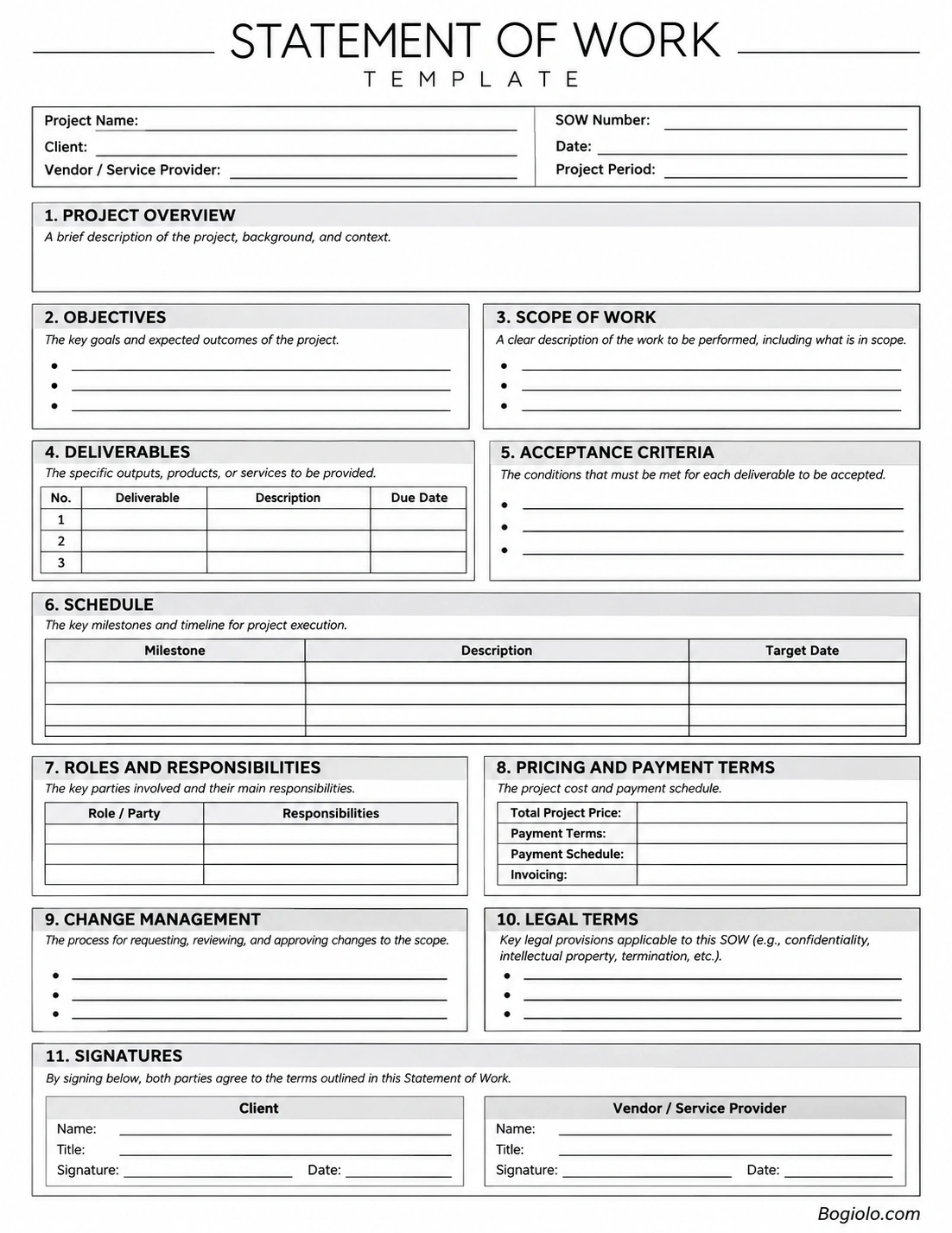
A complete statement of work should contain enough information for both parties to understand the project from beginning to end. Although the format may vary, most SOW documents include the following sections.
1. Project Overview and Objectives
Start with a brief description of the project, including its background, purpose, and expected outcomes. This section explains why the project is being undertaken and what the client wants to achieve.
For example, a website development project may aim to create a professional business website that improves online visibility and generates customer inquiries.
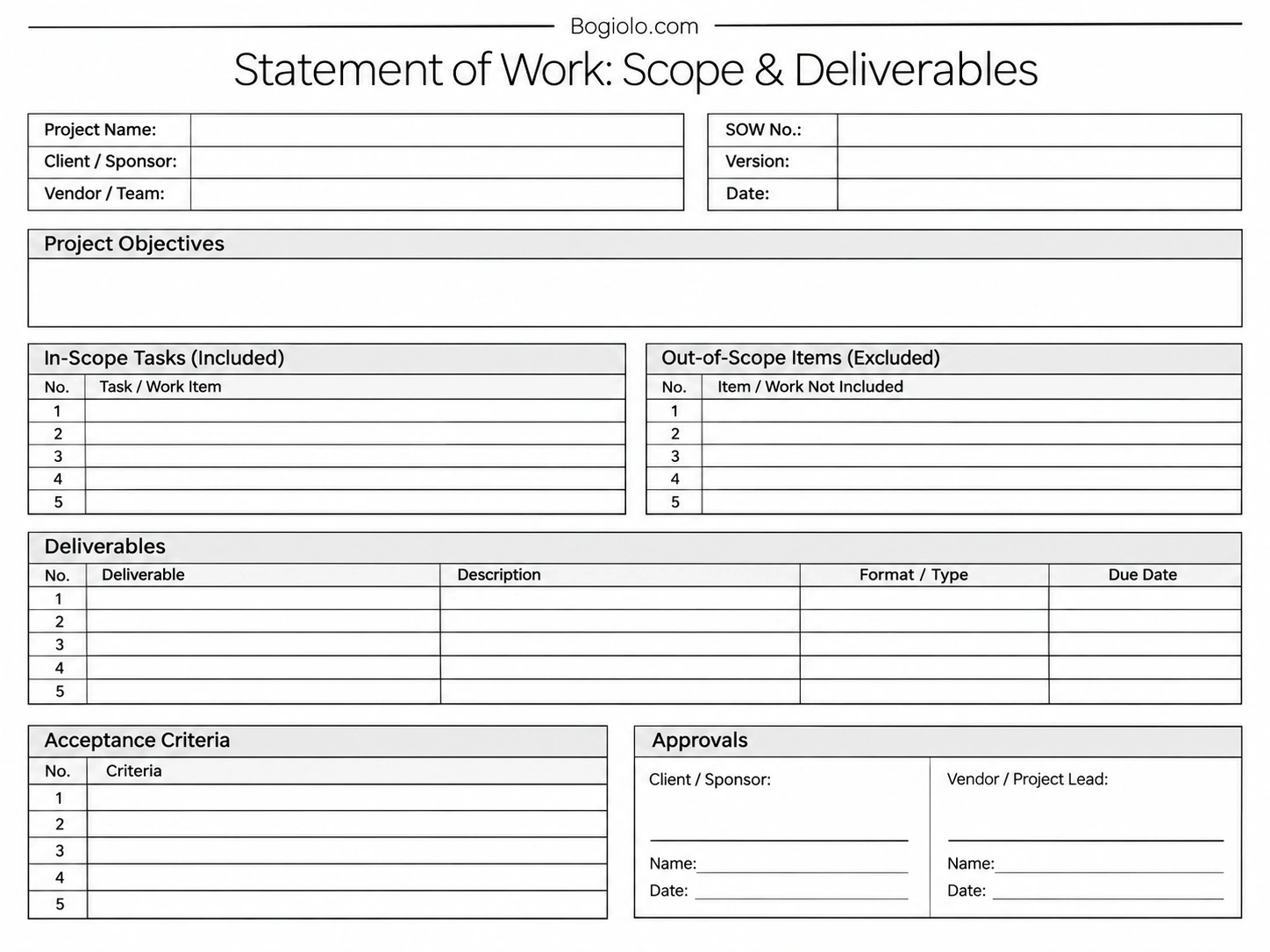
2. Scope of Work
The scope of work describes the specific activities and services included in the project. It should also identify tasks that are not included to avoid misunderstandings.
A clearly defined scope may include:
- Project activities and required tasks.
- Services provided by the contractor or vendor.
- Technical requirements and specifications.
- Project limitations and exclusions.
- Additional services that require separate approval.
Being specific about project boundaries is one of the best ways to prevent scope creep.
3. Deliverables and Acceptance Criteria
Deliverables are the tangible products, services, or results that the service provider must produce. Each deliverable should have a clear description and an expected completion date.
Acceptance criteria explain how the client will determine whether the completed work meets the agreed requirements.
For example, a website project may require a fully functional five-page website, mobile-responsive layouts, contact forms, and basic search engine optimization.
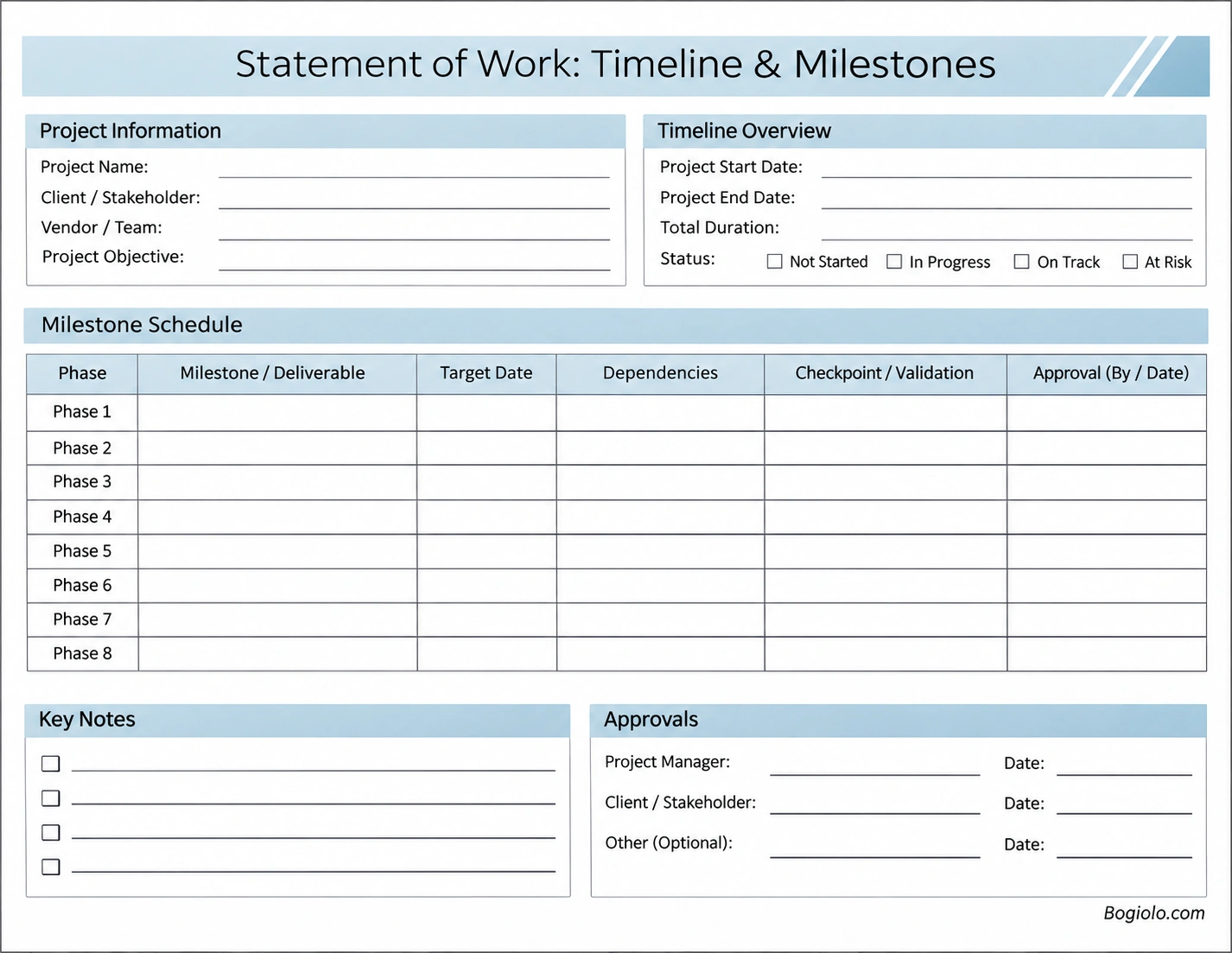
4. Project Schedule and Milestones
This section outlines the project timeline, important deadlines, and major milestones. Breaking a project into smaller phases makes progress easier to monitor.
A typical schedule may include:
- Project kickoff and initial planning.
- Research and requirement gathering.
- Design or development phase.
- Review and revision period.
- Final delivery and approval.
Include target dates for each milestone and identify dependencies that could affect the schedule.
5. Roles and Responsibilities
Identify the people or organizations involved in the project and explain their responsibilities. This helps prevent duplicated work and ensures that important tasks have clear owners.
Common responsibilities include project management, communication, technical development, quality assurance, content approval, and final acceptance.
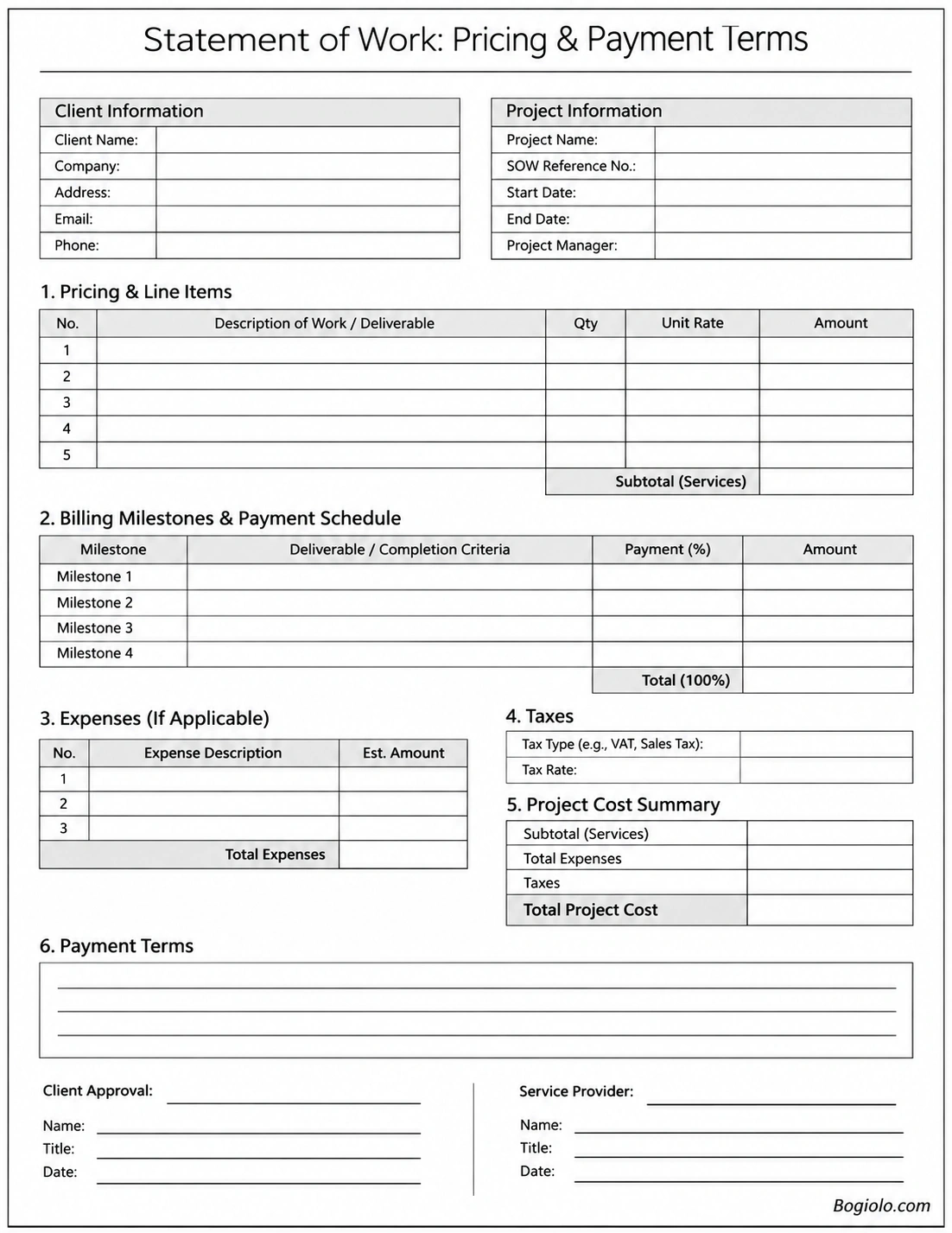
6. Pricing and Payment Terms
The financial section explains the total project cost and how payments will be made. Depending on the agreement, pricing may use a fixed fee, hourly rate, daily rate, or milestone-based payment structure.
Include details such as:
- Total project price or estimated budget.
- Payment schedule and due dates.
- Deposit or initial payment requirements.
- Additional expenses and applicable taxes.
- Late payment conditions, if applicable.
Clear payment terms help both parties manage their financial expectations throughout the engagement.
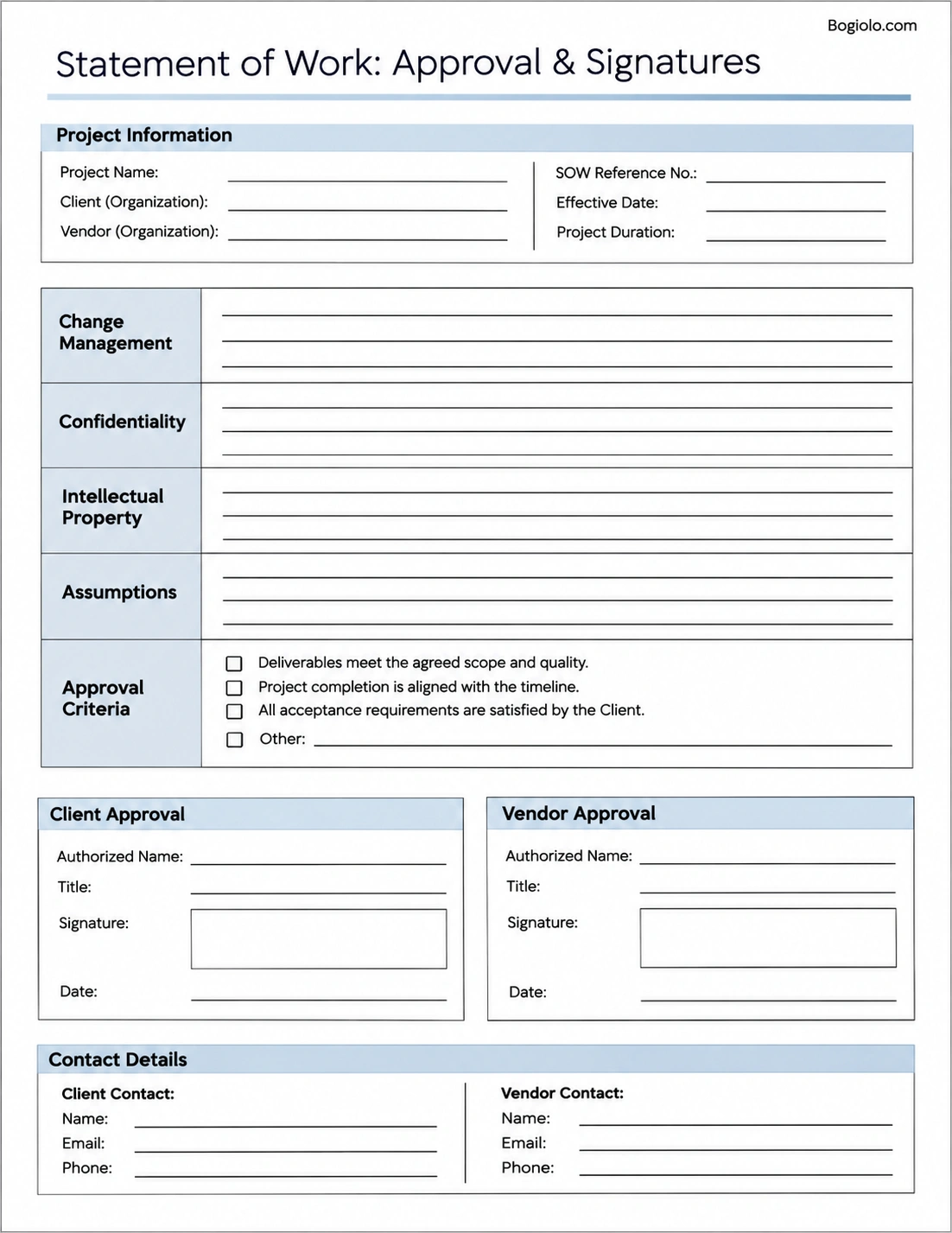
7. Change Management and Legal Terms
Projects sometimes require adjustments after work has started. A change management section explains how either party can request changes and how those requests will be reviewed and approved.
It should clarify whether a change affects the project cost, delivery schedule, responsibilities, or original scope.
Other important terms may include confidentiality, intellectual property ownership, termination conditions, dispute resolution, and applicable governing law. These provisions should be reviewed carefully and aligned with any existing master agreement.
8. Signatures and Approval
The final section provides space for authorized representatives to approve the statement of work. Include names, job titles, signatures, and signing dates for both parties.
Obtaining written approval before starting the project helps confirm that the client and service provider agree on the documented requirements.
How to Write a Statement of Work
Creating an effective SOW does not have to be complicated. The following steps can help you prepare a professional document that is easy to understand and practical to use.
Step 1: Understand the Project Requirements
Discuss the project with the client or service provider before writing the document. Identify the main objectives, expected results, available resources, and potential limitations.
Step 2: Define the Project Scope
Write down every major task and service that will be included. Be equally clear about exclusions so that neither party assumes additional work is automatically covered.
Step 3: List the Deliverables
Describe each expected output in measurable terms. Include formats, quantities, specifications, and delivery dates whenever possible.
Step 4: Establish a Realistic Timeline
Break the project into manageable phases and assign target dates to each milestone. Consider review periods, approval delays, and dependencies when preparing the schedule.
Step 5: Agree on Pricing and Responsibilities
Document the project budget, payment structure, and responsibilities of each party. Make sure both sides understand who handles communication, feedback, approvals, and other important activities.
Step 6: Review and Obtain Approval
Check the document for missing details, unclear requirements, and inconsistent terms. Ask all relevant parties to review and approve the final version before project work begins.
Statement of Work Example
Consider a small business hiring a freelance designer to create a new company website. A simplified statement of work might include the following details:
- Project: Business website design and development.
- Objective: Create a professional website to showcase services and attract potential customers.
- Scope: Website design, five-page development, contact form setup, and mobile responsiveness.
- Deliverables: Completed website, design files, and basic documentation.
- Timeline: Six weeks from the approved project start date.
- Responsibilities: The designer handles development while the client provides content, feedback, and approvals.
- Payment: A fixed project fee divided into an initial deposit and milestone payments.
- Acceptance: The project is complete when the agreed website requirements are fulfilled and approved.
This example demonstrates how an SOW translates a general project idea into specific tasks, deliverables, and expectations.
Statement of Work vs. Scope of Work: What Is the Difference?
Although the terms sound similar, a statement of work and a scope of work are not exactly the same.
A statement of work is the broader project document that covers deliverables, schedules, responsibilities, pricing, acceptance criteria, and other relevant terms.
A scope of work is generally the section that describes the tasks, activities, services, and boundaries of the project.
In simple terms, the scope of work is usually one component of the larger statement of work.
Tips for Creating an Effective SOW
A well-prepared statement of work should be specific, measurable, and easy to review. Keep these practical tips in mind:
- Use clear language: Avoid vague descriptions that could create different interpretations.
- Set measurable expectations: Define deliverables and acceptance criteria as clearly as possible.
- Document exclusions: Explain which tasks and services are outside the agreed project scope.
- Assign responsibilities: Make sure every important activity has an accountable person or team.
- Include realistic deadlines: Allow enough time for revisions, feedback, and approvals.
- Document changes: Require written approval for changes that affect the original agreement.
- Review before signing: Check all commercial and legal terms before authorizing the work.
Frequently Asked Questions About Statements of Work
What is the main purpose of a statement of work?
The main purpose of a statement of work is to establish clear expectations between parties involved in a project. It documents the required tasks, deliverables, deadlines, responsibilities, costs, and acceptance requirements before work begins.
Is a statement of work a legally binding contract?
A statement of work can form part of a legally binding agreement, depending on its wording, the parties’ intentions, applicable law, and how it relates to any master agreement. For important engagements, have the document reviewed by a qualified legal professional.
Who prepares the statement of work?
Either the client or the service provider may prepare the initial SOW. In many projects, the vendor or contractor drafts it based on discussions with the client. Both parties should review and agree on the final document.
When should a statement of work be created?
A statement of work should generally be prepared and approved before project activities begin. This ensures that the parties understand the agreed scope, costs, responsibilities, and deadlines from the start.
What is the difference between an SOW and an MSA?
An MSA, or master services agreement, establishes the general legal and commercial terms governing an ongoing business relationship. An SOW defines the specific work, deliverables, timeline, and pricing for an individual project under that relationship.
Can I use a statement of work template for freelance projects?
Yes. A statement of work template is useful for freelance engagements involving graphic design, website development, writing, consulting, marketing, and other professional services. You can customize the sections to match the requirements of each project.
What happens if the project scope changes after signing?
The parties should follow the change management procedure documented in the SOW or governing agreement. Significant changes should be recorded in writing, including any adjustments to deliverables, fees, responsibilities, or deadlines.
Does every statement of work need signatures?
For formal client-vendor engagements, written approval and signatures are generally recommended. The exact approval requirements depend on the governing agreement and the organization’s procedures.
Conclusion
A statement of work is an important tool for managing projects and establishing clear expectations between clients and service providers. By documenting the project scope, deliverables, schedule, responsibilities, pricing, and approval requirements, both parties can reduce misunderstandings and work toward the same objectives.
Whether you are managing a freelance assignment, software development project, consulting engagement, or vendor contract, using a structured statement of work template can make project planning easier and more organized.
Start with a clear project overview, define measurable deliverables, establish realistic deadlines, and document all agreed terms. A well-prepared SOW provides a practical foundation for a successful working relationship.
Download: Statement of Work Template
