A roof estimate is one of the most important documents to review before starting a roofing project. Whether you need a complete roof replacement, minor repairs, or a new roof installation, understanding the estimated costs helps you plan your budget and avoid unexpected expenses.
A detailed roofing estimate explains the work involved, the materials required, labor charges, project timeline, and payment terms. It also gives homeowners a clear way to compare contractor proposals and understand what they are paying for before signing an agreement.
In this guide, you will learn what a roof estimate includes, how roofing costs are calculated, which materials may affect your budget, and how to evaluate a contractor’s proposal. You will also find practical tips and a printable roof estimate template to help organize your project.
What Is a Roof Estimate?
A roof estimate is a written breakdown of the expected expenses and work required for a roofing project. It is usually prepared by a roofing contractor after reviewing the roof’s condition, measuring its dimensions, and discussing the homeowner’s requirements.
The document outlines the estimated price of materials, labor, permits, removal of existing roofing, and other related services. Depending on the contractor, it may also include project dates, warranty information, payment schedules, and specific terms.
A roofing estimate helps homeowners understand the proposed work before making a financial commitment. It also provides a reference for comparing multiple roofing bids and identifying differences in pricing or project scope.
Why Is a Roofing Estimate Important?
Getting a written estimate offers several advantages:
- Budget planning: Understand the expected project cost before work begins.
- Cost transparency: See how much materials, labor, and additional services contribute to the total price.
- Bid comparison: Evaluate proposals from different roofing contractors using similar project requirements.
- Clear expectations: Identify which services are included and which may require additional payment.
- Project organization: Review the expected start date, completion time, and important milestones.
- Written documentation: Keep a record of the proposed work and agreed-upon details.
What Should a Roof Estimate Include?
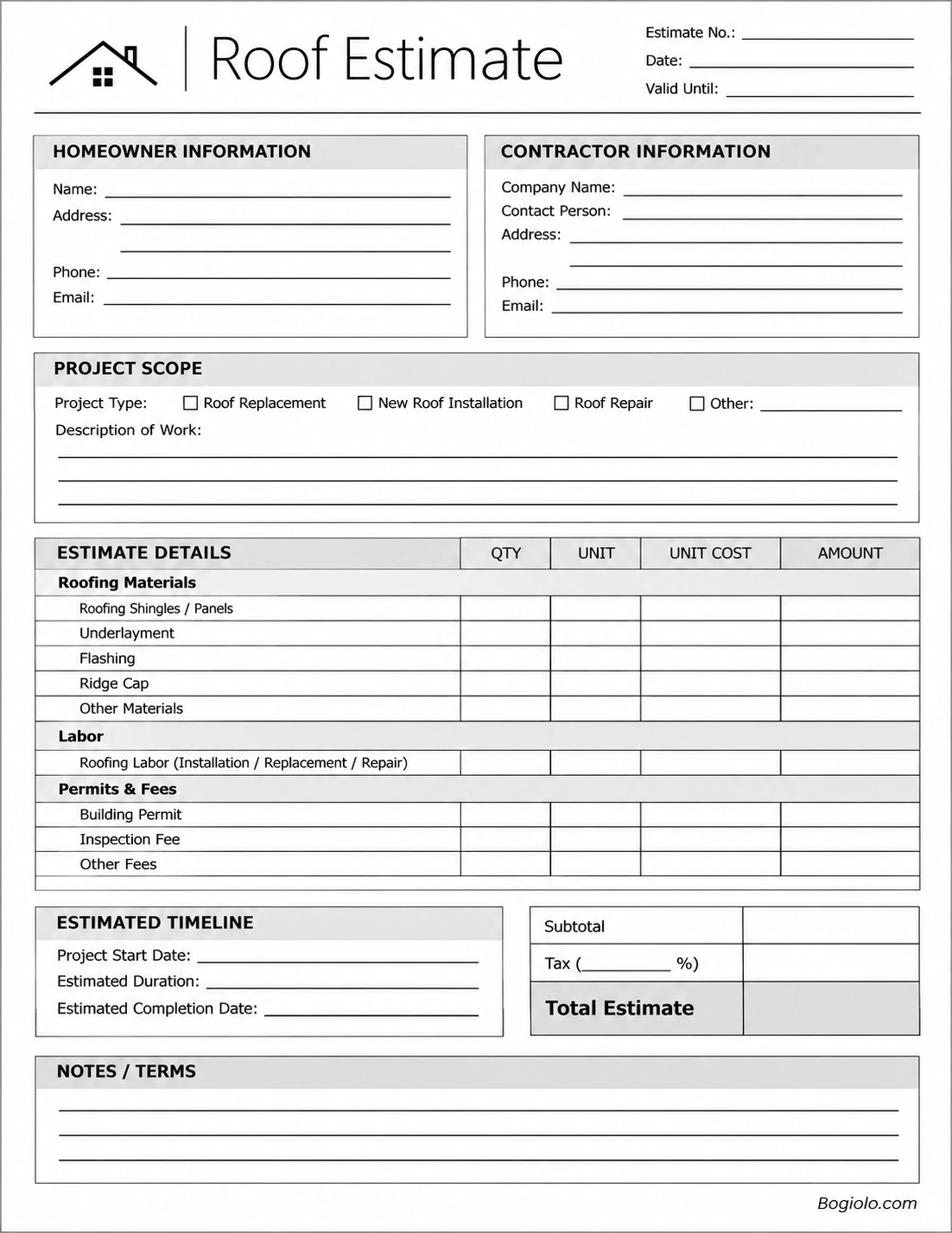
A professional roof estimate should provide enough information for a homeowner to understand the entire project. Although the format may vary between contractors, several important sections should always be included.
1. Homeowner and Contractor Information
The first section should identify both parties involved in the project. It typically includes the homeowner’s name, property address, phone number, and email address.
Contractor information should include the company name, business address, contact person, phone number, and relevant license or registration details where applicable. An estimate number and preparation date also make the document easier to track.
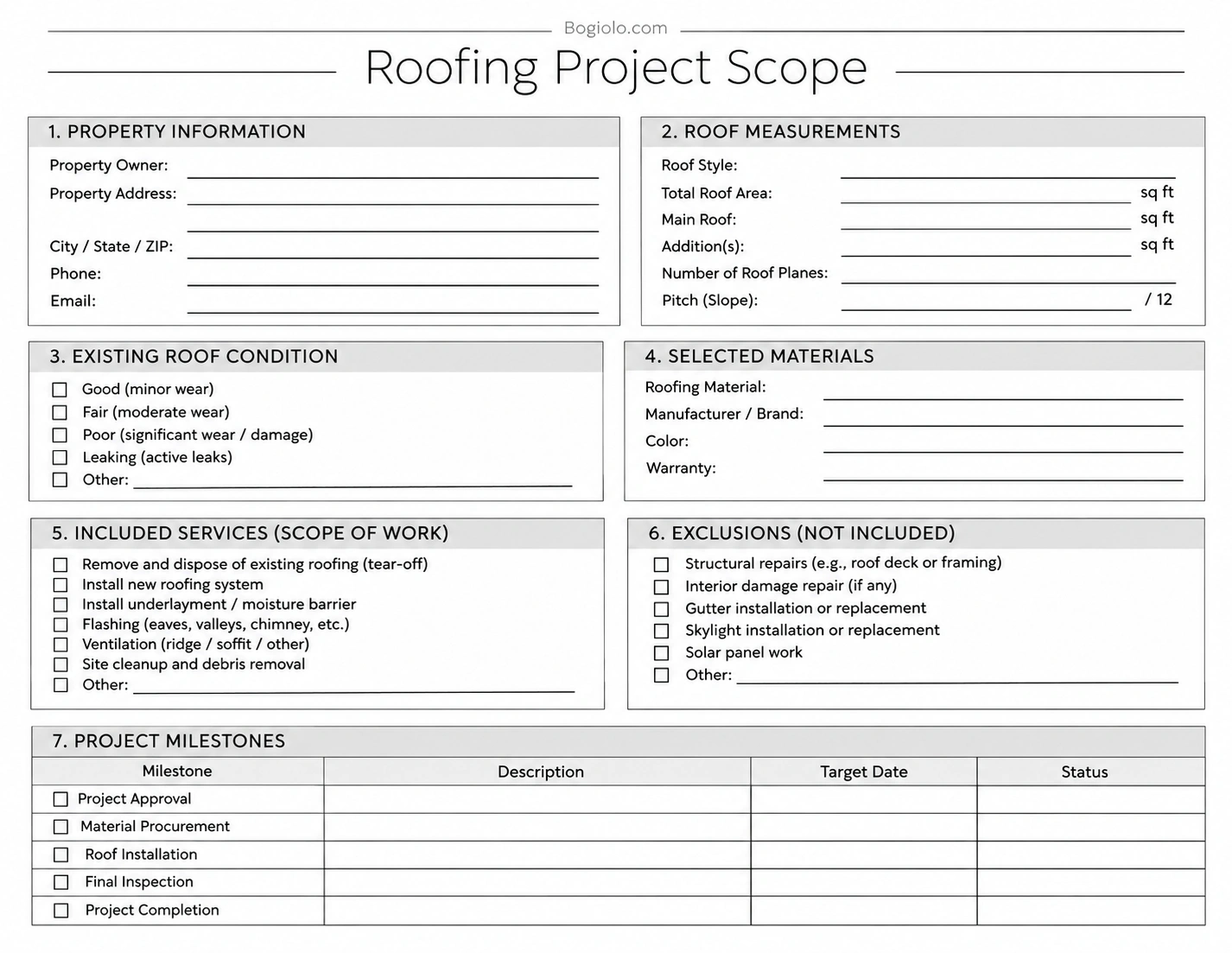
2. Roofing Project Description
This section explains the type of roofing work being proposed. Common project types include:
- Complete roof replacement.
- New roof installation for a residential property.
- Roof leak repair and maintenance.
- Replacement of damaged shingles or roofing panels.
- Flashing, ventilation, and roof accessory installation.
- Roof deck repairs or replacement, if included in the scope.
The description should explain the work clearly. For example, a roof replacement estimate should specify whether the contractor will remove the existing roofing material, inspect the underlying deck, install new underlayment, and replace the flashing.
3. Roof Measurements and Existing Conditions
Accurate measurements are essential for calculating roofing material quantities and labor requirements. Contractors generally evaluate the total roof area, roof pitch, number of roof sections, valleys, ridges, and other architectural features.
The estimate should also describe the roof’s current condition. Existing leaks, damaged decking, moisture problems, and ventilation issues may affect the final project cost.
4. Materials and Product Specifications
A detailed estimate should identify the roofing materials that will be installed. Important specifications may include the product type, manufacturer, color, quantity, and warranty information.
Common roofing materials include:
- Asphalt shingles: A popular residential roofing option available in different styles and quality levels.
- Metal roofing: A durable option available in standing seam panels and other profiles.
- Clay tiles: A traditional roofing material often selected for its appearance and longevity.
- Concrete tiles: A substantial roofing option available in various shapes and finishes.
- Slate roofing: A natural stone material known for its distinctive appearance and long service life.
The estimate should also identify supporting materials such as underlayment, flashing, ridge caps, fasteners, and ventilation components when they are part of the project.
How Much Does a Roof Estimate Cost?
The cost of a roofing project depends on several factors, including roof size, material selection, labor rates, roof complexity, and the condition of the existing structure.
Some contractors provide free roofing estimates as part of their sales process. Others may charge for a detailed inspection, professional roof measurement, or specialized assessment. Ask whether an inspection or estimate fee applies before scheduling an appointment.
Factors That Affect Roofing Costs
Understanding the main cost factors makes it easier to evaluate a roofing proposal.
- Roof size: Larger roofs generally require more materials and installation time.
- Roof pitch: Steeper roofs may require additional safety equipment and labor.
- Roof design: Multiple valleys, dormers, skylights, and complex roof sections can increase installation costs.
- Material selection: Different roofing products have different purchase prices and installation requirements.
- Existing roof removal: Removing old shingles or other roofing materials adds labor and disposal expenses.
- Structural repairs: Damaged roof decking, fascia, or other components may require additional work.
- Location: Local labor rates, transportation expenses, permit requirements, and material availability affect the overall price.
Typical Cost Categories in a Roofing Estimate
A useful roofing cost breakdown separates the project into individual categories instead of presenting only one total amount.
- Roofing materials: Shingles, metal panels, tiles, underlayment, flashing, and other supplies.
- Labor: Installation, removal, repairs, and cleanup.
- Old roof removal: Tear-off, transportation, and disposal fees.
- Additional components: Ventilation, ridge caps, gutters, and accessories when included.
- Permits and inspections: Required local approvals and inspection charges.
- Additional repairs: Unexpected or separately approved structural work.
- Taxes and other fees: Applicable taxes and project-related charges.
Ask the contractor to explain any allowance, contingency, or additional charge that may change the final invoice. This is particularly important when hidden damage cannot be confirmed before the existing roofing is removed.
How to Calculate a Roof Estimate
Although contractors use professional measuring methods and pricing systems, understanding the basic calculation process helps homeowners review a proposal.
Step 1: Determine the Roof Area
Start by calculating the total surface area of the roof. A simple roof section can be measured using its length and slope-adjusted width. Complex roofs require measurements for each individual section before adding the areas together.
Roofing contractors commonly use squares as a measurement unit. One roofing square represents 100 square feet of roof surface.
Step 2: Account for Roof Pitch and Waste
Roof pitch affects the actual surface area compared with the building’s horizontal footprint. Contractors also account for material waste caused by cutting, overlapping, and fitting materials around roof features.
The amount of waste varies depending on the roof design and material. Ask your contractor how the material quantity was determined rather than assuming a fixed percentage applies to every project.
Step 3: Estimate Material and Labor Expenses
Multiply the required material quantities by their unit prices. Then add the estimated labor costs, removal expenses, permits, and any additional services included in the scope of work.
Step 4: Calculate the Total Project Cost
Combine all estimated expenses to determine the subtotal. Add applicable taxes and other disclosed charges to calculate the final estimated amount.
For example, a contractor may present separate amounts for roofing materials, installation labor, tear-off, and permits. This format makes it easier to identify which category contributes most to the total cost.
How to Compare Roofing Estimates from Different Contractors
Obtaining multiple roofing estimates is a practical way to evaluate pricing and understand the available options. However, the lowest bid is not necessarily the best choice.
Before comparing prices, make sure each contractor is estimating substantially the same project.
Check the Scope of Work
Review whether each proposal includes the same services. One contractor may include complete tear-off and disposal, while another may only include installing new materials over the existing roof if local rules and conditions permit.
Look for differences in underlayment, flashing replacement, ventilation, cleanup, and structural repair allowances.
Compare Material Quality
Two estimates may use different roofing products even when their descriptions appear similar. Check the manufacturer, product line, material specifications, and warranty coverage before comparing prices.
Review Labor and Warranty Coverage
Ask whether the contractor provides a workmanship warranty and how long it lasts. Also review the manufacturer’s material warranty and any conditions that may affect coverage.
Verify Contractor Credentials
Before accepting a proposal, verify relevant licensing, insurance, business information, and local references. Requirements vary by location, so check the applicable rules in your area.
How to Plan a Roofing Project Timeline
A roof estimate should provide an expected schedule so homeowners can prepare for the work. The actual timeline depends on roof size, material availability, weather, labor availability, and the complexity of the installation.
A typical roofing project may involve these stages:
- Initial inspection: The contractor evaluates the roof and identifies potential issues.
- Estimate and approval: Both parties review the price, materials, and project scope.
- Material ordering: Roofing supplies are selected and scheduled for delivery.
- Preparation: The work area is secured and the property is protected.
- Roof installation: Existing materials are removed when required, repairs are completed, and the new roofing system is installed.
- Final inspection and cleanup: The contractor checks the completed work and removes project debris.
Ask for estimated start and completion dates, along with an explanation of how weather delays or unexpected repairs will be handled.
Tips for Getting an Accurate Roof Estimate
Taking a few simple steps before requesting a roofing proposal can help improve the accuracy of the estimate and reduce misunderstandings.
- Request an on-site inspection: Whenever possible, have the contractor inspect the actual roof rather than relying entirely on general measurements.
- Explain your requirements: Clearly describe whether you need repairs, replacement, or a completely new roofing system.
- Ask for itemized pricing: Request separate costs for materials, labor, removal, and additional services.
- Confirm material specifications: Make sure the proposed products match your preferences and expectations.
- Discuss unexpected repairs: Establish how additional work will be quoted and approved.
- Get everything in writing: Keep the scope, payment terms, warranty details, and schedule documented.
- Avoid rushing your decision: Compare proposals carefully before signing a contract.
Roof Estimate vs. Roofing Contract: What Is the Difference?
A roof estimate and a roofing contract serve related but different purposes. Understanding the distinction helps homeowners know which document to review at each stage.
Roof Estimate
A roof estimate describes the proposed work and its expected price. It is primarily used to understand project costs, compare contractor bids, and evaluate available materials and services.
Roofing Contract
A roofing contract is the formal agreement between the homeowner and contractor. It should establish the final agreed scope, price, payment schedule, project responsibilities, warranty terms, and procedures for handling changes.
An estimate may become part of the final contract, but homeowners should not assume that every estimate automatically creates a complete agreement. Review the final contract and make sure both parties agree to its terms before work begins.
Frequently Asked Questions About Roof Estimates
1. What is included in a roof estimate?
A roof estimate typically includes homeowner and contractor information, project description, roof measurements, material specifications, labor costs, removal expenses, permits, estimated timeline, and total project price. Some proposals also include warranty details and payment terms.
2. Are roofing estimates usually free?
Many roofing contractors offer free estimates, particularly for standard residential projects. However, some may charge for detailed inspections, specialized measurements, or professional assessments. Always confirm whether there is a fee before scheduling.
3. How many roofing estimates should I get?
Getting at least three estimates is a useful starting point. It allows you to compare pricing, material quality, project scope, and contractor experience before making a decision.
4. How long is a roof estimate valid?
The validity period depends on the contractor and the terms stated in the document. Some estimates remain valid for a few weeks, while others may have different expiration dates. Material prices and labor costs can change, so confirm the validity period before accepting a proposal.
5. What factors make a roof estimate more expensive?
Common factors include larger roof areas, steep pitches, complex roof designs, premium materials, old roof removal, structural repairs, difficult site access, and local labor rates. Additional permits and specialized installation requirements may also increase the total cost.
6. Can a roof estimate change after work begins?
Yes. The final cost may change if contractors discover hidden damage, such as rotting roof decking or water-related structural problems. A clear agreement should explain how additional work is documented, priced, and approved before it is performed.
7. What is the difference between a roof estimate and a roof inspection?
A roof inspection evaluates the condition of the roofing system and identifies existing or potential problems. A roof estimate uses inspection findings and project requirements to calculate the expected cost of the proposed work.
8. Should I sign a roof estimate?
You should understand whether the document is simply an estimate or a binding agreement before signing it. Review the scope, price, payment conditions, and contract terms carefully. Request clarification if any details are unclear.
9. Can I use a roof estimate template?
Yes. A roof estimate template can help homeowners and contractors organize project information, materials, labor expenses, additional fees, and timelines. However, the completed document should reflect actual measurements, project requirements, and contractor pricing.
Conclusion
A detailed roof estimate helps homeowners understand the expected cost, materials, and timeline of a roofing project before committing to the work. It also makes contractor comparisons easier by showing exactly what each proposal includes.
Before choosing a roofing contractor, review the project scope, material specifications, labor charges, additional fees, warranty coverage, and estimated schedule. Make sure any changes or unexpected repairs require clear communication and written approval.
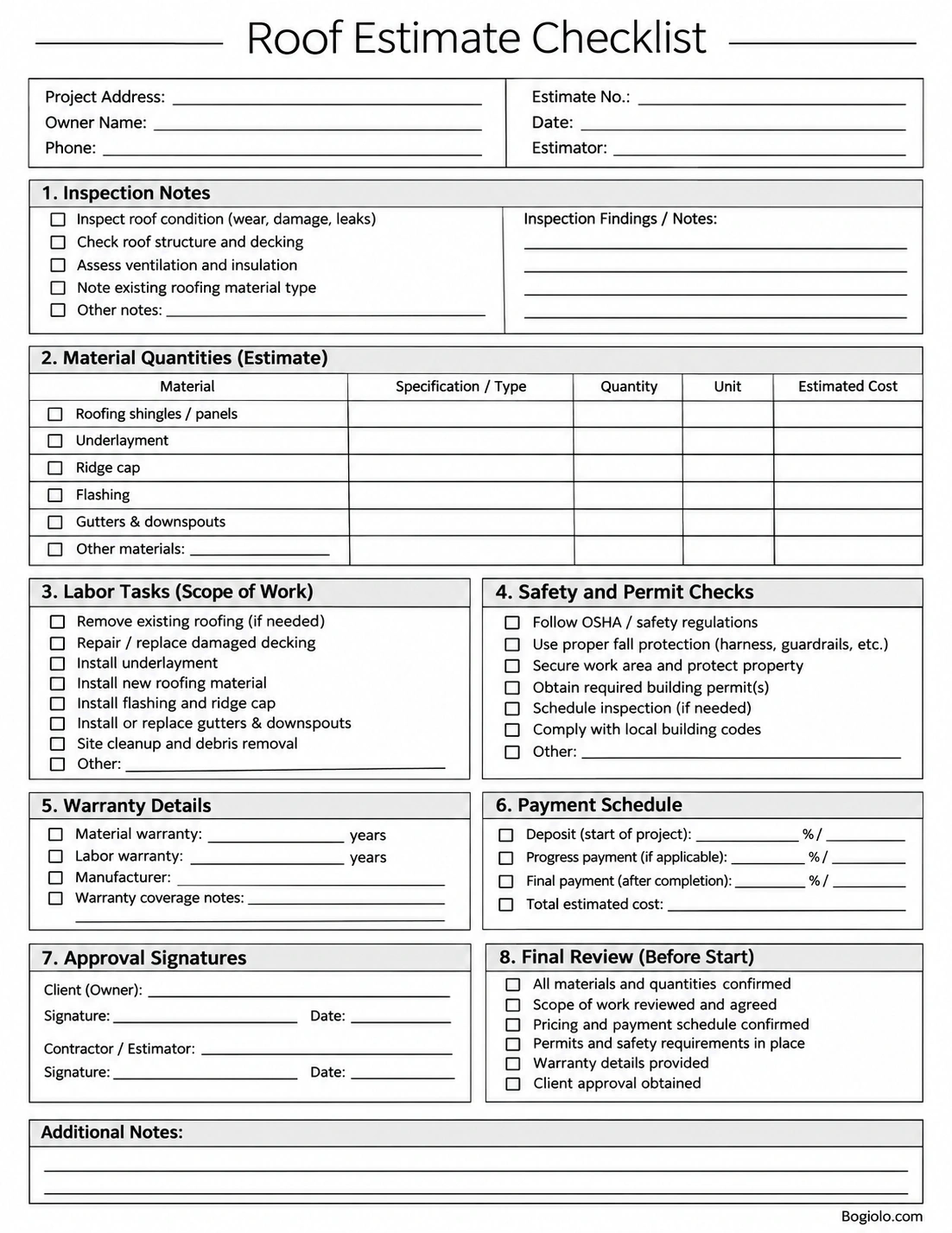
Using a printable roof estimate template and checklist can make the planning process more organized. With accurate information and a clear written agreement, you can approach your roofing project with better preparation and greater confidence.
Download: Roof Estimate Template
