A successful project starts with clear expectations. Whether you are managing a business project, hiring a freelancer, or working with an external contractor, everyone needs to understand what must be done, who is responsible, and when the work should be completed. This is where a scope of work becomes essential.
A scope of work (SOW) is a document that defines a project’s objectives, tasks, deliverables, responsibilities, and timeline. It explains exactly what is included and excluded from an agreement. By documenting these details, project managers and stakeholders can reduce misunderstandings, manage expectations, and prevent unnecessary changes during execution.
In this guide, you will learn what a scope of work is, what to include, how to write one, and how to use a practical scope of work template to organize your next project.
What Is a Scope of Work?
A scope of work is a written document that describes the specific activities, services, and results required to complete a project. It establishes a shared understanding between the client, project manager, contractor, and other stakeholders.
In simple terms, it answers several important questions:
- What: What work needs to be completed?
- Why: What are the project’s objectives?
- Who: Who is responsible for each task?
- When: When should each activity and deliverable be completed?
- How: What methods, standards, or requirements must be followed?
- What is excluded: Which activities are not part of the agreement?
A well-written scope of work provides a clear reference throughout the project lifecycle. It helps everyone understand their responsibilities and gives the team a practical way to measure progress.
Why Is a Scope of Work Important?
Without clear project documentation, even a simple assignment can become confusing. Different stakeholders may have different expectations about the final result, deadlines, or responsibilities.
A detailed scope of work helps prevent these problems in several ways.
1. Establishes Clear Project Expectations
Every stakeholder should understand what the project is expected to accomplish. A scope of work documents the objectives, required activities, and expected outcomes before work begins.
2. Prevents Scope Creep
Scope creep occurs when additional tasks or requirements are added without proper evaluation, approval, or adjustments to the original agreement.
By identifying project inclusions and exclusions, the document helps teams recognize when a new request falls outside the agreed scope. Additional work can then follow a formal change approval process.
3. Defines Roles and Responsibilities
A project often involves multiple people or departments. Clearly assigning responsibilities helps prevent duplicated work, missed tasks, and confusion about accountability.
4. Improves Time Management
Project milestones and deadlines give everyone a clear schedule to follow. Managers can monitor progress, identify delays, and take corrective action before problems become serious.
5. Provides a Reference for Project Evaluation
Once the project is complete, the original scope of work can be used to evaluate whether the agreed deliverables and requirements have been fulfilled.
What Should Be Included in a Scope of Work?
A complete scope of work should contain enough information for everyone involved to understand the project from beginning to end. Although the format may vary depending on the industry, most documents include the following sections.
1. Project Overview
Start with basic project information, including the project name, client, project manager, start date, expected completion date, and a brief description.
This section provides context and helps readers identify the project covered by the document.
2. Project Objectives
Describe what the project is intended to achieve. Objectives should be specific, realistic, and measurable whenever possible.
For example, a website development project might have these objectives:
- Create a responsive business website.
- Improve website navigation and user experience.
- Build five essential website pages.
- Ensure compatibility with modern browsers and mobile devices.
3. Tasks and Responsibilities
Break the project into individual activities and identify the person or team responsible for each task.
For example, a website project could include content preparation, website design, development, testing, and final deployment.
Assigning an owner and due date to every major activity makes project tracking easier.
4. Deliverables
Deliverables are the specific products, services, or results that must be provided when the work is completed.
Examples include:
- A completed website or landing page.
- Approved design files and source materials.
- A marketing strategy document.
- Training materials and user documentation.
- A final project report.
Whenever possible, describe the required format, quantity, quality standards, and acceptance criteria for each deliverable.
5. Project Timeline and Milestones
Include the expected start date, completion date, major milestones, and important deadlines.
A simple timeline might look like this:
- Week 1: Project planning and requirements gathering.
- Week 2: Design and initial development.
- Week 3: Development and internal testing.
- Week 4: Final review, revisions, and delivery.
Make sure the schedule accounts for reviews, client feedback, approvals, and dependencies between tasks.
6. Project Inclusions and Exclusions
This section explains exactly what is and is not covered by the project agreement.
Inclusions describe the services, activities, and deliverables that are part of the agreed work.
Exclusions identify activities or services that are not included unless separately approved.
For example, a website development project might include five website pages but exclude ongoing maintenance, premium hosting, and future feature development.
Clearly documenting both sides helps avoid disagreements about additional requests.
7. Assumptions and Constraints
Document important assumptions that affect project planning. These might include client-provided materials, access to software, resource availability, or timely feedback.
Constraints may include limited budgets, fixed deadlines, technical requirements, or regulatory restrictions.
8. Approval and Acceptance Criteria
Explain how the completed work will be reviewed and approved. Identify who has the authority to accept deliverables and what conditions must be met.
For example, a website may be considered complete when all agreed pages are functional, approved content is uploaded, and the website passes the specified testing requirements.
Free Scope of Work Template
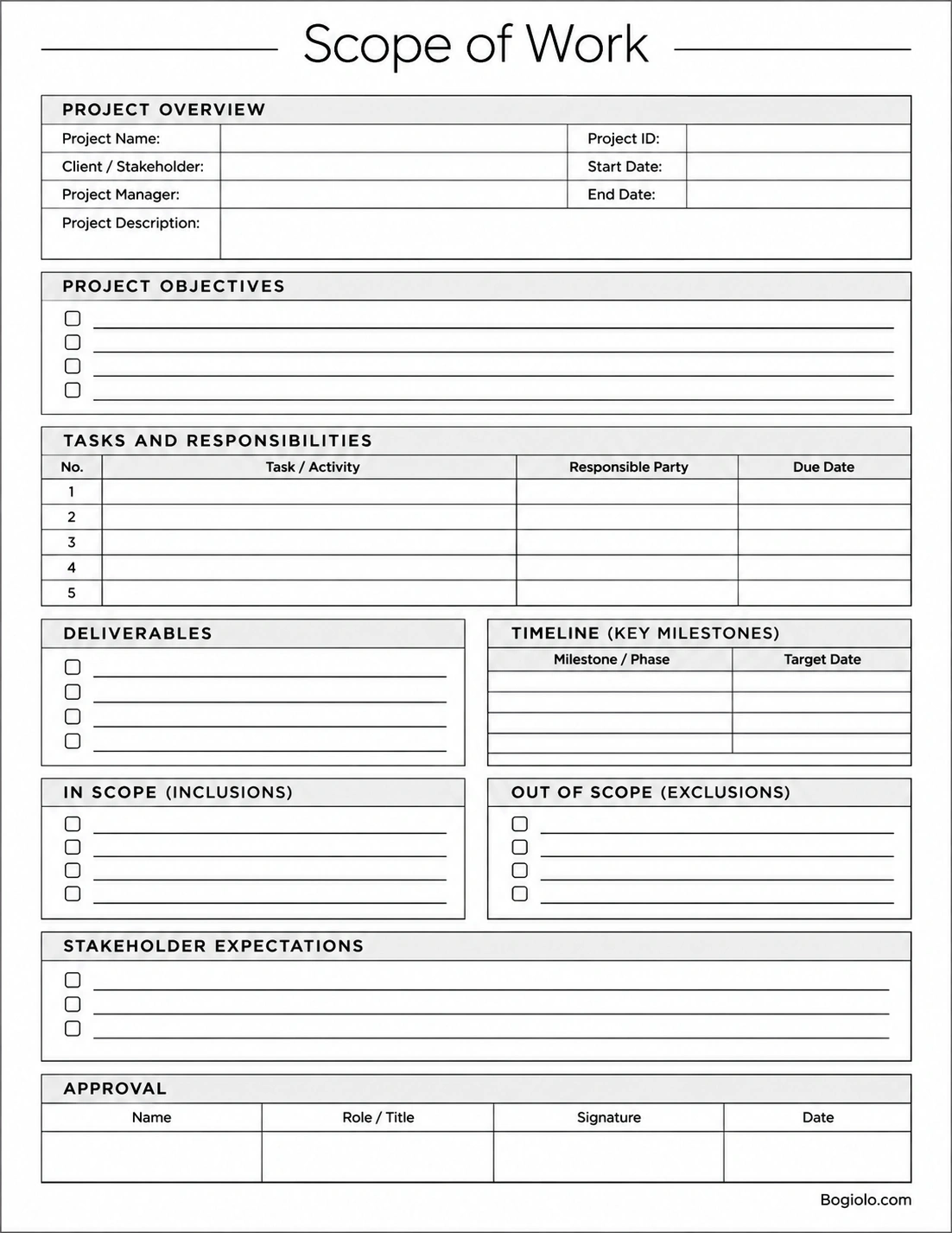
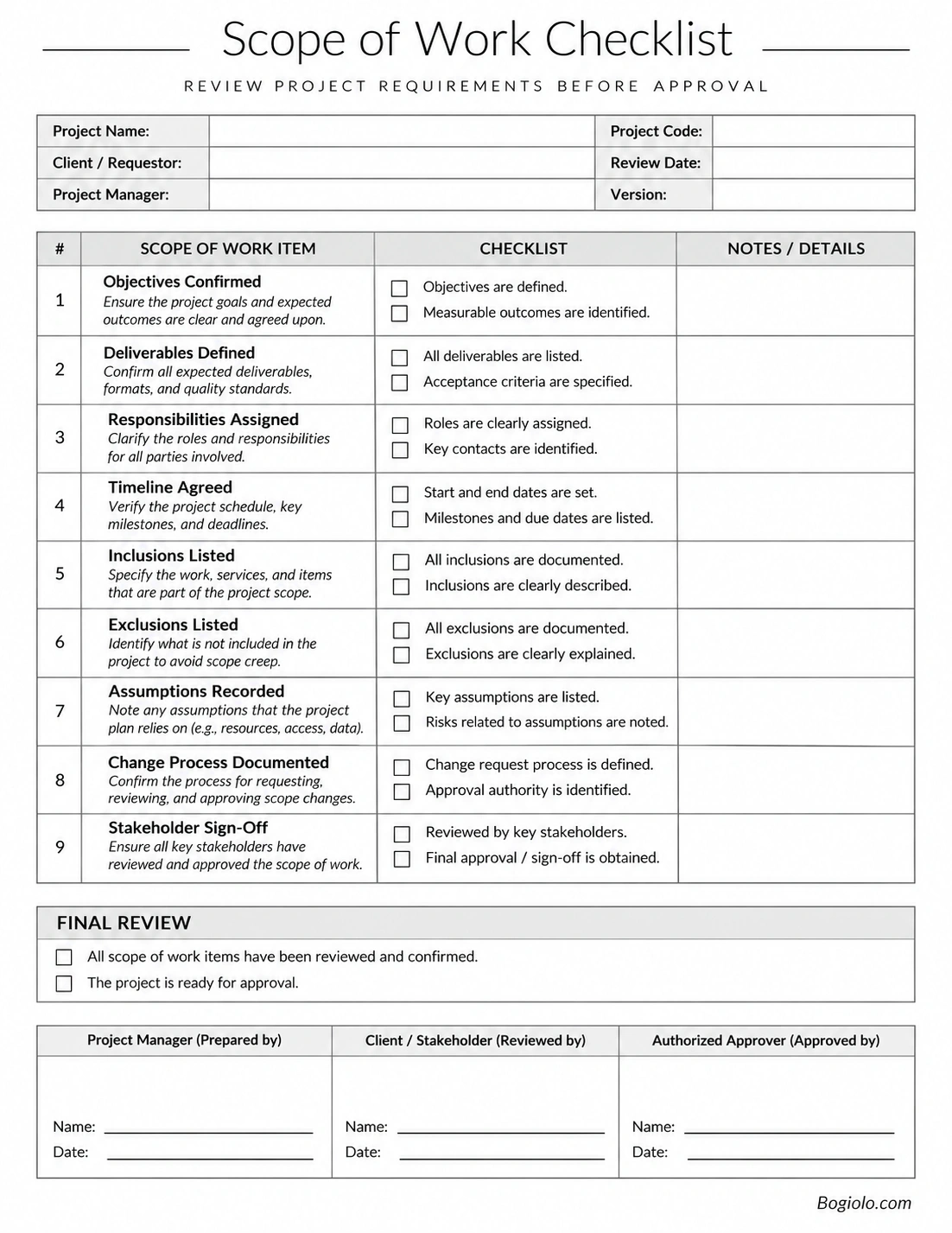
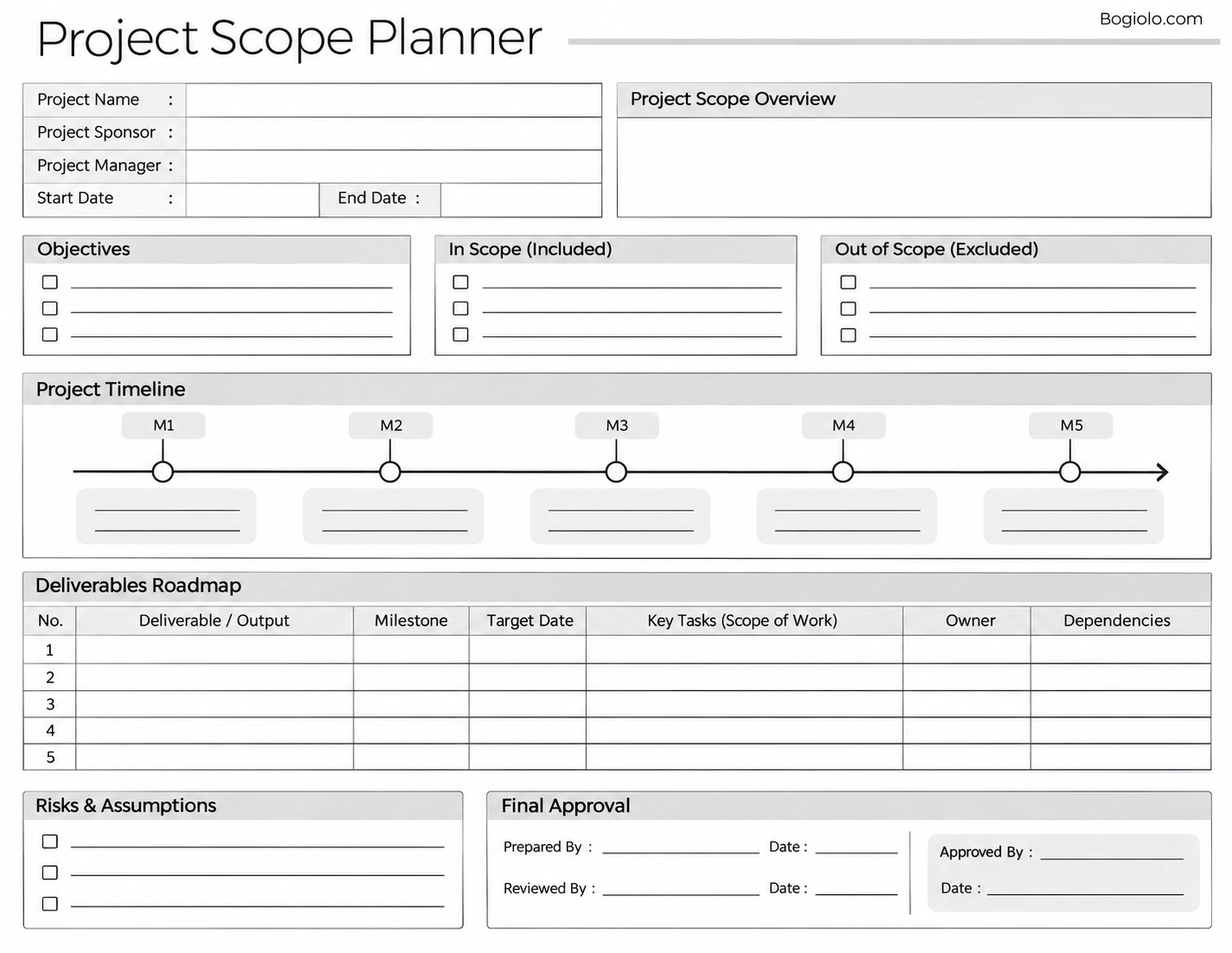
Creating a project document from scratch can take time, especially when you manage several projects simultaneously. A ready-to-use scope of work template provides a structured starting point and makes it easier to organize important information.
Use the printable templates below to document project objectives, responsibilities, deliverables, timelines, and approval requirements. Each design serves a different purpose, depending on how much project detail you need to organize.
How to Write a Scope of Work Step by Step
Writing an effective scope of work does not have to be complicated. Follow these practical steps to create a document that is clear, organized, and useful.
Step 1: Understand the Project Requirements
Start by discussing the project with the client or relevant stakeholders. Identify the main problem, desired outcome, available resources, and any important requirements.
Ask questions whenever expectations are unclear. It is easier to resolve confusion before work begins than during project execution.
Step 2: Define the Project Objectives
Write down the project’s main goals. Avoid vague statements such as “improve the website” or “increase business performance.”
Instead, describe measurable outcomes that help the team understand what success looks like.
Step 3: List Tasks and Deliverables
Divide the project into manageable activities. Then connect each major activity to a specific deliverable or expected result.
This makes it easier to track responsibilities and confirm that no important work has been overlooked.
Step 4: Establish the Timeline
Set realistic deadlines for major activities and deliverables. Consider dependencies, review periods, and the availability of team members.
Include milestone dates so stakeholders can monitor progress throughout the project.
Step 5: Identify Inclusions and Exclusions
Clearly describe the work covered by the agreement and identify anything that requires separate approval. This is one of the most important steps for preventing scope creep.
Step 6: Review and Obtain Approval
Share the completed document with all relevant stakeholders. Ask them to review the requirements, responsibilities, timeline, and acceptance criteria.
Resolve disagreements before requesting formal approval. Once everyone agrees, record the approved version and distribute it to the project team.
Common Scope of Work Mistakes to Avoid
Even a well-organized project can experience problems when its scope document is incomplete or unclear. Avoid these common mistakes:
- Using vague descriptions: Replace general statements with specific tasks and measurable outcomes.
- Ignoring exclusions: Clearly identify services and activities that are not included.
- Setting unrealistic deadlines: Consider available resources, dependencies, and review periods.
- Forgetting acceptance criteria: Explain how stakeholders will determine whether deliverables meet expectations.
- Leaving responsibilities unclear: Assign an owner to each important activity.
- Failing to document changes: Require review and approval before modifying the original project scope.
Scope of Work vs. Statement of Work
The terms scope of work and statement of work are closely related, but they are not always interchangeable.
A scope of work generally focuses on the specific tasks, activities, deliverables, and boundaries of a project. It explains what work must be performed.
A statement of work is often a broader document that describes the overall working agreement. Depending on the organization or contract, it may include the scope, objectives, schedule, payment terms, performance requirements, and other contractual details.
In practice, some organizations use these terms differently. Always check the terminology and requirements used in the relevant contract or organization.
Frequently Asked Questions About Scope of Work
What is the main purpose of a scope of work?
The main purpose of a scope of work is to define what a project must accomplish, which activities are required, who is responsible, and when deliverables are due. It keeps stakeholders aligned and helps prevent misunderstandings.
Who prepares a scope of work document?
A project manager, business owner, client, or service provider may prepare the document. In many cases, several stakeholders contribute to ensure that all requirements and expectations are accurately documented.
What are the five main elements of a scope of work?
Five essential elements are project objectives, tasks and responsibilities, deliverables, timeline, and project boundaries. A more comprehensive document also includes assumptions, constraints, acceptance criteria, and approval requirements.
Is a scope of work legally binding?
A scope of work may form part of a legally binding contract when it is properly incorporated into an agreement and meets applicable legal requirements. However, its legal effect depends on the contract, jurisdiction, and circumstances. Consider obtaining legal advice for important commercial agreements.
How long should a scope of work be?
There is no fixed length. A simple project may need only one or two pages, while a complex project may require a much longer document. The goal is to provide enough detail without adding unnecessary information.
Can I use a scope of work template for freelance projects?
Yes. A scope of work template is useful for freelance projects because it helps freelancers and clients agree on services, deliverables, revision limits, deadlines, and responsibilities before work begins.
What is the difference between project scope and scope of work?
Project scope describes the overall boundaries and objectives of a project, including what the project will and will not accomplish. Scope of work translates those boundaries into specific activities, deliverables, responsibilities, and requirements.
How do I handle changes to an approved scope of work?
Use a formal change request process. Document the requested change, evaluate its impact on cost, resources, deadlines, and deliverables, and obtain the required approval before proceeding.
Conclusion
A clear scope of work is an essential part of successful project planning. It defines objectives, tasks, deliverables, responsibilities, timelines, and project boundaries so that everyone understands what is expected.
Whether you manage a business project, work with freelancers, or coordinate external contractors, documenting project requirements can prevent misunderstandings and reduce unnecessary changes.
Start with a practical scope of work template, customize it to your project requirements, and make sure all stakeholders review and approve the document before work begins. A well-defined project scope creates a stronger foundation for better communication, accountability, and project results.
Download: Scope of Work Template Word
