A reference letter for an employee is a formal letter written by an employer, manager, supervisor, or professional colleague to describe an employee’s work history, skills, character, and overall performance. It can help a prospective employer understand what a candidate is like beyond the information provided on a resume.
A well-written employee reference letter provides specific and credible insight into the person’s professional abilities, work ethic, reliability, communication skills, and achievements. Depending on the situation, the letter may also support applications for housing, college programs, professional opportunities, or other situations where a character or employment reference is requested.
The most effective reference letters are honest, specific, professional, and tailored to the purpose of the recommendation. Rather than simply listing positive qualities, they explain how the employee demonstrated those qualities in a real work environment.
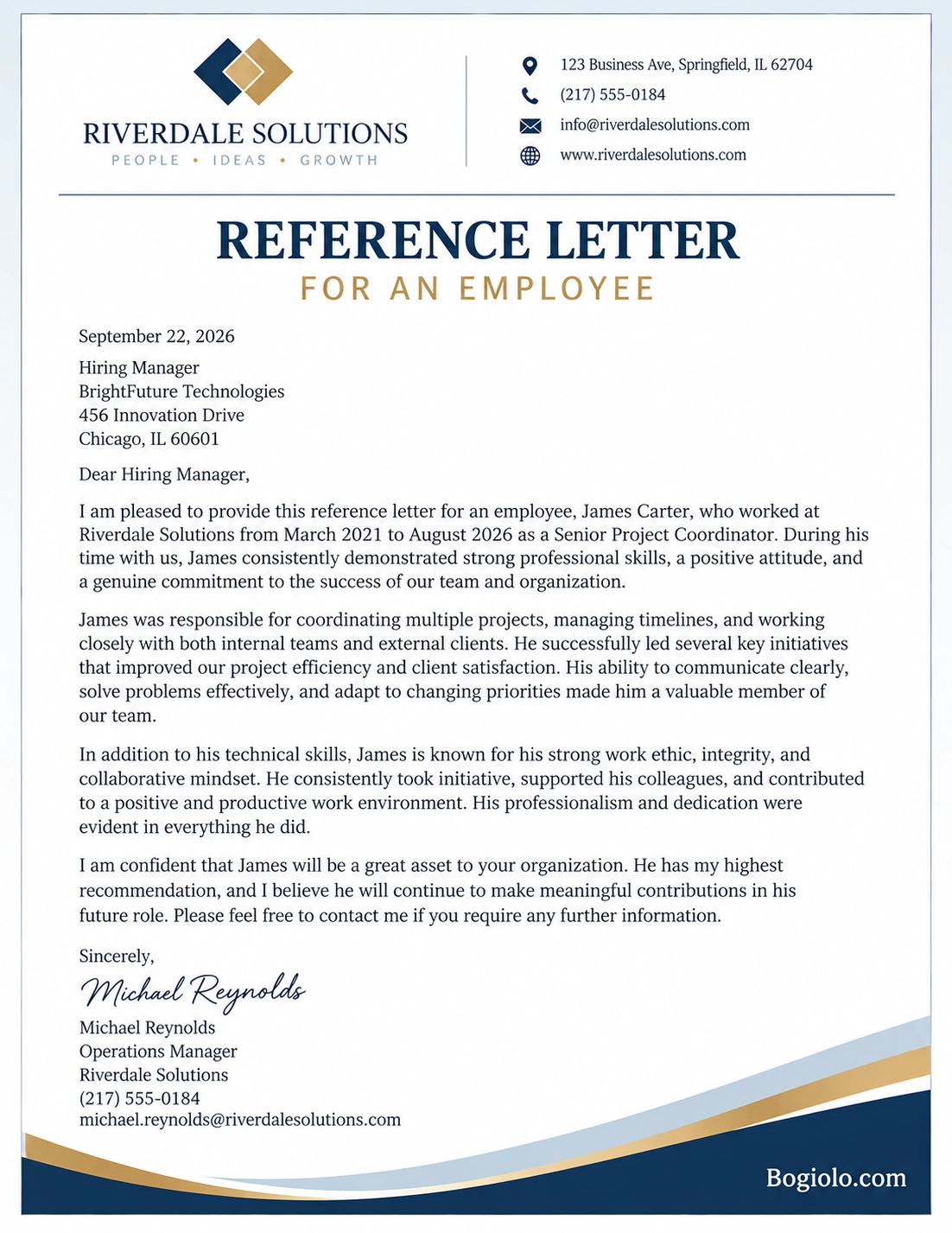
What Is a Reference Letter for an Employee?
A reference letter for an employee is a written recommendation that provides information about a person’s professional background and personal qualities from someone who has worked with or supervised them.
The writer typically explains the employee’s role, length of employment, responsibilities, strengths, accomplishments, and suitability for a future opportunity. The purpose is to provide an independent professional perspective that complements the candidate’s resume and application.
A reference letter is different from a basic employment verification letter. An employment verification letter usually confirms facts such as job title and dates of employment, while a reference letter can provide an assessment of performance, skills, character, and professional potential.
Why Is an Employee Reference Letter Important?
A strong recommendation can give a prospective employer additional context when evaluating a candidate. It can also reinforce information already presented in a resume or interview.
- Provides professional insight: The reader learns how the employee performed in an actual work environment.
- Supports credibility: Specific examples can reinforce the candidate’s claims about their experience and abilities.
- Highlights strengths: The writer can identify qualities that may not be obvious from a resume.
- Describes work ethic: The letter can explain the employee’s reliability, initiative, and professionalism.
- Supports hiring decisions: A credible recommendation can help a prospective employer evaluate overall fit.
- Provides context: The writer can explain responsibilities, achievements, and contributions in greater detail.
Who Can Write a Reference Letter for an Employee?
The best writer is usually someone who has direct knowledge of the employee’s work and can provide an honest, specific assessment.
Possible writers include:
- Current or former managers
- Direct supervisors
- Department managers
- Company executives
- Senior colleagues
- Project leaders
- Professional mentors
- Business owners
The writer should have enough experience with the employee to discuss their work meaningfully. A person who barely knows the employee may not be able to provide the specific examples that make a professional reference more useful.
What Should a Reference Letter for an Employee Include?
A professional reference letter should be structured clearly and contain relevant information without becoming unnecessarily long.
1. Writer’s Information
Begin with the writer’s name, job title, company, contact information, and the date when appropriate. A company letterhead can also make the letter look more professional when the writer is authorized to use it.
2. Recipient Information
If the recipient is known, include their name, position, company, and address when appropriate. If the specific recipient is unknown, a professional greeting such as “Dear Hiring Manager” may be suitable.
3. Relationship With the Employee
Explain how the writer knows the employee. Mention the employee’s position, department, and the approximate period during which they worked together.
This information helps establish the writer’s credibility and gives the reader context for the recommendation.
4. Professional Skills and Strengths
Identify the employee’s most relevant skills. These might include communication, leadership, organization, problem-solving, teamwork, technical expertise, customer service, project management, or attention to detail.
Choose qualities that the writer can genuinely support through personal experience.
5. Achievements and Contributions
Specific accomplishments can make a reference letter much more persuasive. Instead of simply stating that an employee is hardworking, describe an achievement that demonstrates initiative or dedication.
For example, the writer might explain how the employee successfully coordinated a complex project, improved an internal process, helped a team meet an important deadline, or developed a solution to a recurring problem.
6. Character and Work Ethic
A professional reference can also describe qualities such as reliability, integrity, accountability, adaptability, professionalism, and willingness to help others.
7. Recommendation
End with a clear statement of recommendation. If appropriate, explain why the writer believes the employee would be a valuable addition to the prospective organization.
8. Contact Information
Provide appropriate contact information so the recipient can follow up if additional information is needed.
How to Write a Reference Letter for an Employee
Start With a Professional Introduction
Open by stating who you are, your professional relationship with the employee, and the purpose of the letter.
A strong opening quickly establishes why the writer is qualified to provide the reference.
Describe the Employee’s Role
Briefly explain the employee’s position and primary responsibilities. This gives the reader a clear understanding of the context in which the writer observed the employee’s performance.
Highlight Relevant Strengths
Focus on skills and qualities that are relevant to the opportunity. A reference letter is more useful when it connects the employee’s strengths to the type of work they are seeking.
Use Specific Examples
Whenever possible, support positive statements with examples. Specific evidence is more convincing than a long list of generic compliments.
Describe the Employee’s Character
Include relevant observations about professionalism, reliability, teamwork, communication, initiative, and other qualities that contributed to the employee’s success.
Close With a Strong Recommendation
Conclude by clearly stating your recommendation and offering to provide additional information if appropriate.
Reference Letter for an Employee Example
A typical employee reference letter might begin by explaining the writer’s position and relationship with the employee. It can then describe the employee’s role, responsibilities, professional strengths, and notable contributions.
For example, a manager might explain that an employee worked as a project coordinator for several years and consistently managed multiple deadlines while communicating effectively with internal teams and clients. The manager could then describe a specific project in which the employee demonstrated organization, problem-solving, and leadership.
The letter could conclude by stating that the employee is reliable, professional, and capable of making meaningful contributions in a new role.
The example should be adapted to the employee and the specific opportunity rather than copied as a generic recommendation.
Reference Letter for an Employee for a New Job
When the letter is intended for a prospective employer, emphasize the employee’s professional performance and qualities that are relevant to the position.
Useful areas to discuss include:
- Relevant professional experience
- Technical or industry-specific skills
- Leadership ability
- Communication skills
- Problem-solving ability
- Teamwork and collaboration
- Reliability and accountability
- Major professional achievements
- Ability to adapt to changing priorities
Avoid including unnecessary personal information. Keep the recommendation focused on the employee’s professional qualifications and suitability for the opportunity.
Reference Letter for an Employee for a Rental Application
An employee reference letter may sometimes be requested for a rental application. In this situation, the purpose is different from a traditional employment recommendation.
The writer may confirm the applicant’s employment relationship and, when appropriate, describe professional qualities such as responsibility, reliability, and professionalism. However, the writer should only provide information they are authorized and comfortable providing.
Any financial or employment information should be handled carefully and according to applicable workplace privacy policies.
Reference Letter for an Employee for College or Other Programs
An employee may also request a professional reference for a college program, training opportunity, scholarship, certification, or professional development program.
In these situations, the writer can focus on qualities such as initiative, learning ability, leadership, discipline, communication, and the employee’s willingness to develop new skills.
The recommendation should explain why the employee’s professional experience and personal qualities make them a strong candidate for the specific opportunity.
Tips for Writing a Strong Employee Reference Letter
- Be honest: Only recommend qualities and abilities that you can genuinely support.
- Be specific: Use examples instead of relying on generic praise.
- Keep it relevant: Focus on information that supports the employee’s purpose.
- Use professional language: Keep the tone positive, clear, and appropriate.
- Keep it concise: A focused letter is usually more effective than an unnecessarily long one.
- Proofread carefully: Check names, dates, job titles, grammar, and contact information.
- Respect confidentiality: Avoid sharing private or sensitive information that is not necessary.
Common Mistakes to Avoid
Even a positive recommendation can lose credibility if it contains errors or unnecessary information.
- Using exaggerated claims that cannot be supported
- Writing a generic letter with no specific examples
- Including irrelevant personal information
- Making unsupported statements about performance
- Using an overly casual tone
- Failing to explain the writer’s relationship with the employee
- Addressing the letter to the wrong organization or recipient
- Leaving outdated contact information in the letter
- Failing to proofread the final document
Reference Letter vs. Employment Verification Letter
A reference letter and an employment verification letter serve different purposes.
An employment verification letter generally confirms factual employment information such as the employee’s job title, employment dates, and sometimes current employment status. It is primarily a factual document.
A reference letter provides a broader professional assessment. It can discuss the employee’s work performance, strengths, character, accomplishments, and potential.
Understanding the difference can help ensure that the appropriate document is provided for the request.
Frequently Asked Questions About Reference Letters for Employees
What is a reference letter for an employee?
A reference letter for an employee is a professional recommendation that describes an employee’s work experience, skills, character, accomplishments, and suitability for a future opportunity.
Who should write an employee reference letter?
A manager, supervisor, employer, senior colleague, or professional mentor who has direct knowledge of the employee’s work is usually a suitable choice.
What should an employee reference letter say?
It should explain the writer’s relationship with the employee, describe relevant work experience and responsibilities, highlight strengths and achievements, discuss professional character, and provide a clear recommendation.
How long should a reference letter for an employee be?
A focused reference letter is often around one page. The exact length can vary depending on the purpose and the amount of relevant experience the writer needs to describe.
Can a reference letter be used for a rental application?
Yes. An employee reference can sometimes support a rental application by confirming employment and describing professional qualities such as reliability and responsibility. The applicant should follow the requirements of the landlord or property manager.
Can an employee reference letter be used for college?
Yes. A professional reference can support certain college, training, scholarship, or professional development applications. The writer should focus on qualities relevant to the program or opportunity.
Should an employee reference letter be on company letterhead?
Company letterhead can provide a professional presentation when the writer is authorized to use it. However, whether it is appropriate depends on the employer’s policies and the purpose of the letter.
What makes an employee reference letter effective?
An effective letter is honest, specific, relevant, and professional. Strong examples of the employee’s performance and achievements are generally more valuable than vague statements or excessive praise.
Conclusion
A reference letter for an employee can provide valuable professional insight into a candidate’s experience, skills, character, and achievements. When written carefully, it gives a prospective employer or other recipient information that may not be fully captured in a resume or application.
The strongest reference letters are specific, honest, and relevant to the purpose of the recommendation. By explaining the writer’s relationship with the employee, highlighting meaningful accomplishments, providing practical examples, and ending with a clear recommendation, the letter can become a useful and credible professional reference.
Download: Reference Letter Template for an Employee
