A proof of funds letter is a formal document used to demonstrate that a buyer has sufficient funds available to complete a purchase. It is commonly requested during real estate transactions, business purchases, and other high-value transactions where a seller or lender wants evidence that the buyer has access to the required money.
Unlike a general financial statement, a proof of funds letter focuses on the availability of funds for a specific transaction. The letter is typically issued by a bank, financial institution, or another qualified financial provider and confirms that the account holder has a stated amount of readily available funds.
Having a clear proof of funds document can help establish financial credibility during a transaction. It can also give sellers, real estate professionals, lenders, and other parties the information they need to evaluate whether a buyer appears financially prepared to proceed.
What Is a Proof of Funds Letter?
A proof of funds letter is a written confirmation that a person or organization has access to a specified amount of money. The document is generally prepared or verified by a financial institution and is intended to demonstrate that the funds are available for a proposed transaction.
For example, a buyer making a cash offer on a property may be asked to provide proof that the necessary funds are available. The buyer can request a proof of funds letter from their bank and provide it to the seller or the seller’s representative.
The letter may identify the account holder, the financial institution, the verified balance, the date of verification, and the intended purpose of the documentation.
Why Is a Proof of Funds Letter Important?
A proof of funds letter can provide a seller or transaction professional with evidence that a buyer has the financial resources needed to move forward. This can be particularly important when the transaction involves a substantial amount of money.
Demonstrates Available Funds
The primary purpose of the letter is to demonstrate that funds are available. This helps distinguish a buyer who has accessible funds from someone who is only expressing an intention to purchase.
Supports a Purchase Offer
In some transactions, a seller may request proof of funds before seriously considering an offer. Providing the requested documentation can help establish that the buyer has the financial resources represented in the offer.
Provides Transaction Documentation
A proof of funds letter creates a formal record of a financial verification. The document can be retained with other transaction records when appropriate.
Helps Simplify Verification
A properly prepared letter can give the recipient relevant financial information in a concise format instead of requiring the buyer to provide extensive financial documents.
When Might You Need a Proof of Funds Letter?
A proof of funds letter can be useful in several situations where financial capacity needs to be demonstrated.
- Buying a house with cash
- Making a real estate offer
- Purchasing commercial property
- Buying a business
- Acquiring another high-value asset
- Participating in certain investment transactions
- Demonstrating liquidity during negotiations
- Responding to a seller’s financial verification request
The exact documentation required varies by transaction. A recipient may accept a proof of funds letter, bank statement, financial statement, or another form of financial verification.
What Information Should a Proof of Funds Letter Include?
The contents of a proof of funds letter can vary depending on the financial institution and the purpose of the transaction. However, a professional document generally contains several key pieces of information.
Financial Institution Information
The letter should identify the bank or financial institution issuing the verification. This may include the institution’s name, address, telephone number, email address, and other contact information.
Date of Verification
The date is important because account balances can change. A proof of funds letter should clearly indicate when the funds were verified.
Account Holder Information
The document normally identifies the individual or business whose funds are being verified. The exact level of personal information included should be appropriate for the transaction and the institution’s privacy practices.
Available Balance
A key part of the letter is the amount of funds available. The document may state a specific balance or another amount that the financial institution is authorized to confirm.
Currency
If the transaction involves a specific currency, the letter should make the currency clear. This helps prevent confusion when transactions involve international buyers or sellers.
Purpose of the Letter
The document may identify the general purpose for which the proof is being provided, such as a property purchase or another specified transaction.
Authorized Signature or Verification
A formal proof of funds letter may include the name, title, and signature of an authorized representative of the financial institution. The recipient may also be provided with contact information for verification.
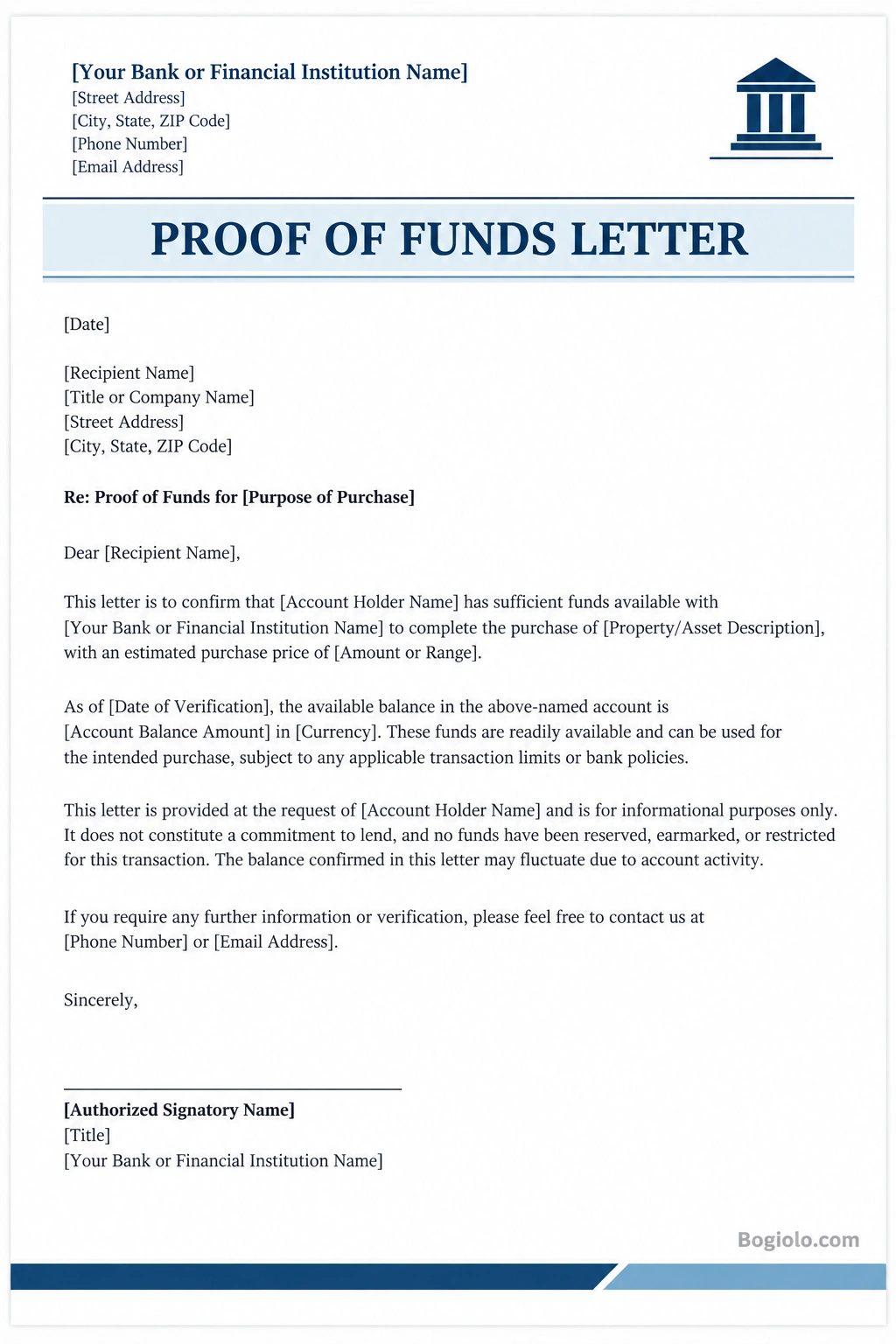
What Does a Proof of Funds Letter Look Like?
A professional proof of funds letter usually follows a formal business-letter format. It should be easy to read and should clearly distinguish the financial institution’s information from the verification statement.
A typical layout may contain:
- Bank or financial institution letterhead
- Date
- Recipient information
- Subject or reference line
- Account holder information
- Statement confirming available funds
- Verified balance and currency
- Date of verification
- Contact information for verification
- Authorized representative’s name and signature
A clean format makes the document easier for the recipient to review and can help ensure that important information is not overlooked.
How to Get a Proof of Funds Letter
If you need proof of funds for a transaction, the first step is usually to contact the bank or financial institution where the funds are held.
1. Contact Your Bank
Ask whether the bank provides proof of funds letters and explain why you need the document. Some institutions have specific procedures or forms for these requests.
2. Provide the Required Information
The bank may ask for information about the account holder, the amount that needs to be verified, the recipient, and the purpose of the transaction.
3. Confirm the Required Balance
Determine how much available funding needs to be demonstrated. The amount should correspond with the financial requirement of the transaction.
4. Request the Letter
Ask the financial institution to issue the letter using its official letterhead or another accepted format. Depending on the institution, the request may be completed online, by telephone, or in person.
5. Review the Document
Before providing the letter to the recipient, check the name, date, amount, currency, recipient information, and other important details for accuracy.
Proof of Funds Letter vs. Bank Statement
A proof of funds letter and a bank statement can both provide evidence of financial resources, but they are not necessarily the same document.
A bank statement is typically a detailed record of account activity over a specific period. It may contain deposits, withdrawals, transactions, account numbers, and balances.
A proof of funds letter is generally more focused. It confirms that a specified amount of money is available as of a particular date without necessarily providing a complete history of account activity.
Which document is appropriate depends on the requirements of the seller, lender, broker, institution, or other party involved in the transaction.
Proof of Funds Letter vs. Pre-Approval Letter
A proof of funds letter should also be distinguished from a mortgage or loan pre-approval letter.
A proof of funds letter generally demonstrates the availability of existing funds. A pre-approval letter, on the other hand, generally relates to a lender’s assessment of a borrower’s potential eligibility for financing.
For a cash purchase, a seller may request proof that the buyer has the necessary cash available. For a financed purchase, the documentation requirements may be different.
Tips for Creating a Professional Proof of Funds Letter
If you are preparing a draft or requesting a letter from a financial institution, several details can help make the document clear and useful.
- Use a professional letter format.
- Clearly identify the financial institution.
- Include the date of verification.
- State the available amount clearly.
- Specify the currency when necessary.
- Identify the account holder accurately.
- Use a clear subject line.
- Include appropriate verification contact information.
- Use an authorized signature when required.
- Avoid including unnecessary sensitive financial information.
Protecting Sensitive Financial Information
A proof of funds document can contain sensitive financial information, so it should be shared carefully. Only provide the information reasonably necessary to satisfy the recipient’s verification requirements.
For example, a recipient may need confirmation of an available balance but may not need a complete transaction history or full account number. Before submitting any financial document, confirm what information the recipient actually requires.
When sending the document electronically, use a secure method when available and verify the recipient’s identity before sharing financial information.
Common Mistakes to Avoid
Using Outdated Information
Because account balances can change, an old letter may no longer accurately demonstrate current available funds. Check whether the recipient requires a recently issued document.
Providing the Wrong Amount
The amount stated in the letter should be appropriate for the transaction and should accurately reflect the funds being verified.
Missing the Verification Date
Without a clear verification date, the recipient may have difficulty determining how current the information is.
Using an Unofficial Document
If the recipient specifically requests documentation from a financial institution, a self-created letter may not satisfy the requirement. Follow the recipient’s instructions and obtain verification from the appropriate institution.
Sharing Excessive Account Information
Providing more financial information than necessary can create unnecessary privacy and security concerns. Use the minimum information required for the transaction.
Can a Proof of Funds Letter Guarantee a Purchase?
A proof of funds letter generally demonstrates the availability of funds at a particular point in time. It does not necessarily mean that a transaction will be completed or that the funds are permanently reserved for a specific purchase.
The recipient may have additional requirements before accepting an offer or completing a transaction. A proof of funds letter should therefore be understood as financial verification rather than a guarantee that a purchase will occur.
Frequently Asked Questions About Proof of Funds Letters
Who issues a proof of funds letter?
A proof of funds letter is commonly issued by a bank or financial institution holding the buyer’s funds. The institution’s procedures determine who is authorized to issue or sign the document.
How long is a proof of funds letter valid?
There is no universal validity period for every proof of funds letter. Because balances can change, a recipient may request a recently dated letter. Always check the requirements of the specific transaction.
Can I create my own proof of funds letter?
You can prepare a draft or template, but a recipient requesting official financial verification may require the document to be issued or verified by a bank or qualified financial institution.
Can a proof of funds letter be used for real estate?
Yes. Proof of funds is commonly relevant to real estate transactions, particularly when a buyer intends to purchase a property using available cash. The seller, agent, or transaction professional may specify which type of financial documentation is acceptable.
Does a proof of funds letter show the full bank account number?
Not necessarily. The information included depends on the financial institution and the requirements of the recipient. For privacy and security, unnecessary account details should generally be avoided.
Conclusion
A proof of funds letter is a useful financial verification document that demonstrates the availability of funds for a proposed purchase or other high-value transaction. It can help sellers, lenders, and other transaction participants understand whether a buyer has access to the required financial resources.
A well-prepared letter should clearly identify the financial institution and account holder, state the verified available funds, include the verification date, and provide appropriate authorization or contact information. When requesting one, always follow the requirements of the recipient and the procedures of the financial institution.
Whether you need proof of funds for a property purchase, business acquisition, or another major transaction, using a clear proof of funds letter template can provide a useful starting structure while ensuring that the final document contains the information required for verification.
Download: Proof of Funds Letter Template
