When a problem occurs in the workplace, fixing it quickly is important. However, solving the immediate issue does not always prevent it from happening again. Organizations need to understand why the problem occurred in the first place. This is where root cause analysis becomes essential.
Root cause analysis (RCA) is a systematic process used to identify the fundamental reasons behind problems, errors, or unexpected events. Instead of focusing only on visible symptoms, it helps teams investigate underlying weaknesses in processes, systems, equipment, or procedures.
By identifying the actual cause, organizations can develop effective corrective actions, improve operational performance, and reduce the risk of recurring problems. This guide explains how root cause analysis works, explores common methods, and provides practical steps for conducting an effective investigation.
What Is Root Cause Analysis?
Root cause analysis is a structured problem-solving method used to determine the underlying cause of an issue. It involves collecting information, examining evidence, identifying contributing factors, and evaluating why an unwanted event happened.
The main objective is to correct the source of a problem rather than repeatedly treating its symptoms. For example, if a company experiences frequent product defects, replacing defective products may solve the immediate situation. However, RCA investigates whether the defects result from poor training, outdated equipment, inconsistent materials, or weaknesses in quality control.
Once the fundamental cause is understood, an organization can implement corrective actions that address the actual problem.
Root Cause vs. Symptoms
Understanding the difference between a symptom and a root cause is important for effective problem-solving.
- Symptom: The visible sign that something is wrong, such as delayed deliveries, equipment failures, or customer complaints.
- Immediate cause: The event or condition directly connected to the problem.
- Root cause: The underlying reason that allowed the problem to occur.
For example, frequent delivery delays may appear to be a transportation issue. However, further investigation might reveal that inaccurate inventory records cause warehouse teams to prepare orders too late. Correcting inventory management may therefore provide a more sustainable solution than simply hiring additional drivers.
Why Is Root Cause Analysis Important?
Root cause analysis helps organizations move beyond temporary fixes and build more reliable processes. It provides a structured way to understand problems and make informed decisions.
Here are several important benefits of using RCA.
1. Prevents Problems from Happening Again
One of the main benefits of root cause analysis is preventing recurring problems. When organizations identify and correct underlying weaknesses, they reduce the likelihood of experiencing the same issue in the future.
2. Improves Operational Efficiency
Recurring problems often waste time, money, and resources. By identifying their underlying causes, teams can eliminate unnecessary work, reduce delays, and improve productivity.
3. Supports Better Decision-Making
RCA encourages decisions based on evidence rather than assumptions. Teams investigate actual conditions, review relevant information, and evaluate possible explanations before choosing a solution.
4. Strengthens Quality and Customer Satisfaction
Organizations can improve product quality and service reliability by addressing the reasons behind defects, complaints, and service failures. Consistent improvements can also strengthen customer trust.
5. Encourages Continuous Improvement
Root cause analysis helps organizations identify weaknesses in their systems and processes. These findings can support better procedures, employee training, quality standards, and long-term organizational improvement.
Common Root Cause Analysis Methods
Several RCA techniques can help teams investigate problems. The right method depends on the complexity of the issue, available evidence, and the type of organization.
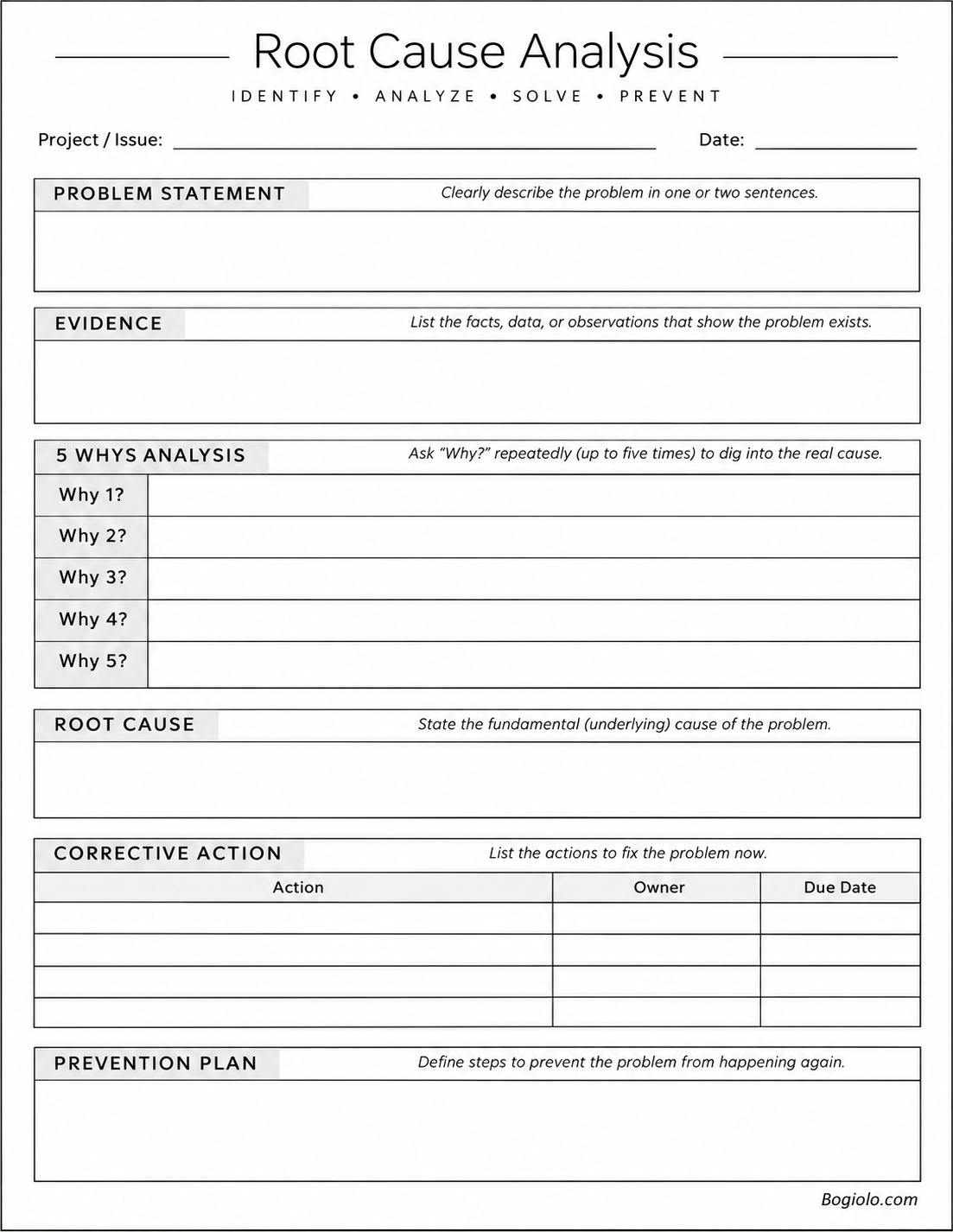
1. The 5 Whys Method
The 5 Whys technique involves asking why a problem occurred repeatedly until the underlying cause becomes clear. Although the method is commonly called the 5 Whys, an investigation may require fewer or more questions.
Example: A production line stopped unexpectedly.
- Why 1? The production machine stopped working.
- Why 2? The machine overheated during operation.
- Why 3? The cooling system was not functioning properly.
- Why 4? A filter was blocked by accumulated debris.
- Why 5? The preventive maintenance schedule did not include regular filter inspections.
The investigation suggests that the maintenance process needs improvement. Simply restarting the machine would not address the underlying weakness.
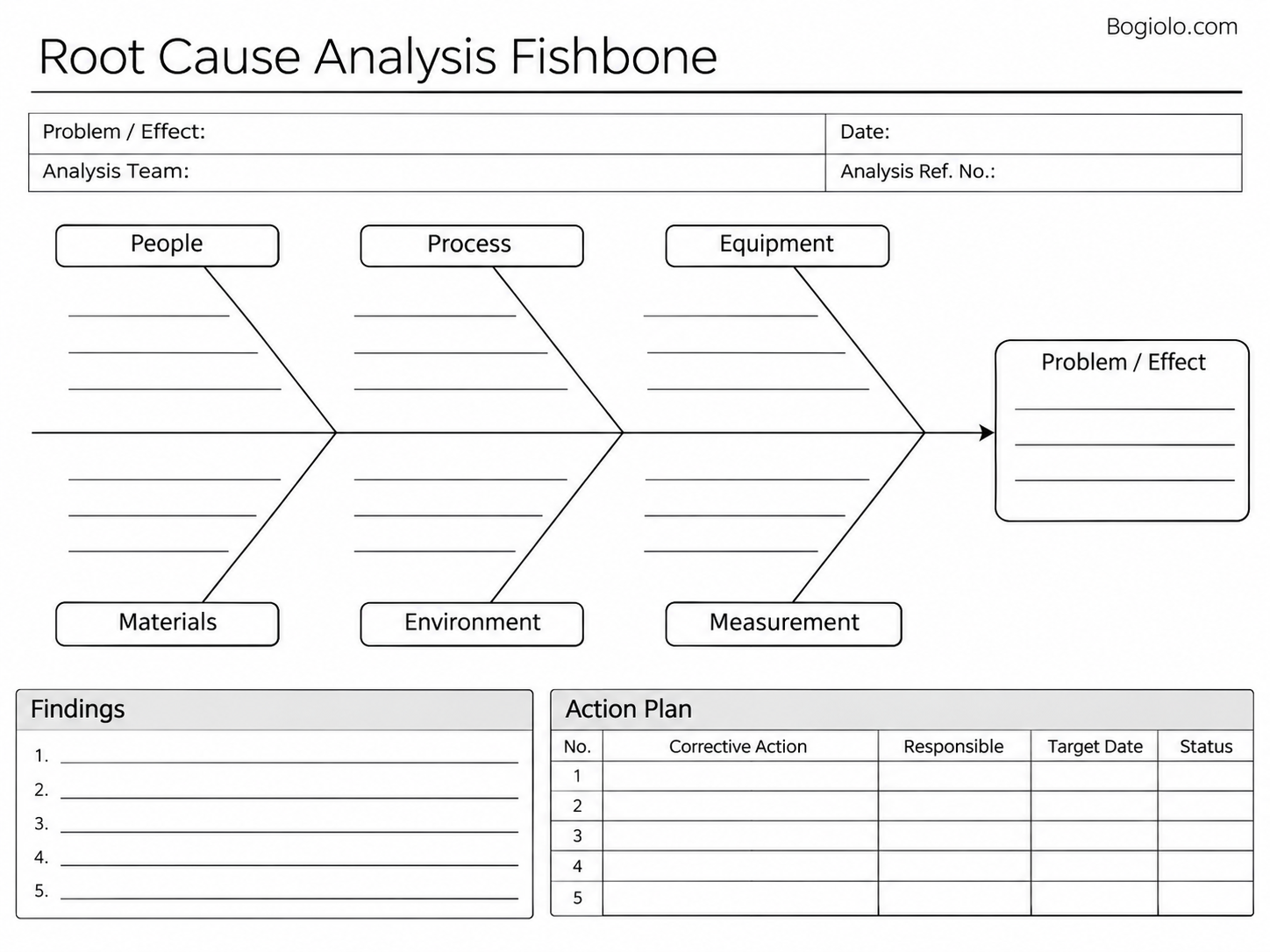
2. Fishbone Diagram (Ishikawa Diagram)
A fishbone diagram is a visual tool used to organize potential causes of a problem into different categories. It is also known as a cause-and-effect diagram or Ishikawa diagram.
Common categories include:
- People: Skills, training, communication, and human errors.
- Process: Procedures, workflows, and operational methods.
- Equipment: Machinery, tools, and technology.
- Materials: Raw materials, supplies, and product components.
- Environment: Workplace conditions and external factors.
- Measurement: Inspection methods, data accuracy, and performance monitoring.
This technique is especially useful when several factors may contribute to the same problem. It helps teams explore possible explanations before deciding which causes require further investigation.
3. Failure Mode and Effects Analysis (FMEA)
Failure Mode and Effects Analysis is a preventive technique used to identify potential failures before they occur. Teams examine possible failure modes, their effects, and the risks associated with each one.
FMEA is particularly useful in manufacturing, engineering, healthcare, and quality management. It helps organizations prioritize risks and introduce preventive controls before problems affect operations.
4. Fault Tree Analysis
Fault Tree Analysis uses a logical diagram to examine how different events or conditions can lead to a particular failure. It starts with an unwanted event and works backward to identify contributing causes.
This method is useful for investigating complex technical systems where multiple failures may interact.
How to Conduct a Root Cause Analysis
A successful root cause investigation requires a clear process. The following steps can help teams identify problems, evaluate evidence, and develop sustainable solutions.
Step 1: Define the Problem Clearly
Start by describing exactly what happened. Include relevant details such as the location, time, affected process, and impact of the problem.
A clear problem statement prevents misunderstandings and keeps the investigation focused. Avoid vague descriptions such as “the process is not working.” Instead, explain the specific failure and its measurable consequences.
Step 2: Collect Relevant Evidence
Gather information that can help explain the situation. Depending on the problem, useful evidence may include:
- Incident reports and historical records.
- Production or performance data.
- Equipment inspection results.
- Process documentation and work instructions.
- Employee observations and relevant feedback.
- Customer complaints and quality reports.
Use reliable information whenever possible. Avoid making conclusions based only on assumptions or personal opinions.
Step 3: Identify Possible Causes
Work with relevant team members to identify factors that may have contributed to the problem. Techniques such as the 5 Whys and fishbone diagrams can help organize the investigation.
Consider different areas, including people, processes, equipment, materials, and environmental conditions. Do not settle on the first explanation without examining other possibilities.
Step 4: Determine the Root Cause
Evaluate each potential cause using available evidence. Determine which factors directly contributed to the problem and which underlying weaknesses allowed it to happen.
A root cause should be supported by facts rather than speculation. If the evidence is insufficient, collect additional information before making a final decision.
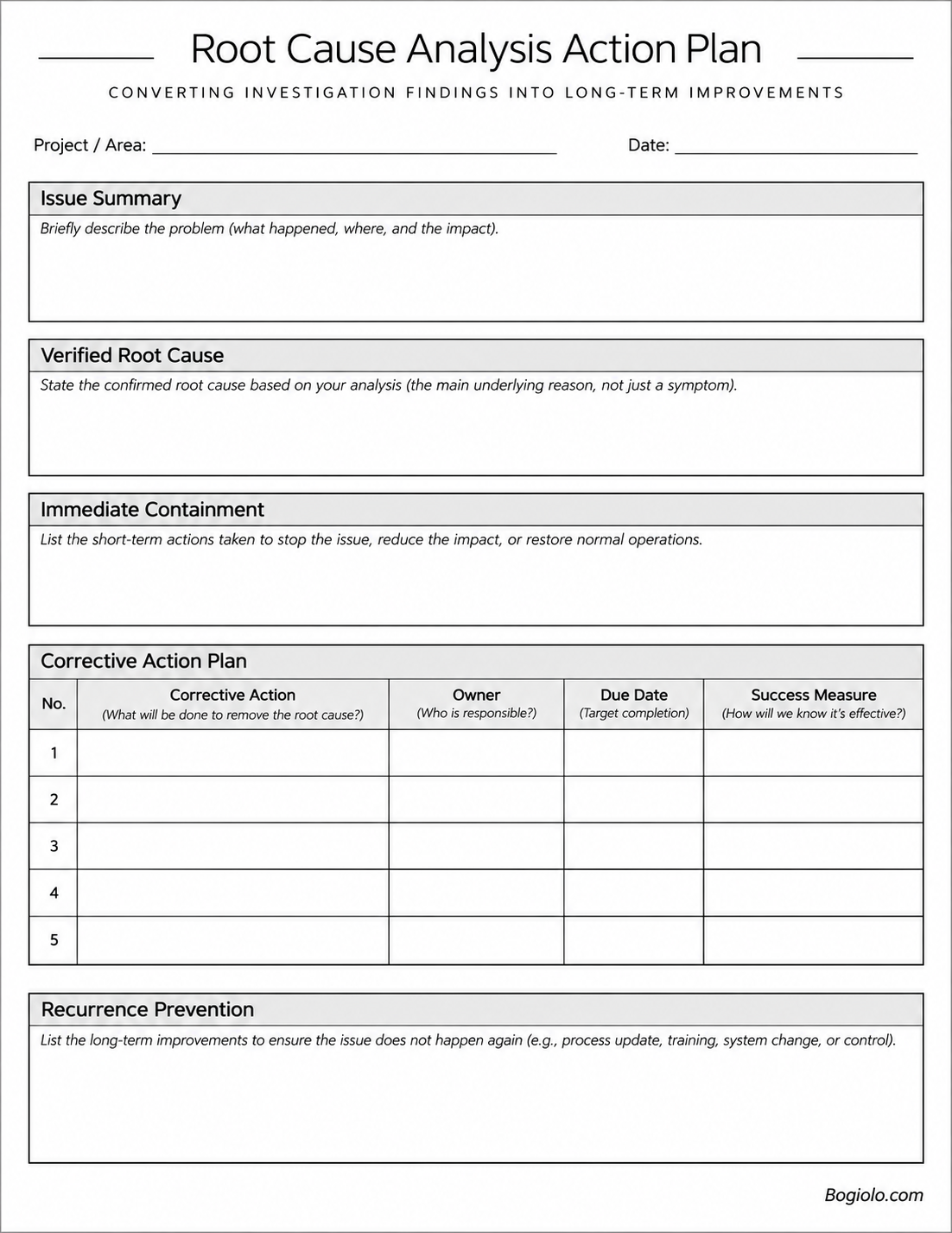
Step 5: Develop Corrective Actions
After identifying the root cause, create practical actions that address it directly. Assign responsibilities, establish deadlines, and define measurable outcomes.
For example, if inadequate maintenance procedures contributed to equipment failures, corrective actions might include updating maintenance schedules, introducing inspection checklists, and assigning clear responsibilities.
Step 6: Implement and Monitor the Solution
Put the corrective actions into practice and monitor their effectiveness. Review performance indicators, inspect relevant processes, and check whether the original problem continues to occur.
If the problem returns, reassess the investigation. The original cause may have been incomplete, or the corrective actions may not have addressed the underlying weakness effectively.
Step 7: Document the Findings
Record the investigation, supporting evidence, identified root cause, corrective actions, and follow-up results. Proper documentation helps organizations maintain accountability and use previous findings in future investigations.
Root Cause Analysis Example in the Workplace
Consider a company that receives repeated customer complaints about late order deliveries. The management team initially believes that the problem is caused by insufficient delivery drivers.
However, the investigation reveals that orders frequently leave the warehouse late because inventory records are inaccurate. Employees must spend additional time locating products and correcting order information.
After reviewing the process, the team identifies inadequate inventory updates as the underlying cause.
The organization decides to introduce the following corrective actions:
- Improve the inventory tracking system.
- Establish clear procedures for recording stock movements.
- Train warehouse employees on inventory management.
- Conduct regular inventory accuracy checks.
- Monitor order preparation and delivery times.
These actions address the underlying process weakness rather than simply increasing the number of delivery drivers. The company can then monitor delivery performance to determine whether the improvements are effective.
Best Practices for Effective Root Cause Analysis
Following a structured process is important, but the quality of the investigation also depends on how teams approach problem-solving.
Consider these practical recommendations:
- Focus on facts: Base conclusions on evidence, records, and verified observations.
- Involve the right people: Include employees who understand the affected process and relevant technical specialists.
- Avoid blaming individuals: Investigate process and system weaknesses instead of immediately assigning personal blame.
- Look beyond obvious causes: Examine contributing factors and underlying conditions.
- Choose practical solutions: Develop corrective actions that directly address identified causes.
- Assign clear responsibilities: Make sure every action has an accountable owner and completion date.
- Verify effectiveness: Use measurable indicators to confirm that the problem has been resolved.
Frequently Asked Questions About Root Cause Analysis
What is the main purpose of root cause analysis?
The main purpose of root cause analysis is to identify the underlying reasons why a problem occurred. It helps organizations implement effective solutions that address the source of an issue and reduce the likelihood of recurrence.
What are the five steps of root cause analysis?
A simplified five-step RCA process includes defining the problem, collecting evidence, identifying possible causes, determining the root cause, and implementing corrective actions. Organizations should also monitor results to confirm that the solution works.
What is the difference between root cause analysis and problem-solving?
Problem-solving is a broad process for resolving an issue. Root cause analysis is a specific investigative approach within problem-solving that focuses on identifying the underlying reasons behind the issue before selecting an appropriate solution.
What are the most common root cause analysis tools?
Common RCA tools include the 5 Whys, fishbone diagrams, Failure Mode and Effects Analysis (FMEA), Fault Tree Analysis, and Pareto charts. Each tool offers a different way to investigate and understand potential causes.
When should an organization perform root cause analysis?
Organizations should consider RCA when problems repeatedly occur, significant failures affect operations, product defects increase, safety incidents happen, or unexpected performance issues require investigation.
Can root cause analysis be used in any industry?
Yes. Root cause analysis can be applied in manufacturing, healthcare, education, information technology, construction, logistics, customer service, and many other industries. Any organization that needs to understand and prevent recurring problems can benefit from this approach.
What is a root cause analysis template?
A root cause analysis template is a structured worksheet that helps teams document problems, collect evidence, investigate possible causes, identify underlying issues, and plan corrective actions. It makes investigations more organized and easier to review.
Conclusion
Root cause analysis is an important method for understanding why problems occur and preventing them from happening again. By investigating underlying causes instead of focusing only on visible symptoms, organizations can develop more effective and sustainable solutions.
Methods such as the 5 Whys, fishbone diagrams, and Failure Mode and Effects Analysis provide practical ways to investigate different types of problems. A structured process, reliable evidence, and clear corrective actions also help improve the quality of each investigation.
Whether you are managing a small team or a large organization, using root cause analysis can support better decisions, stronger processes, and continuous improvement. Start by defining the problem clearly, investigating its underlying causes, and implementing solutions that create lasting results.
Download: Root Cause Analysis Template Excel
