A reading log is a simple tool for recording what you read, tracking your reading progress, and reflecting on the books, stories, or other texts you explore. Whether you are a student, teacher, parent, or regular reader, a reading log can help you build consistent reading habits while making each reading experience more meaningful.
Instead of simply finishing one book and moving on to the next, you can use a reading log to record important details such as the title, author, genre, dates, pages read, and personal thoughts. Over time, these records create a useful picture of your reading habits and progress.
A printable reading log can also make reading goals easier to manage. You can use one to track books throughout the school year, monitor a personal reading challenge, or encourage children to develop a regular reading routine.
What Is a Reading Log?
A reading log is a record used to document and monitor reading activity. Depending on its purpose, it can be as simple as a list of books or as detailed as a reading journal with space for notes, ratings, summaries, and reflections.
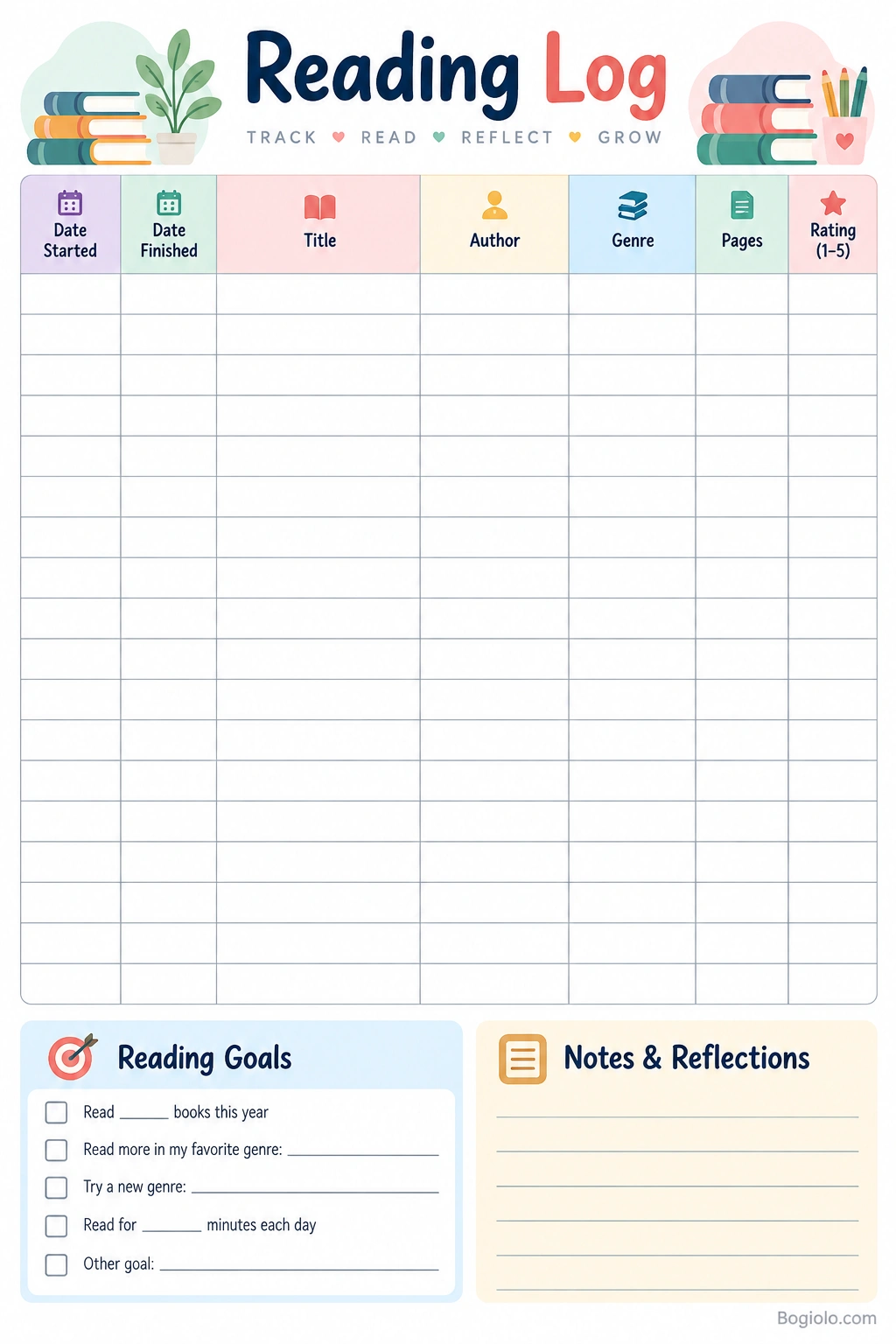
A basic reading log may include:
- Date the book was started
- Date the book was finished
- Book title
- Author’s name
- Genre
- Number of pages read
- Personal rating
- Reading goals
- Notes and reflections
The format can be adapted for different ages and purposes. A student reading log may focus on assigned books and comprehension, while a personal reading tracker may focus more on reading goals and book recommendations.
Reading Log Template
A printable reading log template provides a convenient place to record your books and reading progress. Instead of creating a new page every time you finish a book, you can use a structured worksheet to keep your reading information organized.
The template can be used for school reading assignments, personal reading challenges, classroom activities, homeschool reading, or simply keeping track of books you have read.
Why Use a Reading Log?
Keeping a reading log does more than record the names of books you have finished. It can encourage consistent reading and give you a simple way to think about what you read.
Track Reading Progress
A reading tracker makes it easy to see how many books you have read and how much progress you have made toward a reading goal. Recording start and finish dates can also help you understand your reading pace.
Build Consistent Reading Habits
Writing down your reading activity can encourage you to make reading a regular part of your day. Even a few pages each day can add up over time.
Improve Reading Reflection
A reading log can encourage you to pause and think about a book after reading it. Writing a few sentences about the characters, ideas, themes, or your personal reaction can make reading more active.
Support Comprehension
For students, recording key details and reflections can reinforce understanding of a text. A simple reading response can help readers remember important events, concepts, vocabulary, and themes.
Set and Monitor Reading Goals
A reading log can help you turn a general goal such as “read more” into a measurable target. You might aim to read a certain number of books, pages, or minutes each week or month.
What Should Be Included in a Reading Log?
The information included in a reading log depends on how you plan to use it. A simple book log does not need to contain every possible detail.
Book Title and Author
Always include the title and author so you can easily identify the book later. This is particularly useful when your reading list contains many books.
Reading Dates
Recording the date you started and finished a book allows you to monitor your reading pace. You can also use dates to track your reading activity over a month or school term.
Genre
Adding a genre can help you identify your reading preferences. Over time, you may discover that you read mostly fiction, mystery, fantasy, biography, history, science, or another category.
Pages or Reading Time
Some readers prefer to track the number of pages they read, while others prefer to record reading time. Either method can work as long as it supports your goal.
Rating
A simple one-to-five rating can help you remember your overall impression of a book. You can use stars, numbers, or short descriptions such as “loved it,” “liked it,” or “not for me.”
Notes and Reflections
Adding a notes section makes a reading log more useful for reflection. You can record a favorite idea, an important lesson, a memorable character, a question, or your overall response to the text.
How to Use a Reading Log
Using a reading log does not need to be complicated. A consistent process can make it easy to maintain.
Choose a Reading Goal
Start with a realistic goal. For example, you could aim to read 12 books in a year, read for 20 minutes each day, or finish one book each month.
Record Each Book
When you begin a new book, enter the title, author, genre, and starting date. Add other information as needed.
Update Your Progress
If your reading log tracks pages or reading time, update it regularly. Frequent updates make your reading progress easier to measure.
Reflect After Finishing
When you finish a book, write a short reflection. Consider what you learned, what you enjoyed, what surprised you, or whether the book changed the way you think about a topic.
Review Your Reading History
At the end of a month, semester, or year, review your completed reading log. Look for patterns in your reading habits, favorite genres, reading pace, and progress toward your goals.
Reading Log Ideas for Students
A student reading log can be used to support independent reading, assigned reading, classroom activities, or book reports. The level of detail should match the student’s age and reading ability.
- Record the title and author of each book.
- Write the date reading began and ended.
- Track pages or chapters completed.
- Write a short summary of the text.
- Identify important characters or main ideas.
- Record unfamiliar vocabulary.
- Write questions about the reading.
- Describe a favorite part of the book.
- Give the book a personal rating.
- Write a short reflection after finishing.
For younger readers, a reading log can be kept simple with checkboxes, pictures, ratings, and short responses. Older students can use longer written reflections to develop comprehension and critical thinking skills.
Reading Log Ideas for Adults
Adults can use a reading log for personal development, leisure reading, professional learning, or a yearly reading challenge.
Useful information might include:
- Book title and author
- Genre or subject
- Start and finish dates
- Number of pages
- Personal rating
- Favorite quotes or ideas
- Key lessons learned
- Personal reflections
- Books to read next
A personal reading journal can also help you remember why a particular book was meaningful and make it easier to recommend books to friends or family.
Reading Log vs. Reading Journal
A reading log and a reading journal are similar, but they usually serve slightly different purposes.
A reading log typically focuses on tracking. It may record titles, authors, dates, pages, genres, and reading goals.
A reading journal generally provides more space for detailed thoughts, summaries, questions, opinions, and reflections about the text.
You can combine both approaches. A reading log can provide the basic tracking information, while a notes section can give you space for deeper reflection.
How to Make a Reading Log More Effective
Keep It Simple
A complicated reading tracker may become difficult to maintain. Start with the information you actually need and add additional sections only when they are useful.
Update It Regularly
Try to update your log immediately after reading or finishing a book. Waiting too long can make it easier to forget important details.
Use Measurable Goals
Instead of setting a vague goal, choose something you can track. Examples include books per month, pages per week, or minutes read per day.
Write Short Reflections
Your reflection does not need to be an essay. A few thoughtful sentences can be enough to capture the main idea or your personal response.
Review Your Progress
Take time to look back at your reading log. Seeing completed books and progress toward a goal can provide motivation and help you plan future reading.
Reading Log Benefits for Reading Habits
A well-designed reading tracker can make reading habits more visible. When you can see your progress, it becomes easier to recognize patterns and adjust your routine.
- Encourages regular reading
- Makes reading goals measurable
- Creates a record of completed books
- Encourages reflection after reading
- Supports reading comprehension
- Helps identify favorite genres and subjects
- Makes future reading planning easier
- Provides a record of personal reading achievements
The goal is not to turn reading into a competition. A reading log should make reading more intentional while preserving the enjoyment of discovering new books and ideas.
Tips for Starting a Reading Log
- Choose a format that is easy to use.
- Start with a small and realistic reading goal.
- Record books as soon as you begin or finish them.
- Use short notes instead of lengthy entries when you are busy.
- Include books you read for school, work, or personal interest if useful.
- Review your reading progress regularly.
- Adjust your goals when your schedule or interests change.
Most importantly, make the reading log work for you. There is no requirement to record every detail. The best format is one that helps you read consistently and remember what you have learned or experienced.
Frequently Asked Questions About Reading Logs
What is the purpose of a reading log?
The purpose of a reading log is to track reading activity, monitor progress, encourage reading habits, and provide a place to record thoughts about books or other texts.
What should a reading log include?
A basic reading log can include the book title, author, genre, start date, finish date, pages read, rating, reading goal, and notes or reflections.
Is a reading log the same as a reading journal?
Not exactly. A reading log usually focuses on tracking reading activity, while a reading journal often provides more space for detailed summaries, opinions, questions, and reflections. The two can also be combined.
How do students use a reading log?
Students can use a reading log to record assigned or independent reading, track pages or chapters, summarize texts, identify important ideas, and reflect on what they have read.
How can a reading log improve reading habits?
A reading log makes reading activity visible and measurable. Recording books, pages, or reading time can help readers establish goals and maintain a consistent reading routine.
How often should I update my reading log?
Update your reading log whenever you read or finish a book, depending on the level of detail you want to track. Regular updates make it easier to maintain accurate reading records.
Can I use a printable reading log for a reading challenge?
Yes. A printable reading log works well for reading challenges because it provides a simple place to record completed books, genres, pages, ratings, and progress toward a goal.
Conclusion
A reading log is a simple but useful way to track books, monitor reading progress, build consistent reading habits, and reflect on what you read. It can be adapted for students, teachers, families, homeschoolers, and adult readers.
Whether you prefer a basic book tracker or a more detailed reading journal, the most important thing is to choose a format that you will actually use. Set a realistic goal, record your progress, and take a few moments to reflect on each book.
With a simple reading log template, you can turn your reading history into an organized record that helps you stay motivated, understand your reading habits, and make your next book easier to choose.
Download: Reading Log Template
